Pumpkin crinkle cookies bake up soft in the center with edges that set just enough to hold those dramatic sugar-coated cracks. The powdered sugar bakes into a pale shell, then splits open over the pumpkin-orange dough underneath, which is exactly what makes these cookies stand out on a dessert tray. They look bold, taste warmly spiced, and stay tender instead of cakey when the dough is handled the right way.
The texture depends on two things: blotting the pumpkin puree until it’s as dry as you can get it, and chilling the dough long enough for the flour to hydrate and the butter to firm back up. Skip either one and the cookies spread too much, lose their crinkles, or bake up too soft in the middle. Rolling the dough in granulated sugar before the powdered sugar also helps the coating cling and keeps the sugar shell from disappearing into the cookie as it bakes.
Below, I’ve laid out the one detail that matters most for the crinkle effect, plus the ingredient choices and timing cues that keep these cookies looking sharp and baking evenly every time.
The cookies came out with those big, beautiful cracks and stayed soft for days. Blotting the pumpkin made a bigger difference than I expected, and the powdered sugar coating actually stayed white instead of melting away.
Save these pumpkin crinkle cookies for the kind of dessert that needs a crackly powdered sugar top and a soft, spiced center.
The Trick Behind the Cracks Is Dry Dough, Not More Sugar
Pumpkin crinkle cookies only look effortless when the dough behaves. The biggest mistake is using pumpkin puree straight from the can without blotting it first. Pumpkin carries a lot of water, and that extra moisture softens the dough so much that the cookies spread before the tops have a chance to split. The powdered sugar still melts, but the dramatic crinkle pattern never really forms.
Chilling does a second job here. It firms up the melted butter and gives the flour time to absorb the moisture from the pumpkin and eggs, which means the dough scoops cleanly and bakes in rounded mounds instead of puddling on the pan. If the dough still feels sticky after chilling, it’s usually because the pumpkin was too wet, not because you need more flour. Add too much flour and the cookies turn dry and bready instead of soft and tender.
What Each Ingredient Is Actually Doing in These Cookies
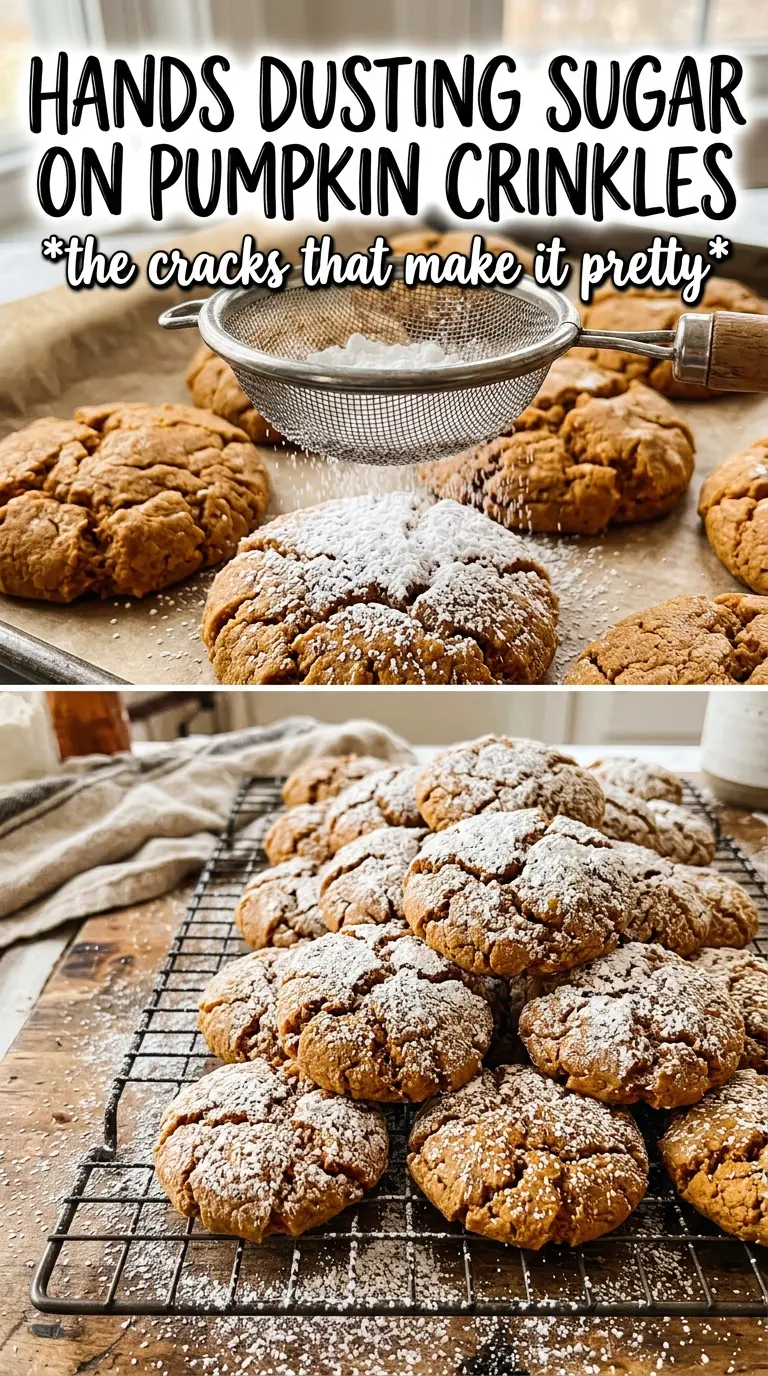
- Pumpkin puree — This gives the cookies their color, moisture, and pumpkin flavor, but it has to be blotted first. Spoon it onto paper towels and press gently until it stops leaving a wet imprint; that one step keeps the dough from spreading too much.
- Melted butter — Melted butter gives a denser, chewier cookie than softened butter would here. It also mixes smoothly with the sugars and helps the dough chill into scoopable balls, which matters for the crinkle shape.
- Brown sugar and granulated sugar — The combination gives you both moisture and structure. Brown sugar brings a little molasses depth, while the granulated sugar helps the cookies hold their shape and supports that crisp sugar coating.
- Powdered sugar coating — This is what gives the cookies their signature look. Roll generously; a light dusting disappears fast in the oven, while a thick coating stays dramatic and creates those bold white cracks.
- Pumpkin pie spice and cinnamon — Pumpkin pie spice handles the warm background notes, and the extra cinnamon keeps the flavor from tasting flat. If your spice blend is old, the cookies can taste muted even when the texture is right.
How to Keep the Coating White and the Centers Soft
Mix the Dough Without Overworking It
Whisk the dry ingredients first so the baking powder and spices are evenly distributed, then mix the wet ingredients until they look smooth and unified. Once the flour goes in, fold just until you no longer see dry streaks. If you beat the dough hard at this stage, the cookies can bake up tough and the tops lose some of their clean crackle.
Chill Until the Dough Scoops Cleanly
Two hours in the refrigerator is enough to make the dough manageable and improve the final shape. It should feel firm but still pliable enough to scoop into balls. If it’s sticky and slack, it’s not ready yet, and trying to roll it early usually means melted sugar, flattened cookies, and weak crinkles.
Roll in Granulated Sugar First, Then Powdered Sugar
The granulated sugar acts like a dry primer for the powdered sugar, which helps the white coating cling through baking. Roll each ball generously in the granulated sugar, then coat heavily in powdered sugar right before it goes onto the baking sheet. If the dough sits too long after coating, the sugar starts dissolving into the surface, so work in small batches.
Bake Only Until the Tops Split
At 350°F, the cookies usually need 11 to 13 minutes. Pull them when the edges are set and the tops are dramatically cracked, even if the centers still look a little soft. Overbaking dries out the middle and dulls the crinkle pattern, while a slightly underbaked center stays tender once the cookies cool.
Three Ways to Adjust These Cookies Without Losing the Crinkle
Gluten-Free Version
Use a 1:1 gluten-free baking flour that includes xanthan gum. The texture will be slightly more delicate, but the cookies will still crinkle well as long as the dough is chilled and the pumpkin is blotted dry. Skip almond flour here; it makes the dough too soft for the classic crackled top.
Dairy-Free Swap
Replace the butter with a plant-based stick butter, not a tub spread. The tub versions usually contain more water, which can flatten the cookies and blur the crinkles. A firmer dairy-free stick gives you the closest texture to the original.
Extra-Spiced Cookies
Add another 1/2 teaspoon cinnamon or a pinch of ginger if you like a warmer spice finish. Don’t increase the total dry spice too much, or the dough can taste dusty and the pumpkin gets pushed into the background. A small bump is enough to make the cookies feel deeper and more aromatic.
Storage and Reheating
- Refrigerator: Store in an airtight container for up to 5 days. The powdered sugar will soften a little, but the cookies stay tender.
- Freezer: Freeze the baked cookies in layers separated by parchment for up to 2 months. You can also freeze the shaped dough balls before coating; thaw just enough for the sugar to cling, then roll and bake.
- Reheating: Warm baked cookies for 5 to 7 minutes in a 300°F oven. Don’t use the microwave unless you want the coating to disappear and the centers to turn gummy.
Questions I Get Asked About This Recipe
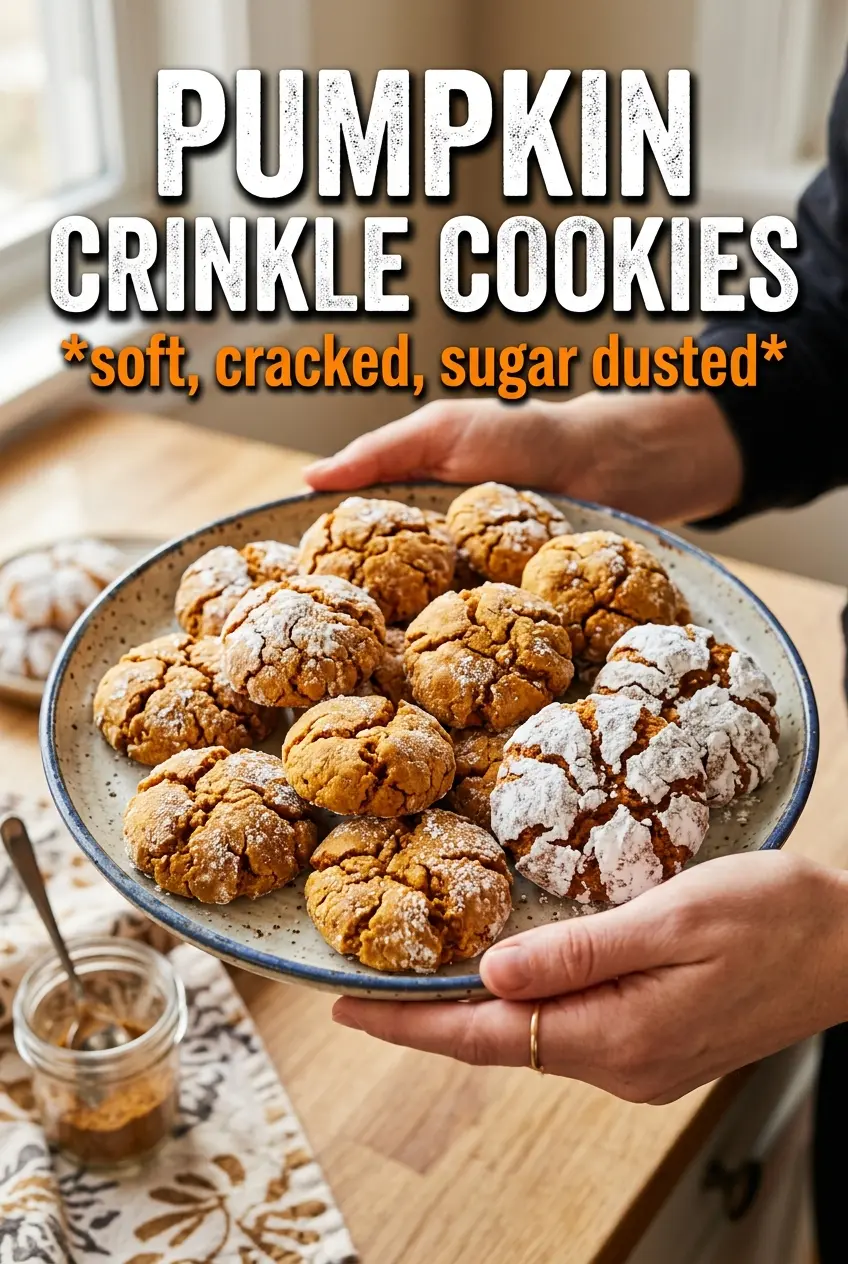
Pumpkin Crinkle Cookies
Ingredients
Equipment
Method
- Whisk all-purpose flour, baking powder, pumpkin pie spice, cinnamon, and salt in a bowl until evenly combined. The mixture should look uniformly speckled with spices.
- Whisk melted unsalted butter, granulated sugar, brown sugar, pumpkin puree, eggs, and vanilla until smooth and glossy. Stop when there are no visible streaks of egg.
- Fold the dry ingredients into the wet ingredients until no dry pockets remain. Scrape the bottom and sides as needed for an even dough.
- Refrigerate the dough for 2 hours. It should firm up enough to scoop without sticking heavily.
- Preheat the oven to 350°F and line baking sheets. The oven should fully come to temperature before baking.
- Scoop dough into 1-1/2 tablespoon balls. Each portion should be uniform so they bake at the same rate.
- Roll each dough ball first in granulated sugar. You should see a light sugar dusting before the powdered sugar step.
- Roll each dough ball very generously in powdered sugar. Brush off excess only lightly so the surface is thickly coated.
- Bake for 11 to 13 minutes until crinkled and set at the edges; do not overbake. Remove when the tops have visibly cracked and the centers still look slightly soft.