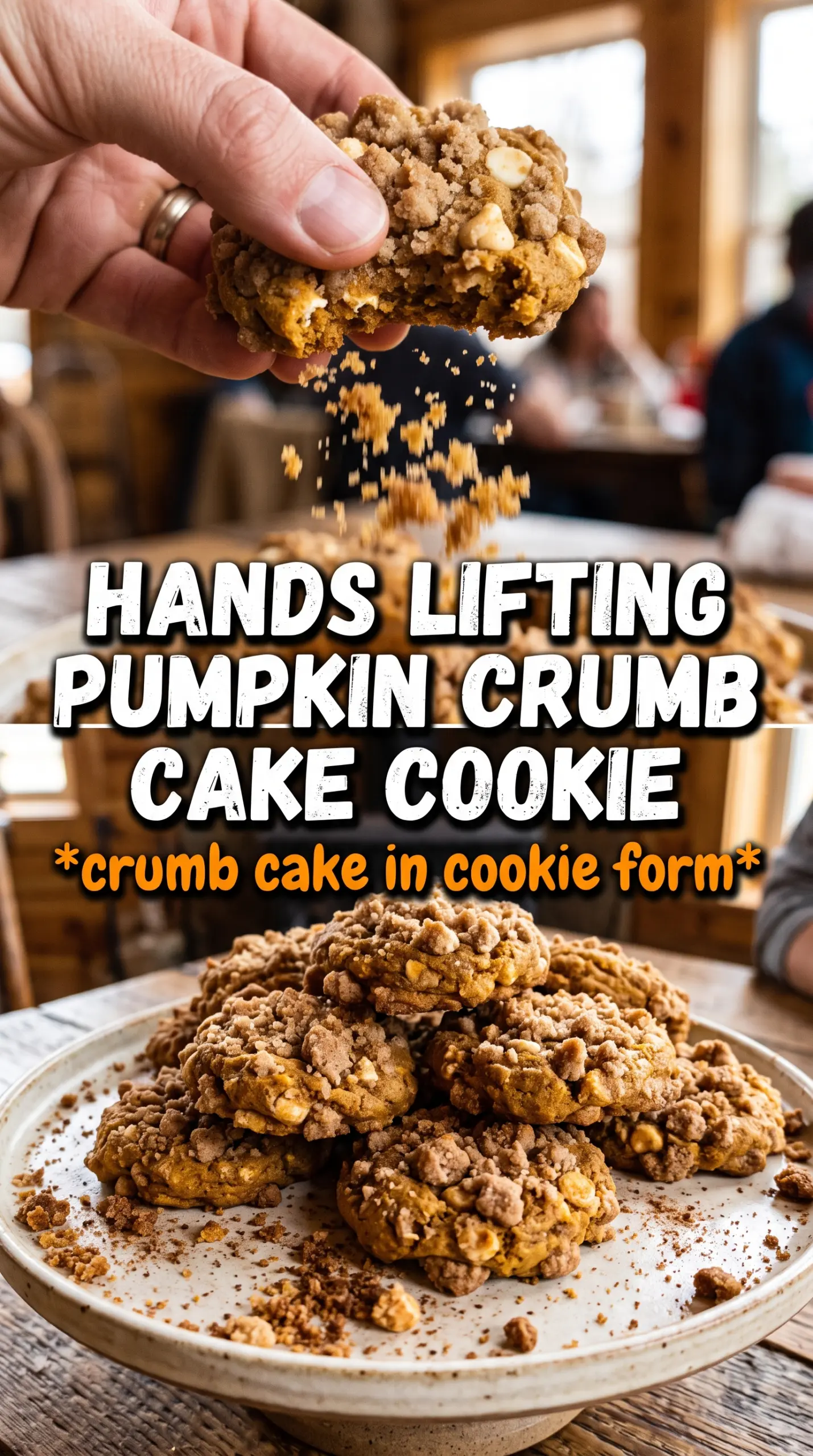
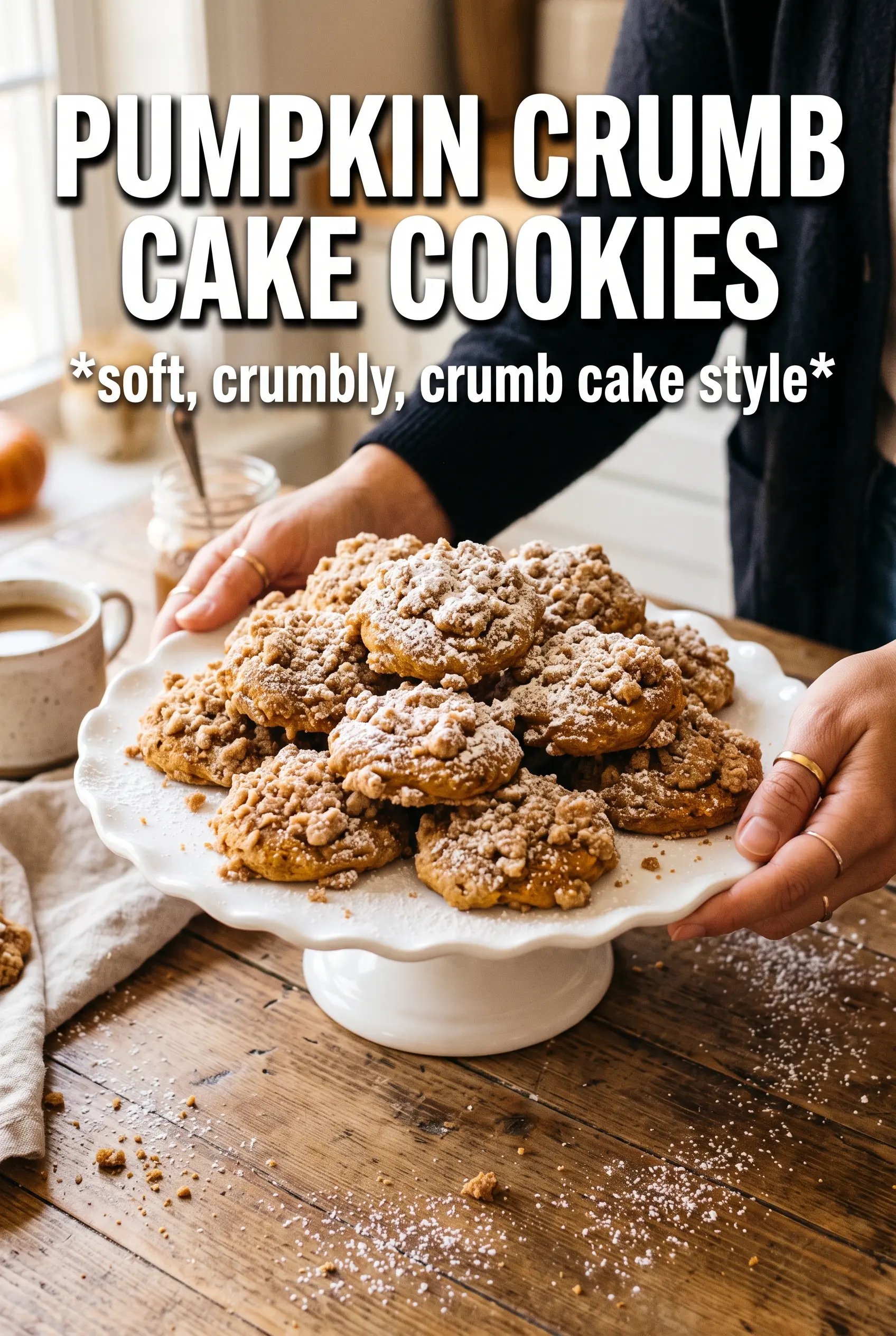
These pumpkin crumb cake cookies bake up thick and soft in the center with a buttery cinnamon crumb on top that cracks just enough when you bite in. The pumpkin stays in the background instead of turning the dough cakey or wet, and the topping brings that coffee-cake feeling without needing a fork. They land somewhere between a bakery cookie and a square of crumb cake, which is exactly why they disappear fast.
The trick is keeping the pumpkin dry and the crumb topping cold. Pumpkin adds great flavor, but too much moisture makes cookies puff, spread oddly, or bake up with a gummy middle. Blotting it first and chilling the crumb mixture keeps both parts doing what they’re supposed to do: the base stays thick, and the topping bakes into crisp, sandy clusters instead of melting into the dough.
Below, I’ve covered the one step that keeps the cookies from turning cakey, plus the swaps that still give you a good result if you’re missing an ingredient or need to work ahead.
The crumb topping stayed in big, buttery pieces and the cookies came out thick instead of puffy cake-like blobs. I followed the pumpkin blotting step and it made a huge difference.
Save these pumpkin crumb cake cookies for the days when you want thick pumpkin cookies with a buttery coffee-cake crumb on top.
The Step That Keeps Pumpkin Cookies Thick Instead of Puffy
Most pumpkin cookies go wrong before they even hit the oven. The dough gets too wet, the cookies spread oddly, and the texture shifts from thick and tender to soft in a way that feels underbaked. That starts with the pumpkin itself, not the flour. Pumpkin puree holds a lot of moisture, and if you add it straight from the can, it can loosen the dough enough to blur the lines between cookie and cake.
Blotting the pumpkin is what keeps the base sturdy. You’re not trying to dry it out completely, just pull off enough excess liquid that the dough stays scoopable and the cookies hold their shape. The crumb topping matters just as much: cold crumbs bake into distinct little nuggets on top instead of disappearing into the dough, which is what gives these cookies their coffee-cake character.
- Blotted pumpkin — This is the ingredient that keeps the dough from turning soft and cakey. A few paper towels and a light press are enough.
- Brown sugar — It brings moisture and that deep caramel note that plays well with pumpkin spice. White sugar won’t give the same warmth.
- Butter in the crumb topping — Melted butter helps the topping clump, but chilling it afterward is what preserves those bigger crumbs in the oven.
- Egg yolk — The yolk enriches the dough without adding extra water. A whole egg would loosen the base more than you want here.
What Each Ingredient Is Actually Doing in the Crumb and the Cookie
- Flour — The crumb topping and the cookie base both need enough structure to hold their shape. All-purpose flour gives you that balance without making the cookies tough.
- Pumpkin pie spice and cinnamon — The spice mix gives the cookie its warm backbone, while the extra cinnamon keeps the crumb topping from tasting flat. If you only have pumpkin pie spice, use it in the dough and add a little more cinnamon to the topping.
- Butter — The base needs softened butter for creaming, and the topping needs melted butter for clumping. They do different jobs, so don’t swap one method for the other.
- Vanilla — It rounds out the pumpkin and brown sugar so the cookies taste fuller, not muddy. It won’t fix an under-spiced dough, but it does smooth the edges.
- Powdered sugar — Add it after the cookies cool. If you dust too early, the heat will melt it into the crumb topping and you lose that bakery finish.
How to Build the Cookies So the Crumb Stays Crisp
Mix the crumb first and chill it
Stir the flour, brown sugar, and cinnamon together, then drizzle in the melted butter and toss until you get shaggy crumbs with a few bigger clumps. Those clumps are what you want. If it turns into a paste, the butter was too hot or you mixed too aggressively. Refrigerating the topping firms the butter back up, which helps the crumbs stay distinct on top of the cookies instead of melting into a flat layer.
Beat the base just until it comes together
Cream the butter and brown sugar until the mixture looks fluffy and a little lighter in color, then mix in the blotted pumpkin, egg yolk, and vanilla. Once the dry ingredients go in, stop as soon as the flour disappears. Overmixing here develops too much structure and can make the cookies dense on the edges while still soft in the center.
Press the topping onto thick scoops
Scoop generous 2-tablespoon portions and keep them tall instead of flattening them. Press a generous handful of crumb topping onto each one so the surface is covered, then gently nudge the edges back into a round if they spread when you add the crumbs. Bake until the edges are set and the centers look just barely soft; they’ll finish setting as they cool. If you wait for them to look fully dry in the oven, they’ll bake up too firm once they hit the rack.
How to Adapt These for Different Kitchens and Different Pantry Shelves
Gluten-Free Version
Use a good 1:1 gluten-free baking blend in both the cookie base and the crumb topping. The cookies will still be tender and thick, but the crumbs may be a little more fragile, so chill the topping well before baking. Don’t use almond flour here as a direct swap; it changes the structure too much and the dough will spread.
Dairy-Free Swap
Use a plant-based butter that behaves like stick butter, not a soft tub spread. The crumb topping will still work, but the flavor will be a little less rich and the crumbs may bake slightly softer. Chill the topping until it feels firm before scooping it onto the dough.
More Spice, Less Pumpkin
If you want a stronger spice note, add a pinch of ginger or nutmeg to the dough and keep the pumpkin amount the same. Don’t add extra pumpkin to chase a deeper color; that just pushes the cookies toward cake texture. The flavor gets better from spice, not from making the dough wetter.
Storage and Reheating
- Refrigerator: Store in an airtight container for up to 5 days. The crumb topping softens a little after day one, but the cookies stay moist.
- Freezer: These freeze well baked or unbaked. Freeze baked cookies in a single layer, then pack them tightly; for unbaked dough, freeze the scooped cookies with topping already pressed on.
- Reheating: Warm baked cookies for 8 to 10 seconds in the microwave or a few minutes in a low oven. Too much heat melts the topping and makes the cookie base too soft.
Answers to the Questions Worth Asking
Pumpkin Crumb Cake Cookies
Ingredients
Equipment
Method
- Mix the flour, brown sugar, and cinnamon until evenly combined, then drizzle the melted butter over and toss until large crumbs form.
- Refrigerate the crumb topping until firm, about 15 minutes, so it holds onto the cookies.
- Beat the butter and brown sugar until smooth and thick.
- Add the blotted pumpkin, egg yolk, and vanilla, and beat until the mixture looks cohesive.
- Fold in the dry ingredients just until no flour streaks remain.
- Scoop 2-tablespoon thick rounds and place them on a sheet pan, spacing them apart.
- Press a generous handful of crumb topping into each cookie so the crumbs cling firmly.
- Bake at 375°F for 12-14 minutes, until the edges look set and the crumb topping is golden.
- Cool completely before finishing.
- Dust generously with powdered sugar.