Warm, puffed pumpkin French toast casserole comes out of the oven with custardy bread underneath and a crisp cinnamon streusel on top. It slices cleanly after a night in the fridge, then bakes up with that center-set, tender texture that makes brunch feel calm instead of rushed. The maple and pumpkin lean into each other without turning muddy, and the top gets just enough crunch to keep every bite interesting.
The overnight soak is what gives this casserole its best texture. Brioche or challah holds on to the custard without collapsing, while pumpkin puree adds body and color without making the filling heavy. The streusel goes on right before baking, so it stays sandy and crisp instead of melting into the custard while the casserole chills.
Below, you’ll find the little details that keep the center from turning soggy, which bread works best, and how to adapt the dish if you need a dairy-free version or want to prep it farther ahead.
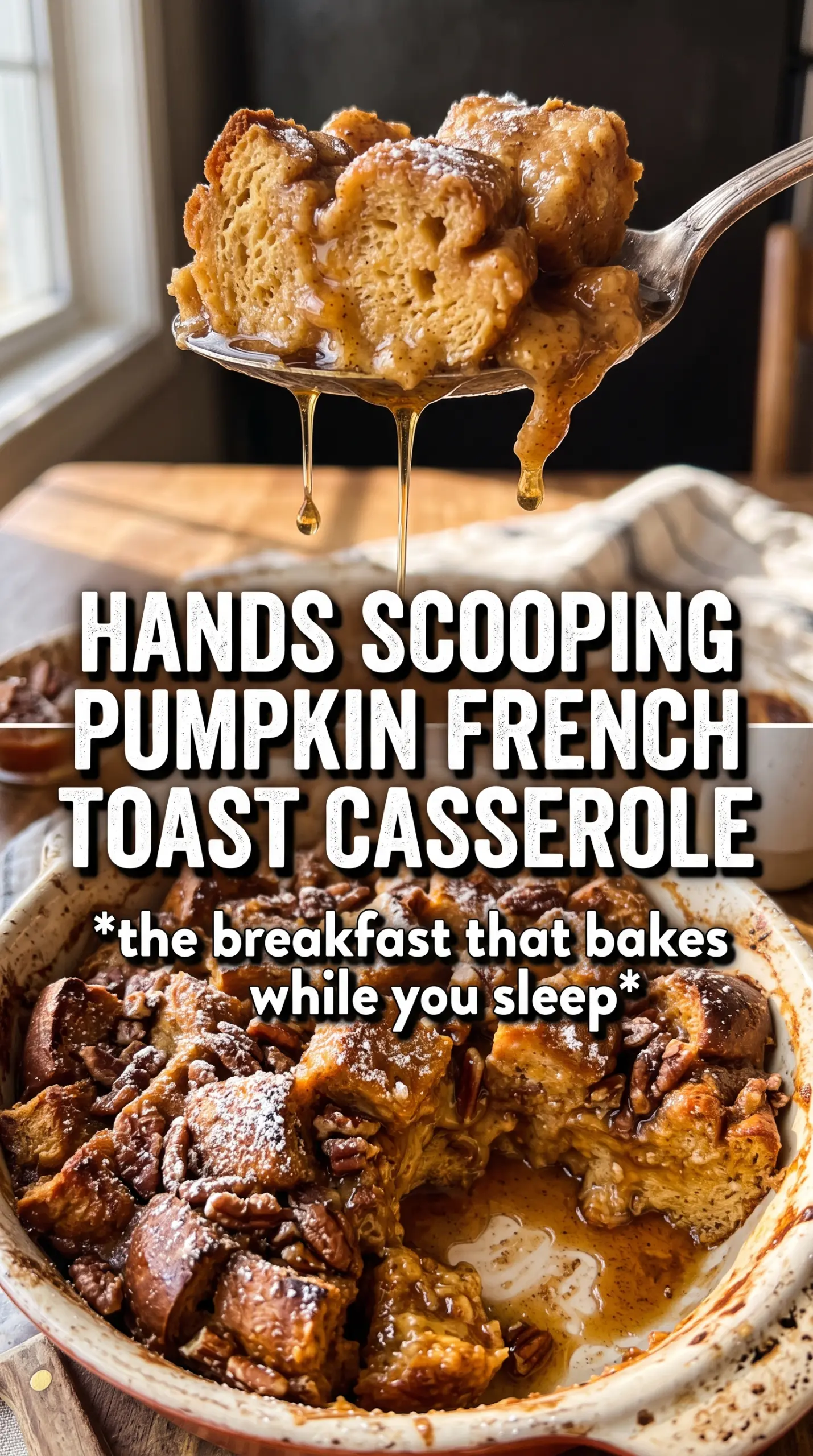
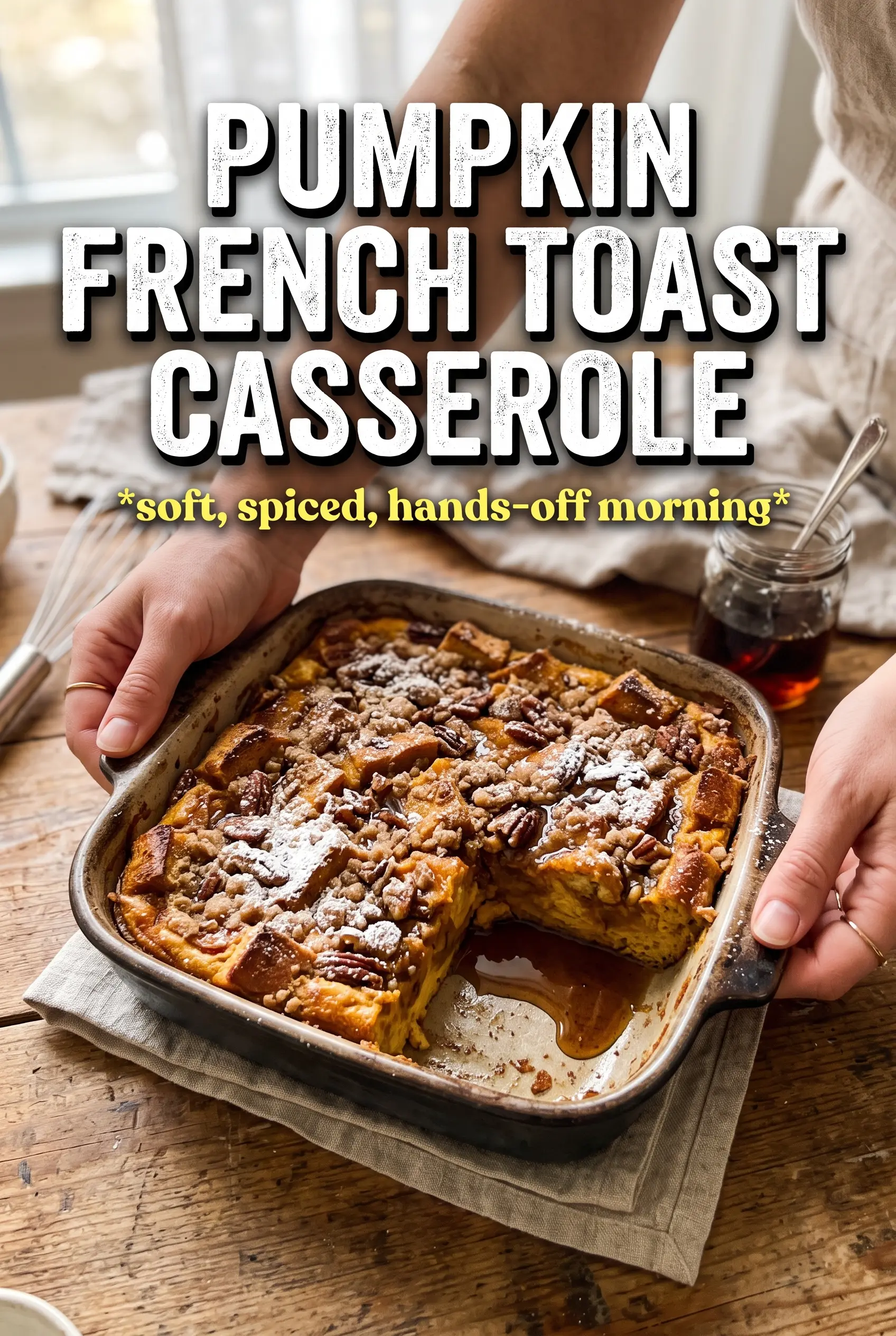
The bread soaked overnight and baked up with a custardy middle and crisp top exactly like I hoped. The streusel stayed crunchy even after I drizzled maple syrup over it.
Save this pumpkin French toast casserole for the kind of brunch that needs a make-ahead dish with a custardy center and crisp streusel top.
The Part That Keeps the Middle Custardy Instead of Soggy
Most baked French toast casseroles go wrong in one of two ways: the bread stays dry in the middle, or it turns into pumpkin mush because the custard is too thin. This version avoids both by using enough eggs to set the casserole and enough cream to keep it rich, but not so much liquid that the bread floats apart. Brioche and challah help too because they’re sturdy, slightly sweet, and built to drink in custard without disintegrating.
The overnight rest matters more here than almost anywhere else. That chilling time gives the cubes a chance to absorb the pumpkin mixture all the way through, so the center bakes evenly instead of hiding a wet pocket under a browned top. If your bread is very fresh, cube it and let it sit out for a few hours first so it dries a bit; slightly stale bread is even better.
- Brioche or challah — Either one gives you a soft, rich casserole with structure. Sandwich bread can work in a pinch, but it won’t hold the custard as well and the texture comes out flatter.
- Pumpkin puree — Use plain pumpkin puree, not pumpkin pie filling. Pie filling is already sweetened and spiced, which throws off both the texture and the seasoning balance.
- Heavy cream and whole milk — The mix keeps the custard silky. Using all milk makes the casserole less luxurious and a little more prone to drying out at the edges.
- Brown sugar and maple syrup — These sweeteners don’t just add sweetness; they deepen the pumpkin and cinnamon notes so the casserole tastes round instead of flat.
What Each Ingredient Is Doing in the Custard
- Eggs — They set the custard. Six eggs is enough to firm up the casserole without making it omelet-like.
- Pumpkin puree — It adds body, color, and that soft pumpkin flavor that makes the casserole taste like more than plain cinnamon toast. Whisk it thoroughly so it disappears into the custard instead of leaving orange streaks.
- Pumpkin pie spice and cinnamon — The spice blend brings the familiar pumpkin note, while the extra cinnamon keeps the flavor from tasting dusty or one-note. You need both.
- Cold butter in the streusel — Cold butter is what makes the topping crisp. If it softens before baking, the streusel turns pasty instead of sandy.
- Vanilla — It smooths out the pumpkin and makes the custard taste fuller. Don’t skip it unless you’re out; the casserole will taste a little flatter without it.
Building the Soak, the Streusel, and the Bake
Layering the Bread So It Absorbs Evenly
Spread the bread cubes in a greased 9×13 dish with a little room for the custard to move between them. When you pour the pumpkin mixture over the top, press the bread down gently so the top cubes don’t stay dry. If you rush this part, the casserole bakes with a soggy bottom and a dry top, which is exactly the kind of uneven texture this overnight rest is meant to fix.
Whisking the Custard Until It Looks Smooth
Mix the eggs, milk, cream, pumpkin, maple syrup, brown sugar, spices, vanilla, and salt until the custard looks uniform and thick enough to coat a spoon. Any streaks of pumpkin or egg will show up in the finished casserole. If you see clumps of pumpkin puree, keep whisking; those clumps don’t bake out on their own.
Adding the Streusel at the Last Minute
Cut the cold butter into the flour, brown sugar, and cinnamon until you have pea-sized crumbs. Sprinkle it over the soaked bread right before baking, not the night before, or the topping will melt into the custard and lose its crunch. You want the streusel to sit on top like a dry blanket that turns golden and crisp in the oven.
Knowing When It’s Done
Bake until the top is puffed, deeply golden, and the center no longer sloshes when you nudge the pan. A little wobble is fine; a wet wave means the middle needs more time. If the top browns before the center sets, tent it loosely with foil for the last stretch so the casserole can finish without burning.
How to Adapt It When You Need a Different Version
Dairy-Free Pumpkin French Toast Casserole
Use full-fat canned coconut milk in place of the cream and a rich unsweetened non-dairy milk for the rest. The casserole will still set, but the flavor will lean a little more toward coconut and the custard won’t be quite as plush as the original.
Gluten-Free Version That Still Holds Its Shape
Swap in a sturdy gluten-free brioche-style loaf if you can find one, and dry the cubes out a little longer before soaking. Softer gluten-free breads can collapse, so the extra drying time helps them hold the custard instead of dissolving into it.
Less-Sweet Brunch Version
Cut the brown sugar in the custard back by half and serve with plain maple syrup at the table instead of drizzling extra on top. This keeps the pumpkin and spice flavors front and center and works especially well if you like a more breakfast-forward casserole than dessert-like one.
Storage and Reheating
- Refrigerator: Store leftovers covered for up to 4 days. The topping softens a little, but the custard stays tender.
- Freezer: Freeze baked portions tightly wrapped for up to 2 months. The texture is best if you freeze slices, not the whole casserole.
- Reheating: Warm in a 325°F oven until heated through, or use short bursts in the microwave for single servings. The oven keeps the edges from turning rubbery, which happens fast if you blast it too hot.
Questions I Get Asked About This Recipe
Pumpkin French Toast Casserole
Ingredients
Equipment
Method
- Arrange the bread cubes in a greased 9x13 baking dish, spreading them evenly in one layer.
- Whisk the eggs, whole milk, heavy cream, pumpkin puree, maple syrup, brown sugar, pumpkin pie spice, cinnamon, vanilla, and salt until smooth.
- Pour the custard over the bread and press down so the cubes absorb it.
- Cover the dish and refrigerate overnight to fully soak.
- Preheat the oven to 350F.
- Stir the flour, brown sugar, and cinnamon for the streusel, then cut in the cold butter until the mixture looks crumbly.
- Uncover the casserole, sprinkle the streusel over the soaked bread, then scatter it evenly.
- Bake for 50-55 minutes, until the top is golden and the casserole is puffed through the center.
- Let the casserole rest briefly, then serve warm with maple syrup and powdered sugar.