Pumpkin pie macarons bring that crisp-shell, chewy-center contrast with a spiced filling that tastes like the best part of pumpkin pie in a cleaner, more elegant bite. The shells bake up smooth and light, with just enough pumpkin spice in the background to hint at what’s inside without making them heavy or cakey.
What makes this version work is restraint. The shells get their pumpkin flavor from spice, not wet puree, which keeps the meringue stable and helps the tops stay smooth. The filling does carry pumpkin puree, but only after it’s been blotted dry, so the buttercream stays pipeable instead of turning loose and grainy. That balance gives you macarons that taste seasonal without losing the texture people expect from a proper macaron.
Below, I’m walking through the part that matters most: how to fold the batter without overworking it, how to tell when the shells have rested long enough, and how to get a filling that tastes like pumpkin pie instead of just sweet buttercream.
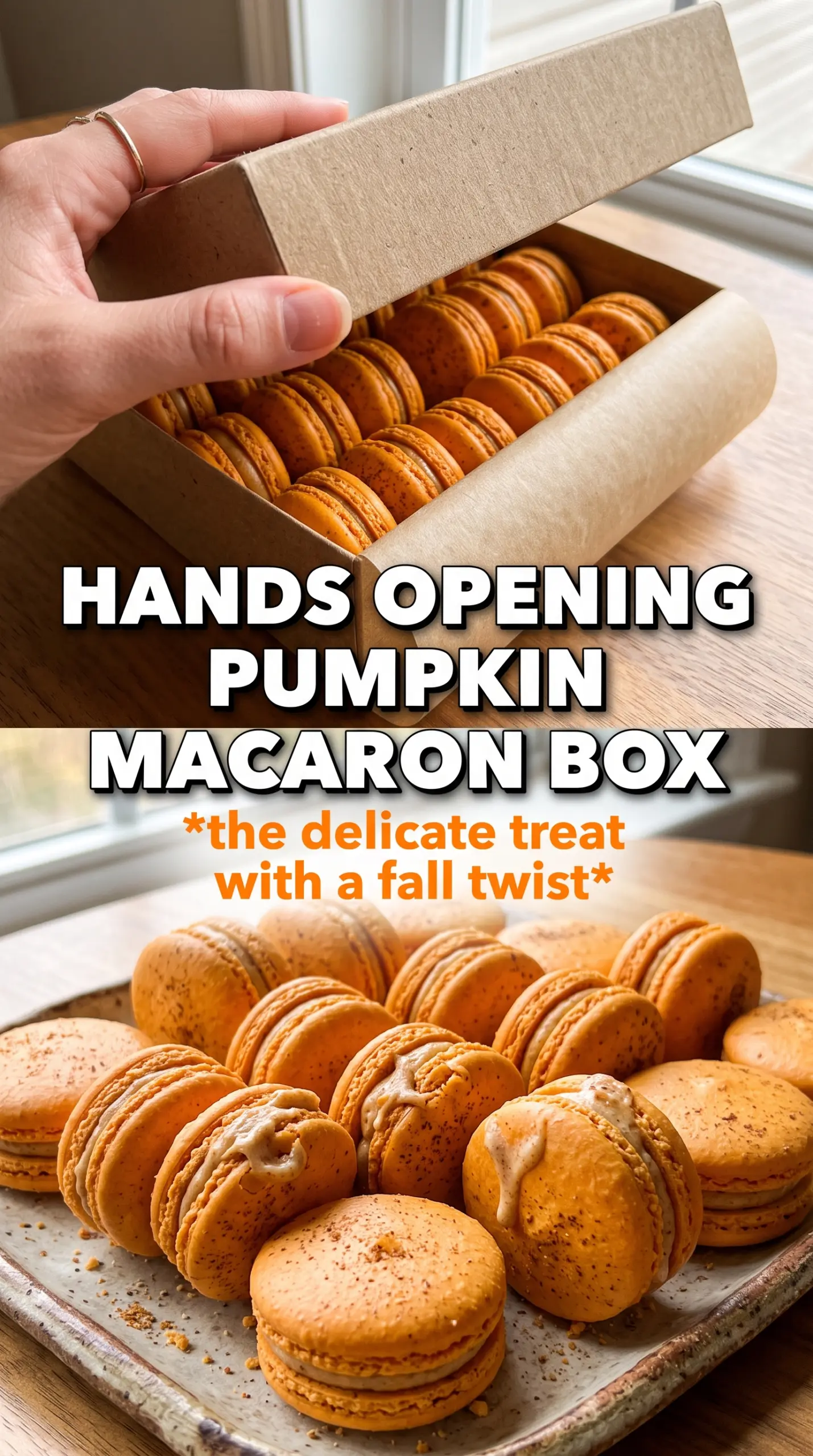
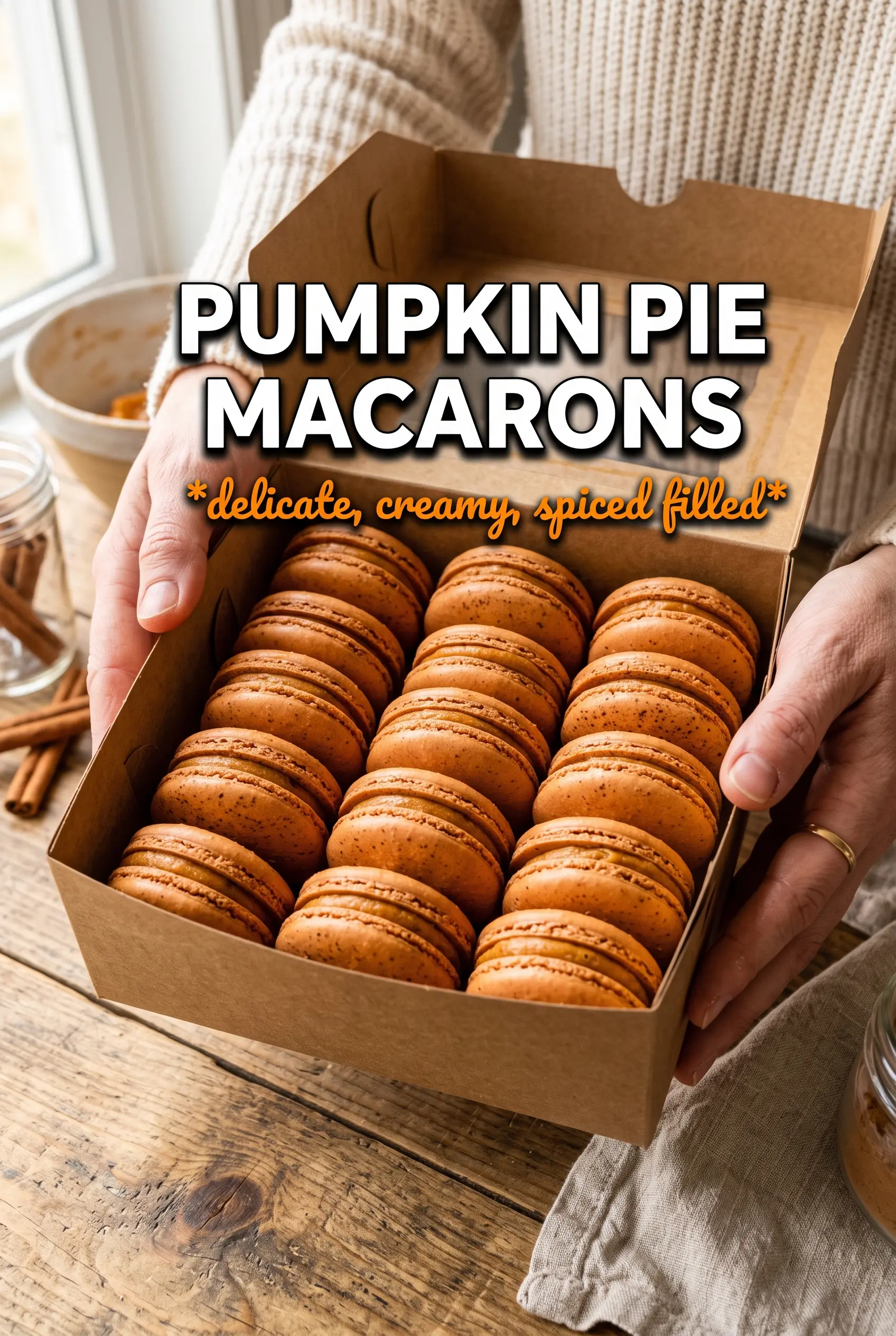
The shells came out smooth and the feet set beautifully, and the pumpkin spice buttercream stayed thick enough to pipe without sliding out the sides.
Save these Pumpkin Pie Macarons for the days when you want crisp shells, spiced buttercream, and a bakery-style finish at home.
The Part Where Macaronage Goes Wrong
The biggest failure point in pumpkin pie macarons isn’t the baking. It’s the folding. Once the almond flour mixture hits the meringue, the batter has a narrow window between undermixed and overmixed, and both will cost you the smooth tops and lifted feet you’re after. Stop when the batter falls from the spatula in a thick ribbon and settles back into itself in about 10 to 15 seconds.
If it’s too stiff, the shells will hold little peaks and bake up lumpy. If it’s too loose, they spread into flat puddles and lose their structure in the oven. The goal is a batter that moves like lava, not one that pours like cake batter.
- Aged egg whites — Older whites whip into a steadier meringue with less water, which matters here because a stable base helps the shells dry and rise properly. Room temperature helps them whip faster, but the aging is the bigger advantage.
- Almond flour — Buy fine almond flour, not coarse almond meal. The texture shows up in the final shells, and coarse flour makes the tops rough no matter how carefully you fold.
- Pumpkin pie spice and cinnamon — These add the pumpkin pie note without introducing extra moisture. That’s why the shells stay reliable instead of turning soft or sticky.
- Orange gel food coloring — Use gel, not liquid. Liquid coloring adds water, and water is one of the fastest ways to ruin macaron batter.
- Pumpkin puree — The filling needs puree that’s blotted dry until it looks almost pasty. Straight puree carries too much water and will loosen the buttercream fast.
What Each Ingredient Is Actually Doing in This Recipe
- Primary ingredient (the star) — Quality matters most. Choose the best you can find.
- Cooking medium (oil, butter, or broth) — This carries flavors and prevents dryness.
- Seasonings (salt, pepper, spices, herbs) — Layer flavors so nothing overpowers. Build depth gradually.
- Aromatics (garlic, onion, herbs) — Cook with fat to bloom flavors. Become the foundation.
- Supporting ingredients — Complement the main ingredient without overpowering it.
- Sauce or liquid (if applicable) — Brings flavors together. Balance richness with acid.
- Acid (lemon, vinegar, wine, or other) — Brightens and prevents flat-tasting results.
- Final finish (garnish, glaze, or sauce) — Prevents one-dimensional taste and adds visual appeal.
Building the Shells, Then Protecting the Filling
Whipping a Stiff Meringue
Beat the egg whites to soft peaks first, then add the sugar slowly and keep beating until the meringue is glossy and holds a firm peak that stands straight up with just a slight curl at the tip. If the sugar goes in too fast, the whites can collapse and the meringue will look grainy instead of smooth. That graininess carries through the whole batter.
Folding to the Right Flow
Add the dry mixture in three additions and fold with a wide spatula, scraping around the bowl and through the center. The batter should lose its rough, stiff look and start falling in thick ribbons. Stop early if you’re unsure; a slightly thicker batter is easier to rescue than one that’s been pushed past the point of no return.
Piping and Resting the Shells
Pipe 1.5-inch circles onto parchment, then tap the tray firmly on the counter to knock out trapped air bubbles. Let the shells rest until you can touch the tops lightly without leaving a mark; they should feel dry, not tacky. If you skip this rest or bake before the skin forms, the tops can crack before the feet set.
Mixing the Buttercream and Finishing
Beat the butter and powdered sugar until the mixture looks fluffy and pale, then add the blotted pumpkin puree, spice, cinnamon, and vanilla. Keep mixing until the filling turns smooth and pipeable, but don’t overdo it once the puree goes in or the buttercream can loosen. Pipe onto fully cooled shells, sandwich them, and let the macarons sit overnight so the filling softens the interior and the texture turns tender instead of dry.
How to Adapt These Macarons Without Ruining the Texture
Dairy-Free Filling
Swap the butter for a firm dairy-free baking stick that creams well. The texture will be slightly softer than classic buttercream, so chill the filled macarons before serving if the kitchen runs warm.
Extra-Spiced Filling
Add another 1/4 teaspoon pumpkin pie spice to the buttercream if you want a stronger pumpkin pie finish. Keep the cinnamon in balance, though, or the filling starts tasting like red-hots instead of pie.
Gluten-Free by Default
These are naturally gluten-free as written, as long as your almond flour and spices are processed in a gluten-free facility if cross-contact matters. The structure comes from the meringue and nut flour, not wheat, so you don’t need a special flour blend.
Make-Ahead Timing
Macaron shells actually improve after a day of resting once filled. If you’re planning ahead, bake the shells one day and assemble them the next, or fill them and refrigerate overnight so the centers soften and the spice comes through more clearly.
Storage and Reheating
- Refrigerator: Store filled macarons in an airtight container for up to 5 days. The shells soften a bit, which is part of the appeal, but the texture stays best in a single layer or with parchment between layers.
- Freezer: These freeze well. Freeze the filled macarons on a tray until firm, then transfer to an airtight container and freeze for up to 1 month. Thaw in the refrigerator so condensation doesn’t bead on the shells.
- Reheating: Don’t heat them. Bring them from the fridge to room temperature for 20 to 30 minutes before serving. Microwaving will melt the buttercream and ruin the shell texture.
Questions I Get Asked About This Recipe
Pumpkin Pie Macarons
Ingredients
Equipment
Method
- Sift powdered sugar, almond flour, pumpkin pie spice, and cinnamon together, discarding any large pieces.
- Beat aged egg whites to soft peaks, then gradually add granulated sugar and continue beating to stiff, glossy peaks.
- Fold the almond flour mixture into the meringue in three additions, then add orange gel food coloring and fold until the batter flows like lava.
- Pipe 1.5-inch circles onto parchment, then rest for 45–60 minutes until a dry skin forms that doesn’t stick when lightly touched.
- Bake at 300°F for 12–14 minutes, until the feet are set and the shells lift cleanly from the parchment.
- Beat the softened unsalted butter until smooth, then mix in powdered sugar, pumpkin puree (blotted very dry), pumpkin pie spice, cinnamon, and vanilla until creamy and uniform.
- Pipe buttercream onto cooled shells and sandwich, then rest overnight for the best texture.