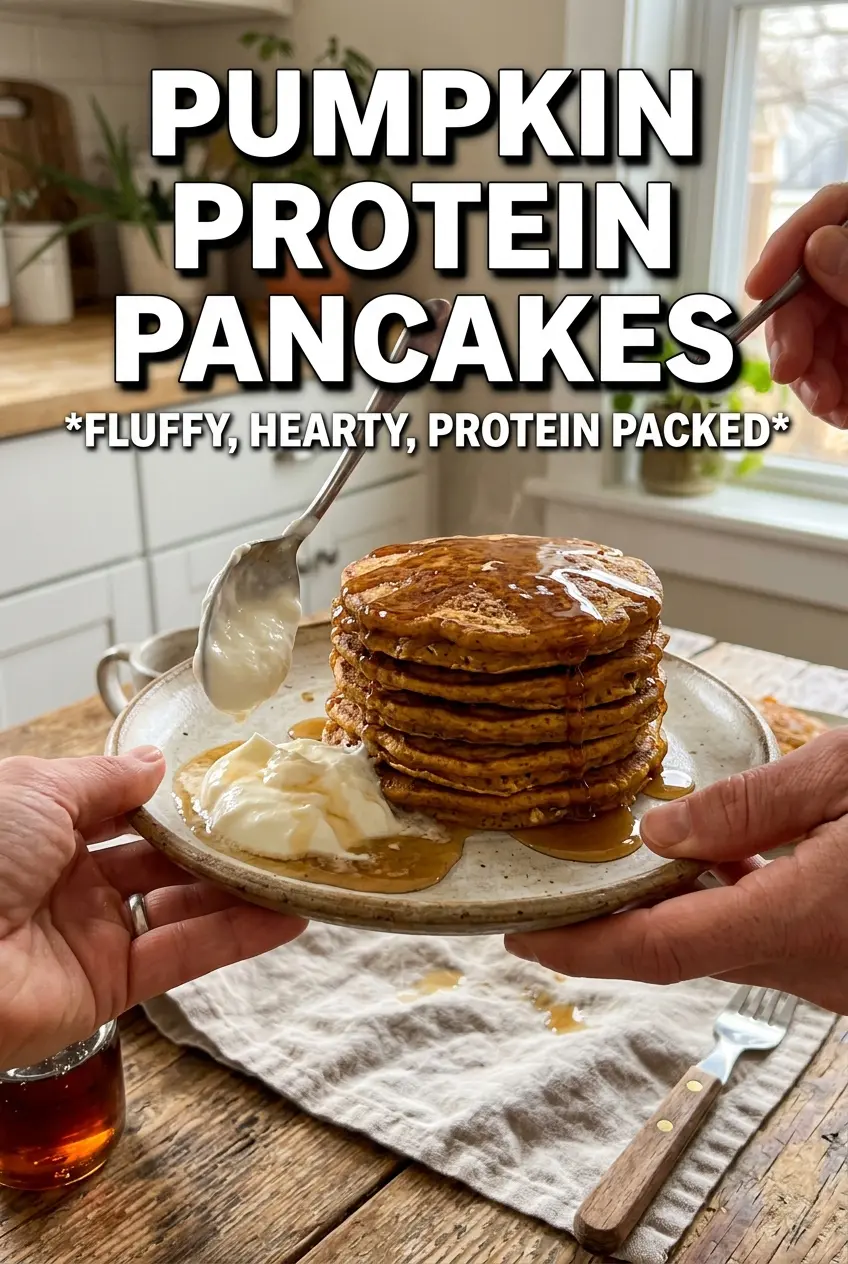
Pumpkin protein pancakes turn out thick, tender, and stacked with that cozy pumpkin-spice flavor without falling apart the second they hit the pan. The batter stays a little thicker than standard pancake batter, which is exactly what gives these pancakes their hearty, satisfying bite instead of a soft, floppy texture. They cook up with golden edges, a gently set center, and enough structure to hold almond butter and banana without going soggy.
The trick is keeping the heat lower than you’d use for regular pancakes. Protein powder and pumpkin puree both change how batter browns and sets, so a medium-low skillet gives the centers time to cook before the outside gets too dark. Greek yogurt adds moisture and tang, while the mix of oat flour and all-purpose flour keeps the texture balanced instead of dense or gummy.
Below, you’ll find the one pan cue that matters most, plus a few smart swaps if you need to adjust the flour or make the batter work with what you already have in the kitchen.
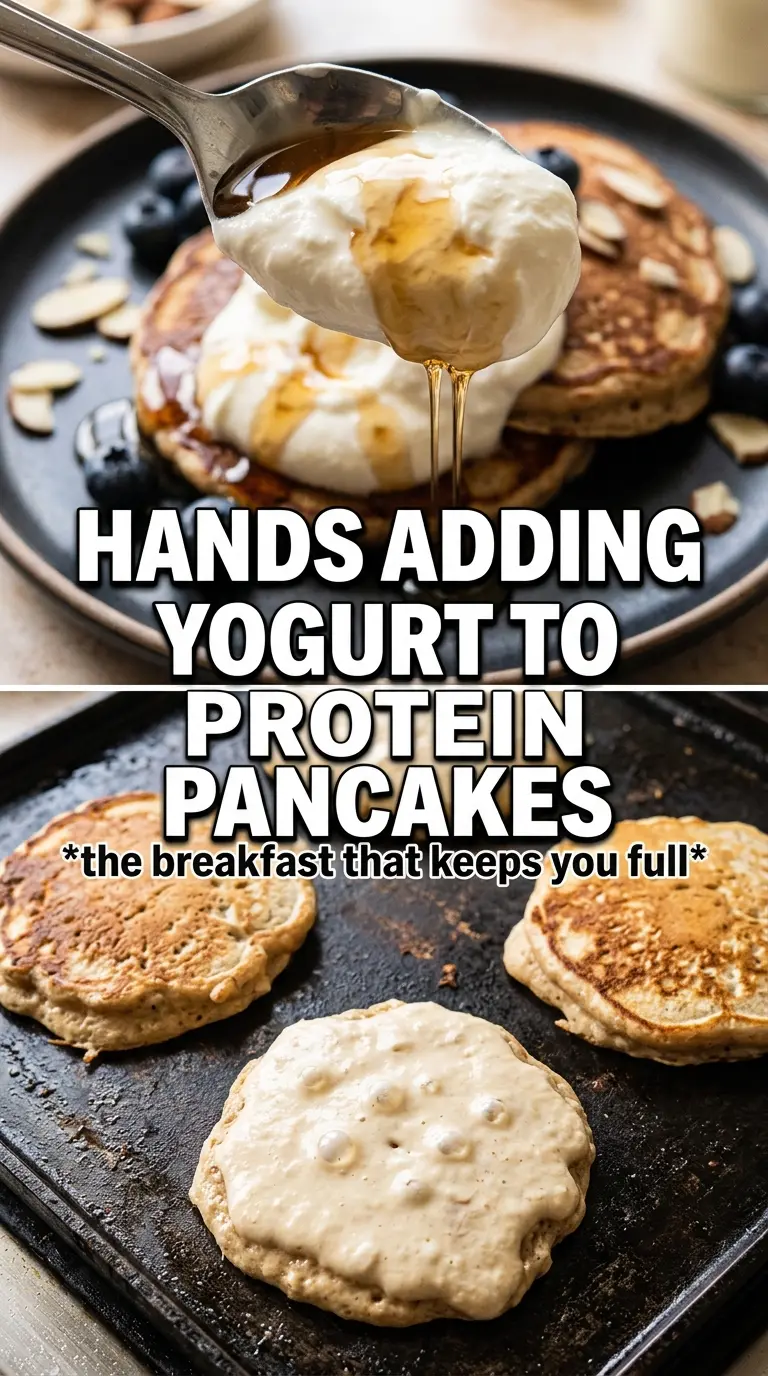
The batter was thick, but the pancakes cooked up fluffy instead of dense, and flipping them at the three-minute mark kept the centers perfectly done.
Love these thick, golden pumpkin protein pancakes? Save them to Pinterest for a high-protein breakfast that still tastes like a proper stack.
The Trick to Keeping Protein Pancakes Tender Instead of Rubbery
Protein powder changes pancake batter fast. Add too much liquid and the pancakes spread thin; add too much flour and they turn dry and chalky. The batter for these pumpkin pancakes should be thick enough to hold its shape when dropped from a spoon, almost like a soft mound, because pumpkin puree and Greek yogurt already bring plenty of moisture.
The other thing that matters is patience. Let the first side cook until the edges look set and bubbles start to open across the surface. If you flip too early, the middle is still fragile and the pancake tears. Low heat gives the flour time to cook through without scorching the protein powder, which is what keeps the texture soft instead of tough.
- Protein powder — Vanilla works best here because it blends into the pumpkin spice instead of fighting it. Whey or a whey blend usually gives the softest texture; plant-based powders often need a splash more milk because they absorb more.
- Oat flour — This adds a little nuttiness and helps the pancakes stay tender. Blended rolled oats work fine if you process them into a fine flour first; coarse oats leave the batter gritty.
- Greek yogurt — This is doing more than adding protein. It gives the batter body and a slight tang, which keeps the pancakes from tasting flat.
- Pumpkin puree — Use plain pumpkin puree, not pumpkin pie filling. The filling is sweetened and spiced already, and it throws the whole balance off.
What Each Ingredient Is Doing in the Pan
- All-purpose flour — This keeps the pancakes from getting too dense. If you swap it for more oat flour, the pancakes will be softer and a little more fragile.
- Baking powder — This is the lift. Protein pancakes depend on it, because the batter is heavier than a standard pancake batter and needs help rising in the pan.
- Eggs — They bind the batter and help the pancakes set cleanly when you flip them. Two eggs give enough structure without making the texture eggy.
- Milk — Start with the amount listed, then check the texture. You want a thick batter that still drops from a spoon; if it’s too stiff, add milk one tablespoon at a time.
- Honey or maple syrup — This rounds out the spice and helps browning. Honey gives a slightly deeper note, while maple keeps the flavor a little lighter.
- Almond butter, honey, and banana — These toppings work because they echo the warm pumpkin spice and add creaminess. Skip them only if you want a simpler breakfast; they’re not there just for looks.
Getting the Batter and Skillet in Sync
Mix the dry ingredients first
Whisk the protein powder, oat flour, all-purpose flour, baking powder, pumpkin pie spice, cinnamon, and salt together until the color looks even. This keeps the baking powder from clumping in one spot, which would give you uneven lift and a few oddly airy pancakes next to flat ones. If your protein powder tends to be sweet, keep the cinnamon and spice as written so the flavor still reads like pumpkin and not vanilla cake.
Build the wet mixture before combining
Whisk the pumpkin puree, eggs, Greek yogurt, milk, honey, and vanilla until the mixture looks smooth and thick. The yogurt should disappear into the batter, not sit in little streaks. When you fold the wet into the dry, stop as soon as the flour disappears; overmixing makes protein pancakes tough in a hurry, and a few small lumps are better than a strained batter.
Cook low and slow for the best set
Heat a greased skillet over medium-low heat. A drop of batter should sizzle gently, not aggressively. Scoop 1/4 cup rounds and let them cook for about 3 minutes, until the edges look matte and bubbles start breaking on the surface. Flip carefully and cook for about 2 minutes more. If the first pancake browns too fast, lower the heat before cooking the rest; protein powder can go from golden to dry in a minute on a hot pan.
Use oat flour only for a softer, gluten-free-style stack
If you need to skip the all-purpose flour, replace it with more oat flour and expect a softer, more delicate pancake. The flavor stays great, but the pancakes will be a little more fragile, so keep the heat low and flip with a wide spatula. A certified gluten-free oat flour is the safer choice if you need the recipe to be fully gluten-free.
Swap Greek yogurt for dairy-free yogurt
A thick unsweetened dairy-free yogurt works in place of Greek yogurt, but the pancakes may be slightly less tangy and a touch less sturdy. If the batter loosens up after the swap, let it sit for 5 minutes before cooking so the flour can hydrate and thicken.
Make them sweeter or more breakfast-leaning
Use maple syrup instead of honey if you want a softer sweetness that leans into the pumpkin spice. For a less sweet breakfast, cut the honey in the batter by half and rely on the banana and drizzle on top for the finish.
Storage and Reheating
- Refrigerator: Store cooked pancakes for up to 4 days in an airtight container with parchment between layers. They soften a little as they sit, which is normal.
- Freezer: These freeze well. Lay them flat on a sheet pan until solid, then transfer to a freezer bag with parchment between stacks.
- Reheating: Warm them in a toaster or a dry skillet over low heat. The common mistake is microwaving them too long, which makes protein pancakes rubbery and wet at the same time.
Questions I Get Asked About This Recipe
Pumpkin Protein Pancakes
Ingredients
Equipment
Method
- In a bowl, combine vanilla protein powder, oat flour, all-purpose flour, baking powder, pumpkin pie spice, cinnamon, and salt.
- Stir until the spices and leavening are evenly distributed, giving a uniform, warm-colored dry mix (visual cue: no visible spice clumps).
- In a separate bowl, whisk pumpkin puree, eggs, Greek yogurt, milk, honey or maple syrup, and vanilla until smooth.
- Whisk just until fully combined (visual cue: no streaks of yogurt or egg).
- Pour the wet mixture into the dry ingredients and fold until a thick batter forms.
- Continue folding only until there are no dry pockets (visual cue: batter holds together and is thicker than normal pancake batter).
- Heat a greased skillet over medium-low heat, because protein pancakes need lower heat (visual cue: heat is steady, not smoking).
- Drop 1/4 cup rounds and cook for 3 minutes until edges set and bubbles form on top.
- Flip carefully and cook for 2 minutes more until cooked through and lightly browned.
- Serve immediately with almond butter, a drizzle of honey, and sliced banana on top.