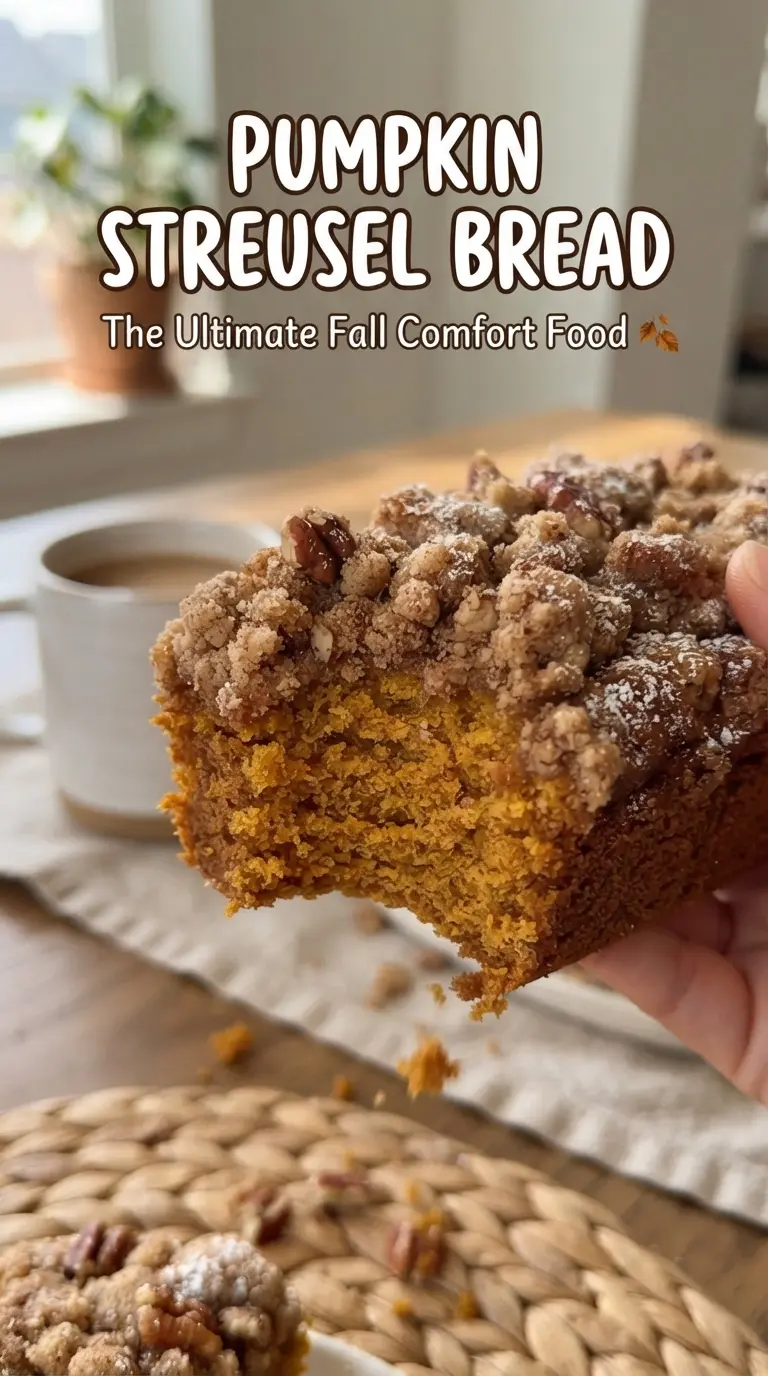
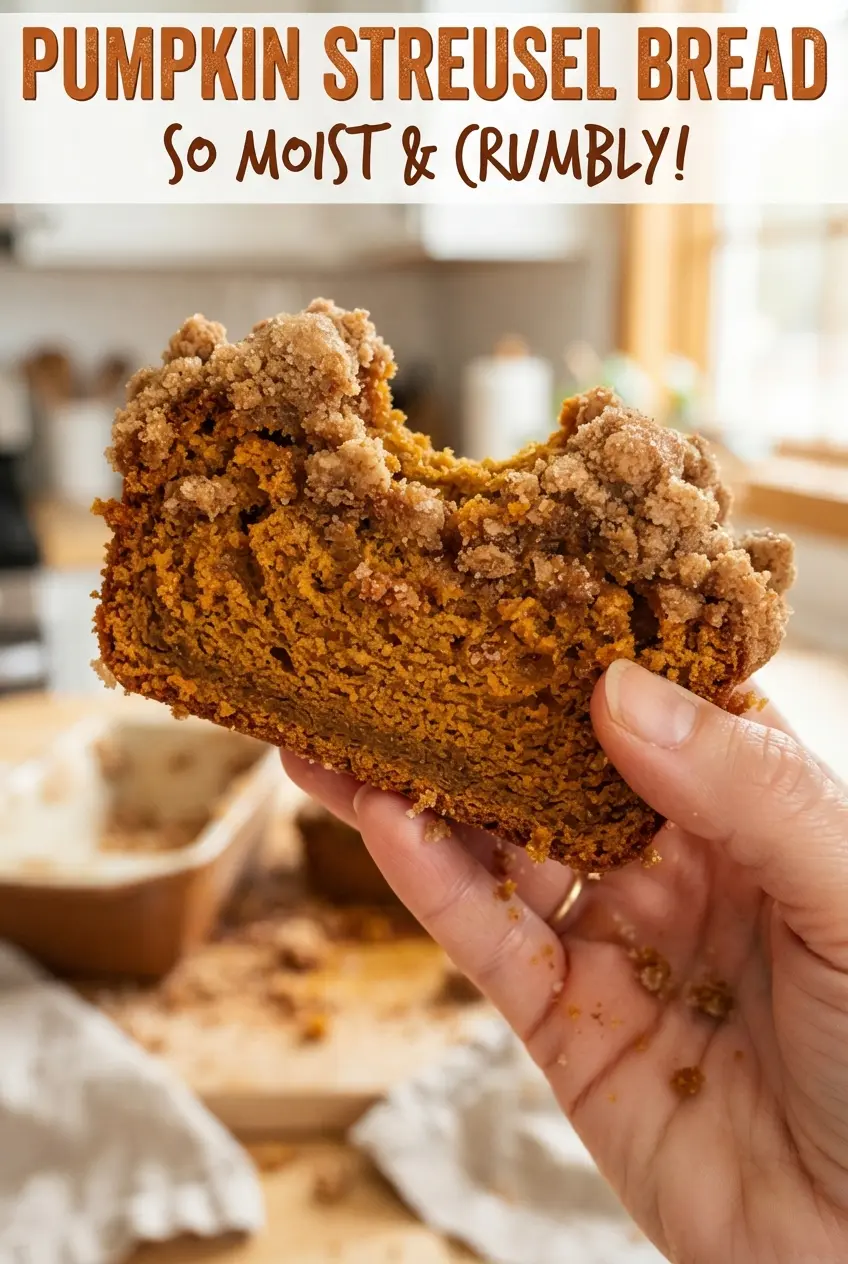
Pumpkin streusel bread bakes up with a moist, tender crumb and a thick cinnamon-sugar crust that cracks just enough when you slice into it. The loaf stays soft for days, but the streusel gives it the kind of bakery-style top that makes it feel special without adding much extra work.
What makes this version dependable is the balance between the wet ingredients and the dry. Pumpkin puree brings moisture and body, while vegetable oil keeps the crumb soft instead of bready or dry. The streusel stays crisp because the butter is kept cold and mixed only until coarse crumbs form, which gives you those bigger nubbly bits instead of a sandy topping that melts away.
Below, you’ll find the small timing details that matter most, including when to tent the loaf so the streusel doesn’t overbrown before the center is done. I also added a few practical swaps and storage notes for the days when you want to bake it ahead.
The streusel stayed crisp on top, and the loaf was still moist on day three. I tented it with foil halfway through like the directions said, and the top didn’t burn at all.
Save this pumpkin streusel bread for the kind of loaf that slices cleanly, stays moist, and carries a thick cinnamon crumb on top.
The Streusel Needs to Stay Cold or It Melts Into the Loaf
Pumpkin bread can go wrong in a couple of predictable ways: the center stays gummy, or the topping disappears into the batter and turns soft. The fix is in the streusel. Cold butter cut into the flour and sugar keeps the topping in distinct crumbs, and those crumbs bake into a crisp layer instead of a paste.
The other trap is overmixing the batter. Once the dry ingredients go in, stir only until the flour disappears. Pumpkin batter is thick and forgiving, but too much mixing makes the loaf tight instead of tender. That’s the difference between a slice that bends softly and one that eats like a muffin brick.
- Pumpkin puree — Use plain pumpkin puree, not pumpkin pie filling. The puree brings moisture and structure without extra sugar or spices that would throw off the balance.
- Vegetable oil — Oil keeps the crumb soft after the loaf cools. Melted butter can work, but it changes the texture slightly and the bread won’t stay as plush for as long.
- Brown sugar — This deepens the flavor and helps keep the loaf moist. Light or dark brown sugar both work; dark brown sugar gives a stronger molasses note.
- Cold butter for the streusel — This matters. Cold cubes rubbed in by hand or with a pastry cutter create the crumbly topping. If the butter softens too much, chill the streusel before it goes on the batter.
What Each Ingredient Is Actually Doing in This Recipe
- Primary ingredient (the star) — Quality matters most. Choose the best you can find.
- Cooking medium (oil, butter, or broth) — This carries flavors and prevents dryness.
- Seasonings (salt, pepper, spices, herbs) — Layer flavors so nothing overpowers. Build depth gradually.
- Aromatics (garlic, onion, herbs) — Cook with fat to bloom flavors. Become the foundation.
- Supporting ingredients — Complement the main ingredient without overpowering it.
- Sauce or liquid (if applicable) — Brings flavors together. Balance richness with acid.
- Acid (lemon, vinegar, wine, or other) — Brightens and prevents flat-tasting results.
- Final finish (garnish, glaze, or sauce) — Prevents one-dimensional taste and adds visual appeal.
Building the Batter and Keeping the Top Crumbly
Mix the streusel first
Start with the streusel so it can chill while you make the batter. Work the cold butter into the flour, brown sugar, and cinnamon until the mixture looks like damp sand with pea-sized clumps. If it turns smooth or greasy, the butter has warmed too much and the topping will bake flat. Pop it in the fridge while you move on.
Whisk the wet ingredients until smooth
Mix the pumpkin, oil, eggs, sugars, and vanilla until the batter looks glossy and even. You don’t need to whip air into it; you just want the eggs fully blended so the loaf bakes evenly. If streaks of egg show up, keep whisking before adding the dry ingredients.
Fold just until the flour disappears
Add the dry ingredients and stir gently with a spatula. Stop as soon as you no longer see pockets of flour, even if the batter still looks a little rough. That roughness is fine. Overmixing tightens the crumb and makes the loaf dense instead of soft and sliceable.
Watch the top, not just the timer
Spoon the batter into the pan, spread the streusel evenly over the top, and bake until the center is set and a toothpick comes out clean. If the topping starts to darken too fast around the 40-minute mark, tent the loaf loosely with foil. That keeps the streusel from burning before the middle finishes baking.
Make it with chopped pecans
Add 1/2 cup chopped pecans to the streusel for extra crunch. They toast as the loaf bakes and give the topping more texture, but the bread itself stays the same soft, pumpkin-rich loaf underneath.
Dairy-free version
Use dairy-free butter for the streusel. The topping will still crumb nicely if the substitute is cold, though it may spread a little more than butter during baking. Keep it chilled before it goes on the loaf for the best texture.
Make it sweeter or less sweet
If you want a more dessert-like loaf, add 2 tablespoons more granulated sugar to the batter. For a slightly less sweet breakfast version, reduce the granulated sugar by 2 tablespoons and keep the brown sugar as written so the crumb stays moist.
Storage and Reheating
- Refrigerator: Store covered for up to 5 days. The streusel softens a little, but the loaf stays moist.
- Freezer: Wrap the cooled loaf tightly, then freeze for up to 2 months. Slice first if you want grab-and-go pieces.
- Reheating: Warm slices in a low oven or toaster oven for a few minutes. A microwave works in a pinch, but too much heat makes the crumb dense and the streusel lose its crunch.
Questions I Get Asked About This Recipe
Pumpkin Streusel Bread
Ingredients
Equipment
Method
- Preheat oven to 350F, then grease and line a 9x5-inch loaf pan. Set the pan aside so it’s ready to fill.
- Rub streusel flour, brown sugar, ground cinnamon, and cold butter together into coarse crumbs, then chill. You should see uneven, sandy clumps rather than a smooth paste (visual cue: coarse crumbs).
- Whisk all-purpose flour, baking soda, salt, and pumpkin pie spice in a bowl until evenly combined. The dry mix should look uniformly speckled with spice.
- Whisk pumpkin puree, vegetable oil, eggs, brown sugar, granulated sugar, and vanilla extract until smooth. Stop once no egg streaks remain (visual cue: glossy, fully mixed batter).
- Fold the dry ingredients into the wet ingredients just until combined. The batter should be thick and slightly lumpy, with no dry flour pockets (visual cue: no streaks).
- Pour the batter into the loaf pan and cover evenly with the chilled streusel. Spread crumbs to the edges so the topping is consistent (visual cue: an even crumb layer).
- Bake at 350F for 60-65 minutes until a toothpick comes out clean, tenting with foil after 40 minutes if browning fast. Watch for deep golden streusel and a clean toothpick (visual cue: top looks set, not wet).
- Cool completely in the pan before slicing. This prevents gummy slices and helps the crumb firm up (visual cue: loaf is cool to the touch).