Pumpkin streusel cheesecake lands in that sweet spot between cozy and polished: a tangy, silky cheesecake layer, a gingersnap crust that holds its own, and a buttery oat streusel that bakes into a crisp, golden cap instead of disappearing into the filling. The caramel drizzle on top is the finish that makes each slice feel complete, not just sweet.
What makes this version work is the layering of textures and the careful bake. The crust gets a short head start so it stays firm under the filling, the cream cheese is beaten smooth before the pumpkin goes in, and the streusel stays chunky because the butter is kept cold. That keeps the topping crumbly and gives you contrast in every bite. The water bath matters here too; it keeps the cheesecake gently set instead of dry and cracked.
Below, I’ve included the detail that matters most when you’re baking this kind of dessert: how to keep the filling smooth, how to tell when it’s done, and what to do if you want to make it ahead without losing that clean slice.
The crust stayed crisp, the filling baked up smooth, and the streusel kept its crunch even after chilling overnight. I added the caramel right before serving and every slice came out clean.
Save this pumpkin streusel cheesecake for the next dessert table — that gingersnap crust, creamy pumpkin layer, and crunchy oat topping bake into the kind of slice people ask about twice.
The Trick to Keeping the Streusel on Top Instead of Sinking In
Streusel that disappears into cheesecake usually starts with a filling that’s too thin or a topping that’s too fine. Here, the pumpkin adds moisture, so the filling needs to be beaten just until smooth, not whipped airy, and the streusel needs enough butter to clump without turning pasty. If the topping looks sandy instead of crumbly, it won’t sit proudly on the surface; it’ll melt right into the batter during baking.
The water bath helps in another way. It keeps the cheesecake baking gently and evenly, which gives the streusel time to set on top instead of browning too fast. That slow bake is what gives you a clean slice with distinct layers: crust at the bottom, pumpkin cheesecake in the middle, and a crisp oat lid on top.
What the Crust, Pumpkin, and Streusel Are Each Doing Here
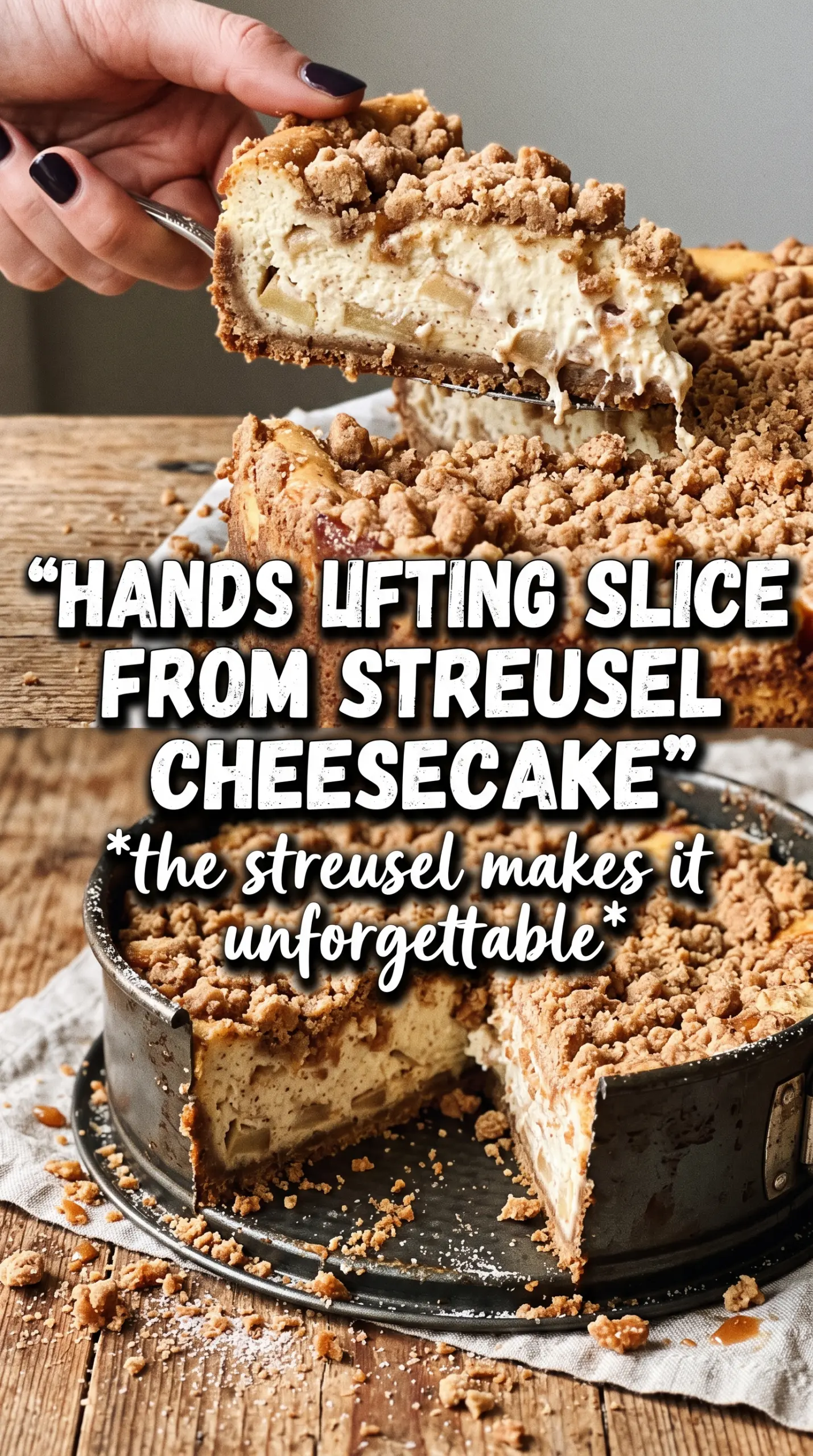
- Gingersnap crumbs — These bring spice and a firmer, more flavorful base than a plain graham crust. Store-bought crumbs are fine here, but the gingersnap flavor needs to be bold so it doesn’t get lost under the pumpkin.
- Cream cheese — Use full-fat blocks, not tub-style cream cheese. The block version gives you the dense, sliceable texture cheesecake needs, while softer packaged cream cheese can make the filling loose.
- Pumpkin puree — Use plain pumpkin puree, not pumpkin pie filling. Pie filling is already sweetened and spiced, which throws off both the texture and the balance of the cheesecake.
- Sour cream — This adds tang and keeps the filling from tasting one-note sweet. You can swap in full-fat Greek yogurt in a pinch, but sour cream gives a smoother, less tangy finish.
- Cold butter for the streusel — Cold cubes are what keep the topping crumbly. If the butter softens too much, the streusel turns into a paste and bakes into a flat layer instead of a crunchy crown.
Building the Layers So the Cheesecake Bakes Evenly
Pressing and Prebaking the Crust
Mix the gingersnap crumbs with sugar and melted butter until every crumb looks evenly coated, then press the mixture firmly into the bottom of a 9-inch springform pan. Bake it for 10 minutes so it sets before the filling goes in; that short bake keeps the crust from turning soggy under the pumpkin layer. Let it cool just long enough to stop steaming, but don’t let it sit so long that the pan goes cold if you’re moving straight into assembly.
Mixing the Filling Without Adding Air
Beat the cream cheese and sugar until completely smooth before adding the eggs. That’s the point where lumps disappear; once the eggs go in, you want to mix only until combined. Add the pumpkin, sour cream, spices, and vanilla last, and stop as soon as the batter looks uniform. If you whip too much air into it, the cheesecake puffs in the oven and sinks as it cools, which can lead to cracks.
Making a Streusel That Stays Crumbly
Cut the cold butter into the oats, flour, brown sugar, and cinnamon until the mixture looks like chunky damp sand with some larger nuggets. Those larger pieces are what bake into crisp bits on top. If the streusel starts to smear, the butter is warming too much; chill the bowl for a few minutes before finishing. Scatter it generously over the batter so you get an even topping, not a patchy one.
Baking and Cooling for Clean Slices
Bake until the center is just set and still has a slight wobble when you nudge the pan. The edges should look firm while the middle moves as one piece, not slosh. Pull it out, cool it slowly, then chill for the full 6 hours so the texture tightens up. If you cut it early, the slices will slump and the caramel will slide instead of sitting neatly on top.
How to Adapt This for Different Kitchens and Different Dessert Tables
Gluten-Free Crust and Streusel
Use certified gluten-free gingersnap crumbs and replace the flour in the streusel with a 1:1 gluten-free baking blend. The texture stays close to the original, though the topping may bake a touch more delicate, so let it cool fully before slicing.
Dairy-Free Version
Swap in dairy-free cream cheese and a thick coconut-based sour cream, then use plant butter for the crust and streusel. The cheesecake will be a little softer and the tang slightly different, but chilling it overnight helps it slice cleanly.
Less Sweet, More Spice
Reduce the sugar in the filling by 2 to 3 tablespoons and lean a little harder on the pumpkin pie spice and cinnamon. That version tastes less dessert-candy sweet and more like a spiced bakery cheesecake, especially if you keep the caramel drizzle light.
Storage and Reheating
- Refrigerator: Store covered for up to 5 days. The streusel softens a little after day one, but the flavor stays great.
- Freezer: Freezes well without the caramel. Wrap slices tightly and freeze for up to 2 months, then thaw in the fridge overnight.
- Reheating: This cheesecake is meant to be served cold or just slightly cool. If you want to take the chill off, let a slice sit at room temperature for 15 to 20 minutes; microwaving will soften the crust and melt the topping.
Questions I Get Asked About This Recipe
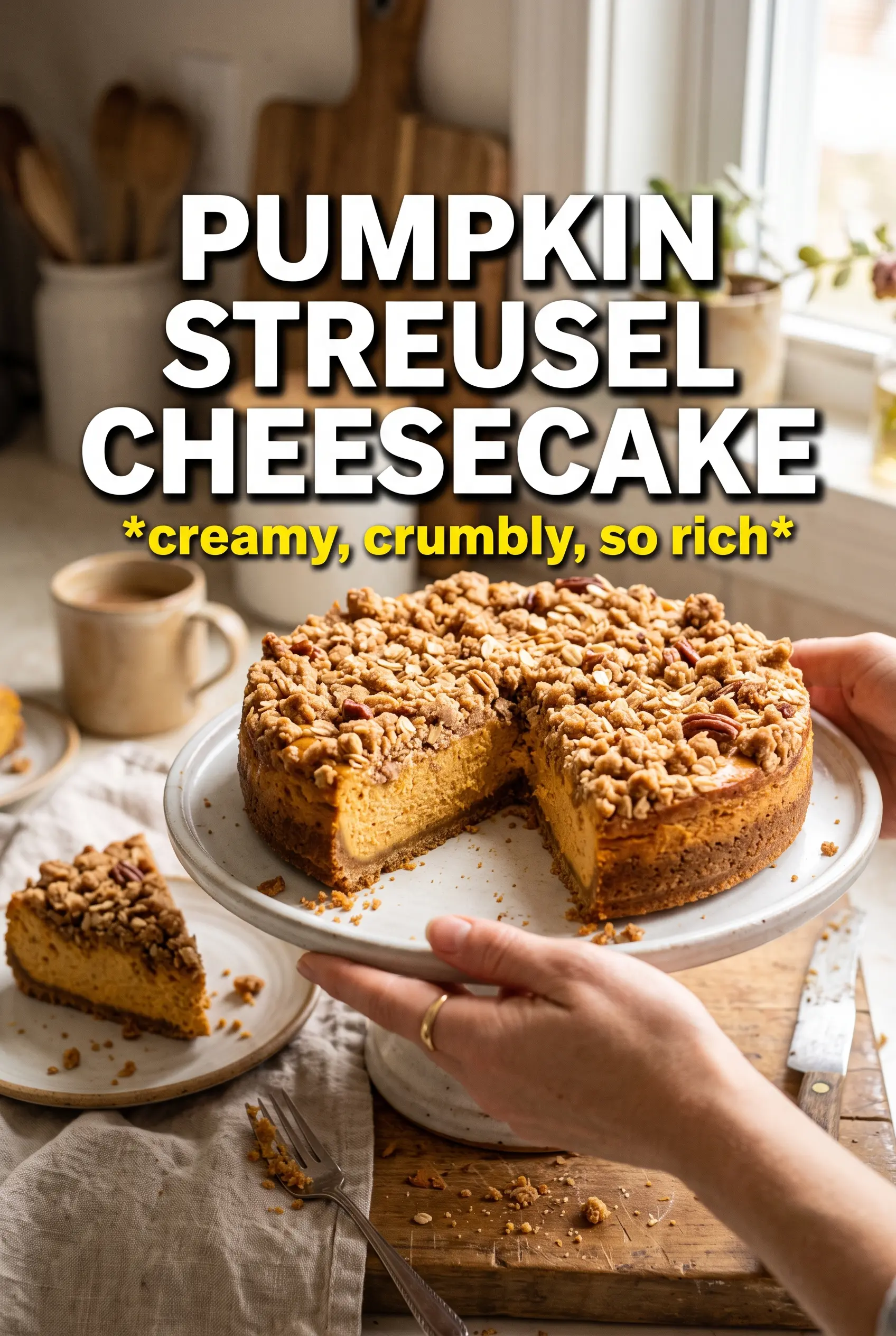
Pumpkin Streusel Cheesecake
Ingredients
Equipment
Method
- Preheat the oven to 325F. Press gingersnap crust mixture into a 9-inch springform pan and bake for 10 minutes, then set aside.
- Beat the cream cheese mixture smooth, then pour it over the baked crust. Aim for an even layer so the topping bakes consistently.
- Cut the cold butter into the oats, flour, brown sugar, and cinnamon until crumbly. The mixture should look sandy with small clumps.
- Scatter the streusel generously over the cheesecake. Cover the top evenly so the crown bakes golden.
- Bake the cheesecake in a water bath at 325F for 65-70 minutes until the center is just set. It should jiggle slightly like set custard, not slosh.
- Cool the cheesecake to room temperature, then refrigerate for 6 hours. Chilling firms up the filling for clean slices.
- Drizzle caramel sauce over the cheesecake slices before serving. Add it right before slicing for the best finish.