Pumpkindoodle cookies bake up with crackly tops, soft centers, and that cinnamon-sugar shell that shatters just a little when you bite in. They taste like a pumpkin cookie met a snickerdoodle in the best possible way: warm spice, buttery vanilla, and a tender crumb that stays thick instead of spreading thin and flat.
The trick is keeping the pumpkin puree almost startlingly dry. Pumpkin brings flavor and color, but it also brings water, and water is what turns a crinkly cookie into a puffy cakelet. Blotting it well lets the butter and sugar cream properly, which gives you those little ridges on top and the classic snickerdoodle-style crackle.
Below you’ll find the one prep step that matters most, the ingredient choices that make the texture work, and a few variations for baking these with different spice levels or dietary needs.
The pumpkin stayed chewy instead of cakey, and the cinnamon-sugar coating baked into the prettiest crinkles. I had three people ask for the recipe before the tray cooled.
Save these pumpkindoodle cookies for the batch that bakes up crinkly, cinnamon-sugared, and soft in the center every time.
The Pumpkin Has to Be Dry Enough to Act Like a Flavoring, Not a Liquid
Pumpkindoodle cookies fail in one predictable way: the pumpkin makes them puff instead of crinkle. Once there’s too much moisture in the dough, the cookies behave more like soft pumpkin drop cookies and lose that classic snickerdoodle spread-and-set edge. The fix happens before anything else touches the bowl. Blot the pumpkin puree until it looks almost pasty, and don’t stop after one paper towel pass.
Cream of tartar matters here because it gives these cookies their snickerdoodle tang and helps the sugar coating bake into that familiar crackly surface. Baking soda works with the acid in the cream of tartar, so the cookies rise just enough and then settle into those wrinkled tops. If you skip either one, you get a flatter cookie with less character and a softer, more generic pumpkin flavor.
What the Pumpkin, Spice, and Cream of Tartar Are Each Doing Here
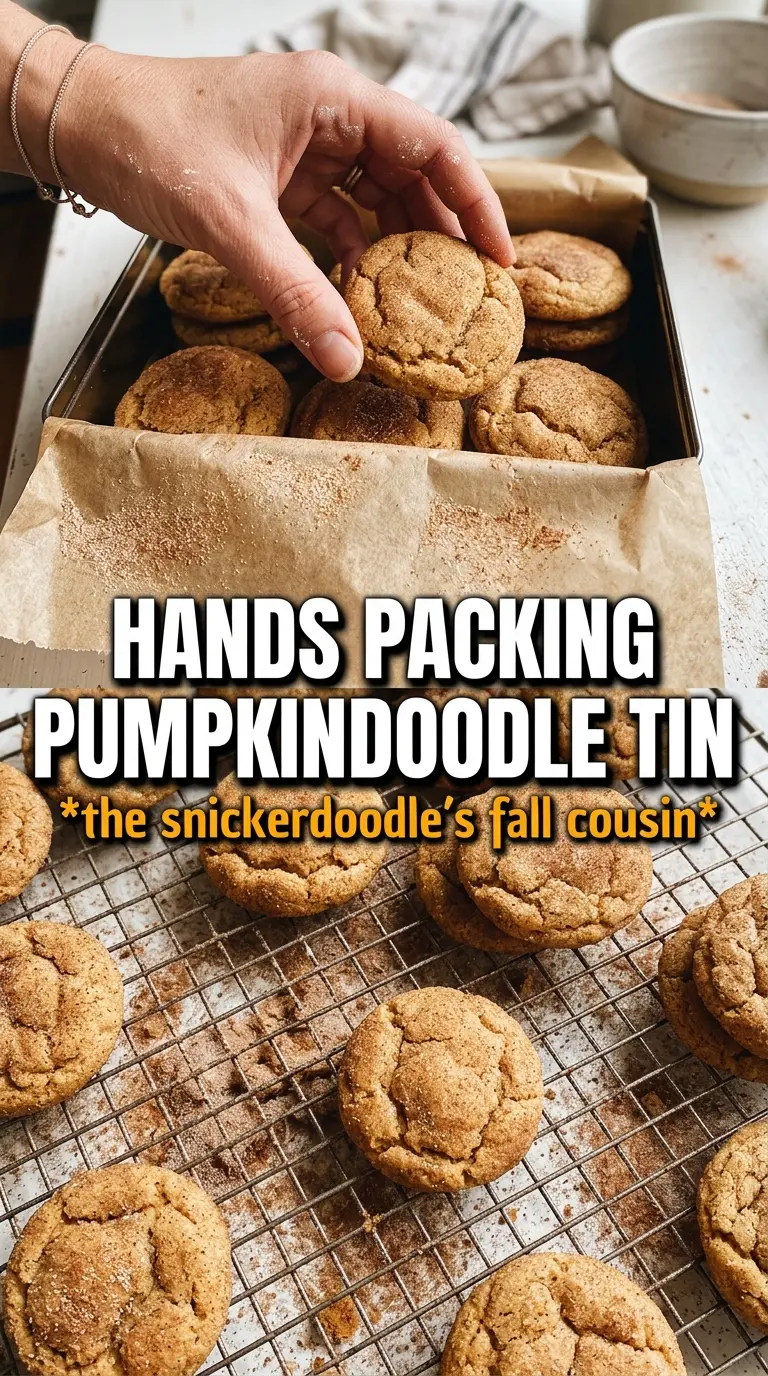
- Pumpkin puree — Use canned pumpkin puree, not pumpkin pie filling. The filling is already sweetened and spiced, which throws off both the texture and the flavor balance. Drying the puree is the real work here, and it’s what keeps the cookies chewy instead of cakey.
- Cream of tartar — This is the ingredient that makes the cookie taste like a snickerdoodle instead of a generic spice cookie. It also helps keep the texture tender and slightly tangy. There isn’t a perfect substitute if you want the classic result.
- Butter — Softened butter creams into the sugar and traps air, which helps the cookies rise and crinkle. Cold butter won’t whip properly, and melted butter will make the dough spread too much. You want it soft enough to leave a dent when pressed, not greasy or shiny.
- Pumpkin pie spice and cinnamon — Cinnamon drives the coating and gives the surface that familiar sweet-spiced finish, while pumpkin pie spice layers in clove and ginger notes. If you only have cinnamon, the cookies still work, but they lose some depth. A fresh spice blend makes the whole cookie smell bigger and warmer.
How to Get the Crinkle, the Coating, and the Center Right Together
Dry the Pumpkin First
Put the pumpkin puree between several layers of paper towels and press out as much moisture as you can. The goal is a dense, thick smear rather than a wet spoonful. If the puree still looks glossy and loose, keep blotting. This is the step that decides whether your cookies spread with cracks or puff into rounded domes.
Cream Until the Mixture Turns Pale
Beat the butter and sugar until the mixture looks fluffy and lighter in color. That air gives the cookies lift, and it also helps the cinnamon-sugar coating cling later. Add the blotted pumpkin, eggs, and vanilla after the butter and sugar have had time to do their job. If the mixture looks curdled, don’t panic; the flour will pull it back together.
Fold the Dry Ingredients Just Until Combined
Add the flour, cream of tartar, baking soda, cinnamon, pumpkin pie spice, nutmeg, and salt, then mix only until the flour disappears. Overmixing at this point builds toughness and dulls the soft center you want. The dough should be thick and scoopable, not sticky like batter. If it feels loose, the pumpkin probably needed more blotting.
Roll, Coat, and Bake Until the Tops Split
Scoop 1 1/2 tablespoon portions and roll them in the cinnamon-pumpkin sugar, coating every side. Bake at 375°F until the cookies are set at the edges and crinkled on top, usually 10 to 12 minutes. They should look a little underdone in the center when they come out. That carryover heat finishes them on the pan, and pulling them too late is how you lose the soft middle.
Make Them More or Less Spiced
If you want a stronger pumpkin spice presence, add another 1/2 teaspoon of pumpkin pie spice to the dough and a pinch more to the rolling sugar. The flavor gets warmer and more aromatic, but it also starts to move away from classic snickerdoodle territory. For a gentler version, lean harder on cinnamon and reduce the nutmeg slightly.
Gluten-Free Pumpkindoodle Cookies
A 1:1 gluten-free baking blend works here as long as it includes xanthan gum. The cookies may spread a touch less and the crumb will be a little more delicate, but the crinkle coating still works. Don’t use almond flour on its own; it won’t give you the same structure or the same chew.
Dairy-Free Version
Use a plant-based butter stick, not a soft tub spread. Stick-style substitutes hold enough fat to cream properly and give a better texture in the oven. The cookies will still crinkle, but the flavor is a little less rich and the edges brown a bit faster, so watch the last minute closely.
Storage and Reheating
- Refrigerator: Store in an airtight container for up to 5 days. The cinnamon sugar softens a little by day two, but the cookies stay chewy.
- Freezer: Freeze baked cookies for up to 2 months, or freeze the portioned dough balls and roll them in sugar just before baking. Dough freezes better than finished cookies because the coating stays crisp.
- Reheating: Warm baked cookies in a 300°F oven for 3 to 4 minutes. Microwaving makes the centers soft in a damp, sticky way instead of restoring the gentle chew.
Answers to the Questions Worth Asking
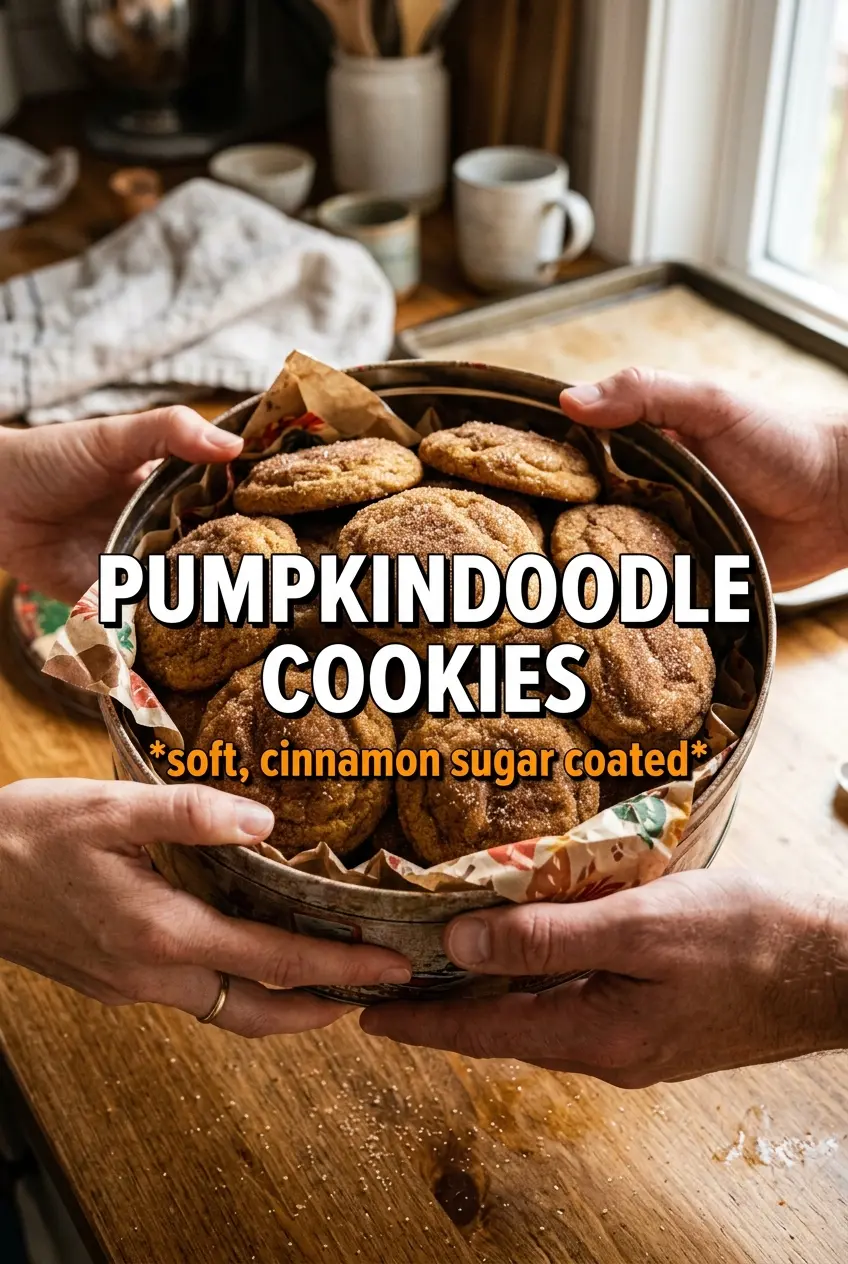
Pumpkindoodle Cookies
Ingredients
Equipment
Method
- Blot the pumpkin puree between many layers of paper towels until very dry; the drier the better for crinkle.
- Preheat the oven to 375F and line baking sheets.
- Beat the softened butter and granulated sugar until very light.
- Add the blotted pumpkin puree, then mix in the eggs and vanilla.
- Fold in the all-purpose flour, cream of tartar, baking soda, cinnamon, pumpkin pie spice, nutmeg, and salt until combined.
- Stir together the cinnamon pumpkin sugar for rolling: 1/3 cup sugar, 2 teaspoons cinnamon, and 1/2 teaspoon pumpkin pie spice.
- Roll 1-1/2 tablespoon balls in the cinnamon pumpkin sugar so they’re evenly coated.
- Bake for 10-12 minutes, until the cookies are crinkled.
- Cool the cookies for 5 minutes on the pan before transferring to serve or store.