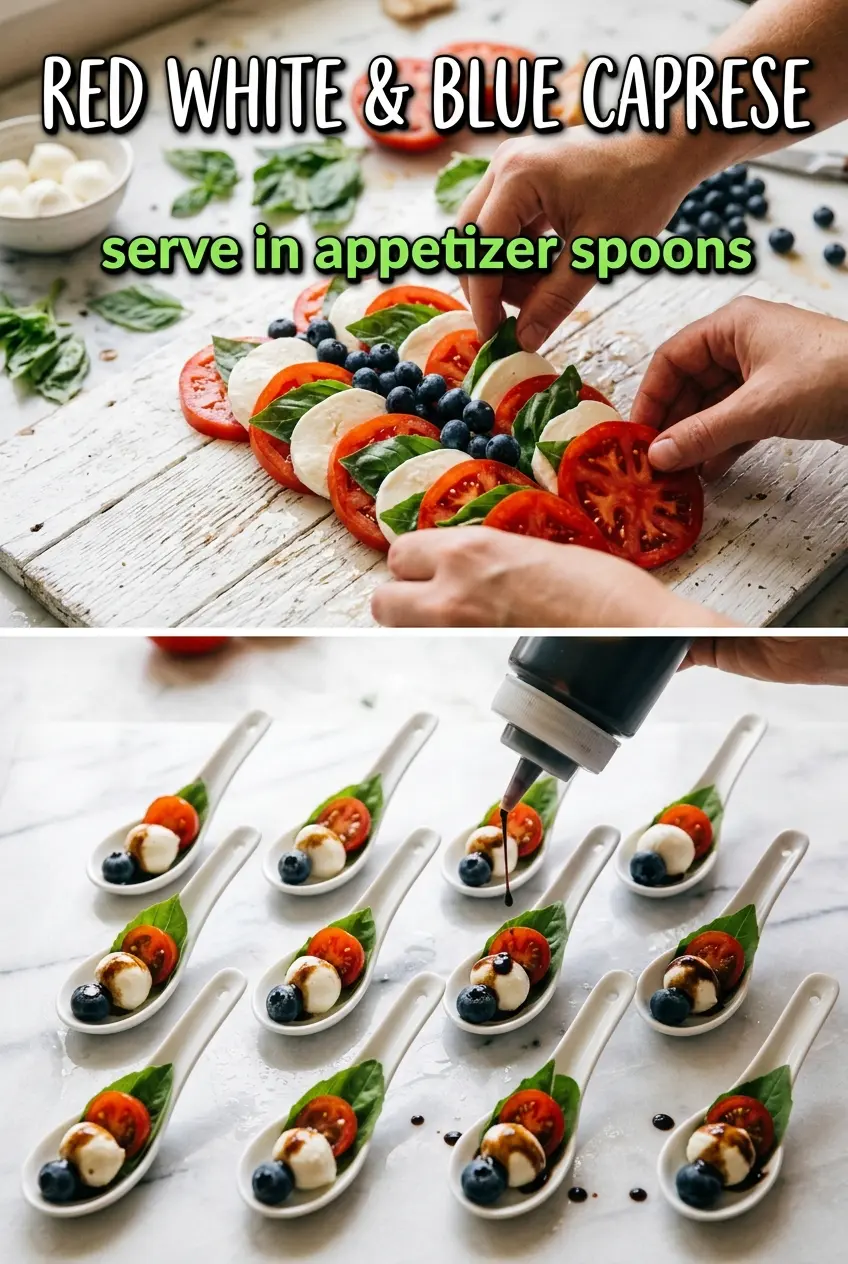
Alternating slices of tomato and fresh mozzarella turn into something much more striking when they’re arranged as a wreath and finished with blueberries, basil, and a thin ribbon of balsamic glaze. The result is cool, juicy, and clean on the plate, with enough contrast to feel special without asking you to cook a thing. It’s the kind of salad that disappears fast because every bite lands with salt, creaminess, and a little sweet pop from the berries.
What makes this version work is the balance of texture and moisture. Heirloom or beefsteak tomatoes give you broad slices that hold their shape, while fresh mozzarella stays tender instead of watery. The blueberries sound unusual at first, but they bridge the red-and-blue color story and add a bright, fresh note that plays well with basil and balsamic glaze.
Below, I’ve included the small details that matter most: how to keep the platter from looking flat, when to season so the tomatoes don’t puddle, and a few easy swaps if you need to work with what’s in the fridge.
I made this for our block party and it held its shape for almost an hour on the table. The blueberries were the surprise hit, and the balsamic glaze kept the whole salad from tasting flat.
Love the red, white, and blue wreath look? Save this blueberry Caprese salad for a no-cook appetizer that still feels festive and fresh.
Why the Wreath Pattern Keeps This Salad from Looking Crowded
The trick here isn’t the ingredients themselves. It’s giving each one enough space to read clearly on the platter. When tomato and mozzarella overlap in a ring instead of sitting in a heap, the salad feels composed, and the blueberries can tuck into the gaps instead of rolling everywhere.
The other detail that matters is thickness. Slice the tomatoes and mozzarella about 1/4-inch thick so they’re sturdy enough to stand up to the dressing and still soft enough to cut easily with a fork. If the slices are too thin, the tomatoes slump and release too much juice; too thick, and the salad starts eating like a cheese board instead of a Caprese.
- Tomatoes — Heirloom or beefsteak tomatoes work best because their broad slices create the wreath shape cleanly. Roma tomatoes are smaller and firmer, but they won’t give you the same dramatic look or the same juicy bite.
- Fresh mozzarella — Use the best fresh mozzarella you can find. The milky, soft texture is what makes the salad feel balanced against the fruit and tomatoes. Pre-shredded or low-moisture mozzarella won’t melt into the right bite here.
- Blueberries — They’re not just for color. The berries add a cool, sweet contrast that keeps the salad from tasting like a standard Caprese. Use firm, dry berries and pat them off if they’ve been rinsed, or the extra moisture will slide onto the platter.
- Balsamic glaze — Glaze clings to the salad in a way plain vinegar won’t. If all you have is balsamic vinegar, reduce it first or use it sparingly; thin vinegar runs off the cheese and leaves the plate muddy.
What Each Ingredient Is Actually Doing in This Recipe
- Primary ingredient (the star) — Quality matters most. Choose the best you can find.
- Cooking medium (oil, butter, or broth) — This carries flavors and prevents dryness.
- Seasonings (salt, pepper, spices, herbs) — Layer flavors so nothing overpowers. Build depth gradually.
- Aromatics (garlic, onion, herbs) — Cook with fat to bloom flavors. Become the foundation.
- Supporting ingredients — Complement the main ingredient without overpowering it.
- Sauce or liquid (if applicable) — Brings flavors together. Balance richness with acid.
- Acid (lemon, vinegar, wine, or other) — Brightens and prevents flat-tasting results.
- Final finish (garnish, glaze, or sauce) — Prevents one-dimensional taste and adds visual appeal.
Building the Salad So the Juice Stays Where It Belongs
Lay Down the Tomato and Mozzarella Ring First
Start by alternating tomato and mozzarella slices around the outer edge of a large platter, overlapping them slightly like shingles. That overlap matters because it helps the wreath hold together and keeps the slices from sliding once you add oil and glaze. If the platter is too small, the circle collapses inward, so use a wide one even if it looks oversized at first.
Fill the Gaps with Blueberries and Basil
Once the ring is set, tuck blueberries into the spaces between the slices and scatter a few more around the center. Basil should look loose and fresh, not packed down, so tear the biggest leaves if they’re covering the tomatoes too much. The goal is a full-looking platter with visible color in every section, not a pile that hides the structure underneath.
Finish with Oil, Glaze, and Salt at the Last Minute
Drizzle the olive oil and balsamic glaze evenly over the top right before serving. Salt draws moisture out of tomatoes fast, so finishing too early gives you a puddle on the platter and dulls the clean edges you worked to build. A final pinch of flaky salt and cracked black pepper is enough to wake everything up without drowning the fresh flavors.
How to Adapt This Red, White & Blue Caprese for the Table You’re Actually Serving
Make it dairy-free with avocado
Swap the mozzarella for thick avocado slices if you need a dairy-free option. You lose the milky, creamy bite of fresh cheese, but you gain a richer, softer texture that still looks beautiful in the wreath pattern. Add the avocado just before serving so it stays bright.
Use mini mozzarella balls for a looser platter
If you can’t get a large ball of fresh mozzarella, use ciliegine or bocconcini cut in half. The salad won’t have the same broad, dramatic slices, but it will still taste right and come together quickly. Keep the blueberry placement a little tighter so the smaller cheese pieces don’t look sparse.
Turn it into a lunch salad with greens
Serve the tomatoes, mozzarella, blueberries, and basil over a bed of arugula if you want something more substantial. The peppery greens sharpen the sweetness of the berries and make the olive oil feel a little less rich. Toss the greens lightly with a bit of olive oil and salt first so the platter doesn’t taste dry underneath.
What to do if you’re serving it ahead
Assemble the tomatoes, mozzarella, blueberries, and basil without the oil, glaze, salt, or pepper up to 1 hour ahead, then cover loosely and chill. Add the finishing seasonings right before the platter goes out, or the tomatoes will start weeping and the basil will darken. This salad is at its best fresh, not after a long rest.
Questions I Get Asked About This Recipe
Red, White & Blue Caprese Salad
Ingredients
Method
- Arrange alternating slices of tomato and mozzarella in an overlapping circle or wreath pattern on a large serving platter, keeping the rounds even for a clean edge.
- Tuck fresh blueberries between and around the slices to fill gaps and create the blue element in the wreath shape, distributing them so every segment has some berries.
- Scatter fresh basil leaves throughout the wreath and tuck a few between tomato and mozzarella to anchor the green accents.
- Drizzle extra virgin olive oil evenly across the whole platter to lightly coat the tomato, mozzarella, and blueberries without pooling.
- Drizzle balsamic glaze in a light, even layer over the entire wreath, aiming for a glossy red streak effect across the top.
- Finish with flaky sea salt and cracked black pepper to taste, then serve immediately so the mozzarella stays fresh-looking and the tomatoes remain crisp.