Red, white, and blue fruit kabobs win every time because they look festive without any extra effort and they eat like a snack people actually want. The mix is clean and crisp, the marshmallows give each bite a soft sweet pause, and the strawberries and blueberries keep the whole thing fresh instead of heavy. On a party table, they disappear fast.
The trick is keeping the fruit dry and the pattern consistent. Dry berries grip the skewer better, stay brighter, and don’t make the marshmallows sticky before serving. I like halving bigger strawberries so every kabob eats evenly and the color balance stays tight from end to end. If the berries are wet or the marshmallows are too small, the skewers can slip around and the whole thing looks sloppy instead of sharp.
Below, you’ll find the small details that make these patriotic fruit skewers hold up for a crowd, plus a few easy swaps if you want to change the fruit or prep them a little ahead of time.
I made these for our neighborhood cookout, and the strawberries stayed neat on the skewers instead of sliding around. The marshmallows softened just enough to make them fun to eat, and the platter was empty before the burgers came off the grill.
Love these red, white, and blue fruit kabobs? Save them to Pinterest for your next patriotic party or easy summer dessert table.
The Small Thing That Keeps These Kabobs Looking Clean
Most fruit skewers start looking messy the moment the berries get wet. That’s the part people miss. Moisture makes the marshmallows tacky, dulls the berries, and turns a neat pattern into a slippery pile before the tray ever reaches the table. Washing the fruit ahead of time is fine, but let everything dry completely before threading. A paper towel lined tray works better than a bowl because the fruit isn’t sitting in its own condensation.
The other detail that matters is size. Strawberries that are too large throw off the rhythm of the kabob, while blueberries that are too soft split when you push the skewer through them. Halving oversized strawberries gives you a better-looking skewer and a better bite. If your marshmallows are extra large, they help anchor the pattern and give the kabob a little more body between the fruit.
What Each Ingredient Is Actually Doing in This Recipe
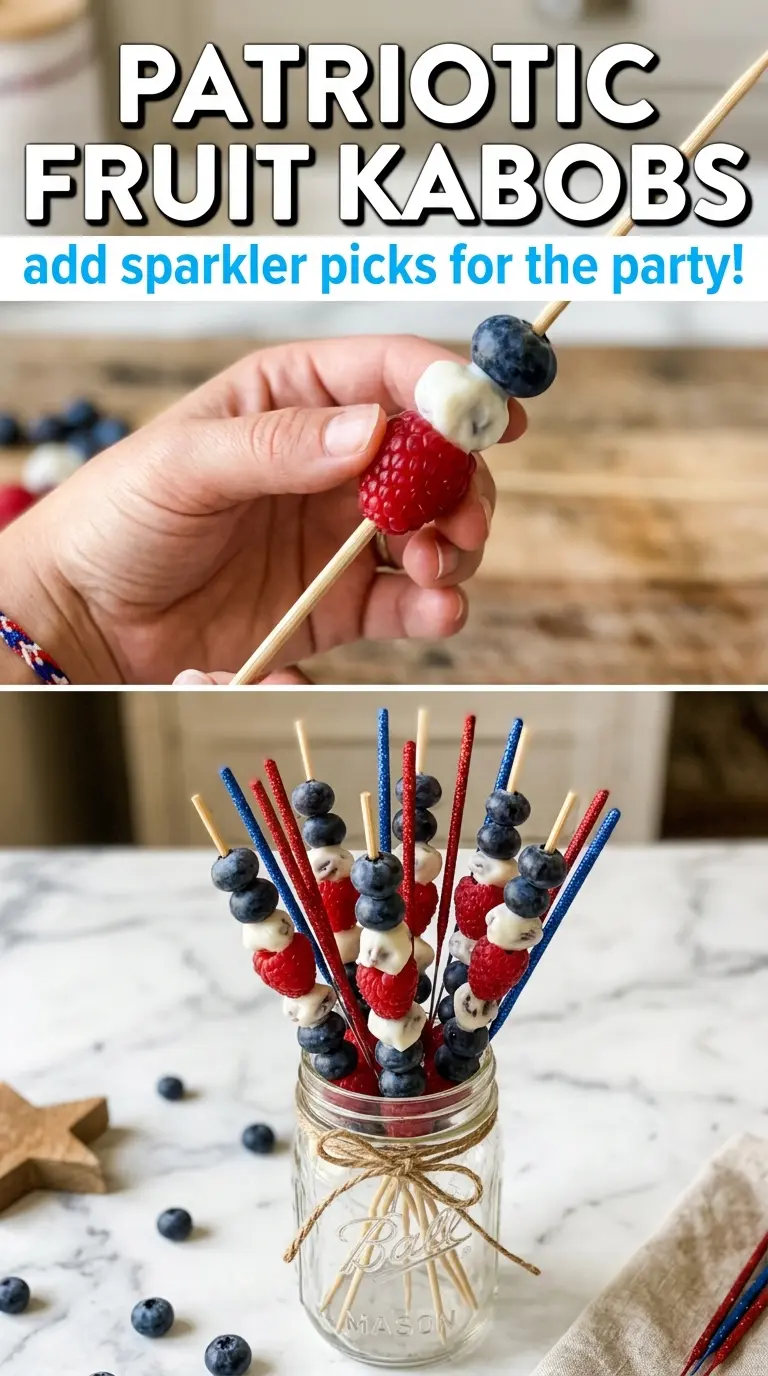
- Primary ingredient (the star) — Quality matters most. Choose the best you can find.
- Cooking medium (oil, butter, or broth) — This carries flavors and prevents dryness.
- Seasonings (salt, pepper, spices, herbs) — Layer flavors so nothing overpowers. Build depth gradually.
- Aromatics (garlic, onion, herbs) — Cook with fat to bloom flavors. Become the foundation.
- Supporting ingredients — Complement the main ingredient without overpowering it.
- Sauce or liquid (if applicable) — Brings flavors together. Balance richness with acid.
- Acid (lemon, vinegar, wine, or other) — Brightens and prevents flat-tasting results.
- Final finish (garnish, glaze, or sauce) — Prevents one-dimensional taste and adds visual appeal.
Why Each Ingredient Earns Its Place
The recipe is simple, but each piece has a job. The strawberries bring the red color and a juicy bite that feels like actual food, not just a decoration on a stick. Blueberries keep the shape tight and give you a little burst of tartness between the sweeter pieces. Marshmallows soften the fruit sharpness and make the kabobs feel playful enough for kids and adults alike.
- Strawberries — Use ripe but firm berries. Soft berries slide and split more easily, especially if you’re threading them onto thinner bamboo picks. If the berries are large, halve them so the skewers stay balanced.
- Blueberries — Fresh, firm blueberries work best because they hold their shape and give the most reliable color contrast. Very soft blueberries can burst when skewered, so pick through the carton and save the best ones for the platter.
- Large marshmallows or white grapes — Marshmallows give you the classic patriotic look and a sweeter, kid-friendly bite. White grapes are the better swap if you want a fresher, less sugary kabob that still keeps the color pattern intact. Grapes should be dry and seedless.
- Wooden skewers or bamboo picks — Use sturdy skewers with a pointed end so the fruit threads cleanly. Short picks work for appetizers, while longer skewers make the repeating red-white-blue pattern easier to build and more dramatic on a platter.
Building the Pattern So the Skewers Hold Together
Start with the firmest fruit first
Thread the blueberries and marshmallows with gentle pressure, then follow with the strawberry piece. The skewer should slide through without cracking the fruit or tearing the marshmallow apart. If you feel resistance, back the skewer out and enter from a slightly different angle instead of forcing it through the center. For halved strawberries, pierce through the cut side for the steadiest fit.
Keep the order consistent from end to end
Use the same repeating pattern on every skewer: blueberry, marshmallow, strawberry. That repetition is what gives the platter its clean, flag-like look. If one skewer gets extra fruit or a different order, the whole tray starts to look uneven. Stop before the skewer gets crowded; leaving a little space between pieces helps the colors read clearly.
Chill only until serving time
Once the kabobs are assembled, line them up on a tray and refrigerate them just until guests are ready to eat. They hold best for about two hours. Longer than that, the marshmallows can dry out a bit and the berries can sweat, especially if the platter comes out of the fridge and sits in a warm room.
How to Adapt These Patriotic Fruit Skewers for Different Crowds
Use white grapes instead of marshmallows
This is the best swap if you want a fresher appetizer or a less sugary snack. Grapes keep the white color and add a crisp bite, but they won’t give you the soft, candy-like contrast that marshmallows do. Pat them dry first so the skewers don’t slip.
Make them fully dairy-free and gluten-free by keeping the fruit-only version
The fruit-only version is naturally dairy-free and gluten-free, as long as you use plain fruit and standard bamboo picks. If you’re serving guests with dietary restrictions, grapes instead of marshmallows keeps the same red-white-blue look with fewer questions at the table.
Add banana slices for a softer dessert-style skewer
Banana slices fit between the berries if you want a fuller, more dessert-like kabob, but they brown quickly and should be assembled right before serving. They make the skewers softer and a little sweeter, which works well on a dessert tray but not as well if you need them to sit out.
Storage and Serving Window
- Refrigerator: Assemble up to 2 hours ahead. After that, the fruit starts to release moisture and the marshmallows lose their clean texture.
- Freezer: Don’t freeze these. The fruit turns watery and the marshmallows become sticky and odd once thawed.
- Reheating: Not applicable. Serve chilled straight from the fridge, and let the tray sit at room temperature for only a few minutes before serving so the berries aren’t icy.
Questions I Get Asked About This Recipe
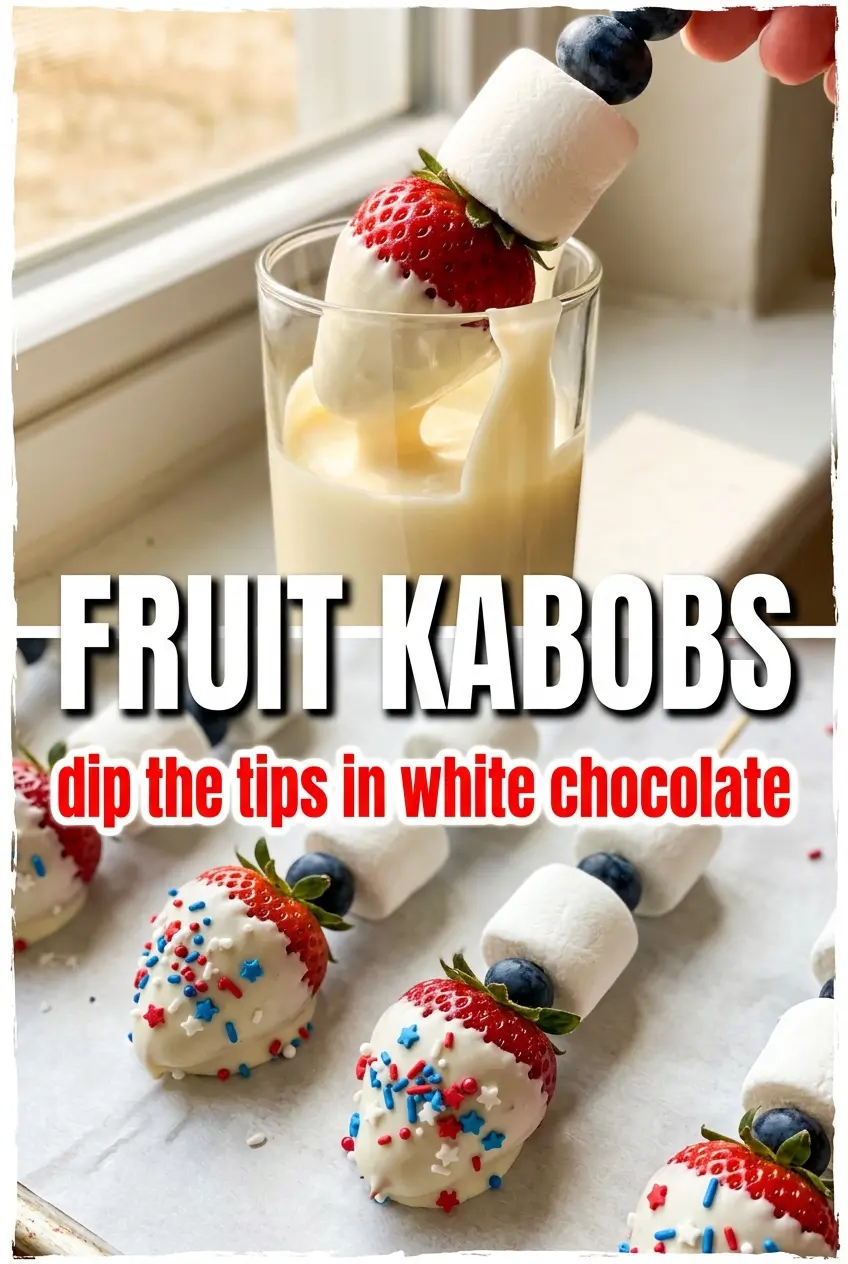
Red, White & Blue Fruit Kabobs
Ingredients
Method
- Wash and prep all fruit; hull the strawberries and leave the blueberries whole.
- Pat the berries dry so the marshmallows stay clean and the kabobs look crisp.
- Thread each skewer in a repeating pattern of 1 blueberry, 1 marshmallow, 1 strawberry—repeat 2–3 times per skewer depending on skewer length, keeping the sequence consistent.
- Line the completed skewers on a serving platter or tray so they sit in a tidy row.
- Refrigerate until ready to serve, up to 2 hours ahead, and keep the kabobs covered if possible to prevent drying.
- Serve chilled as a grab-and-go party appetizer or dessert.