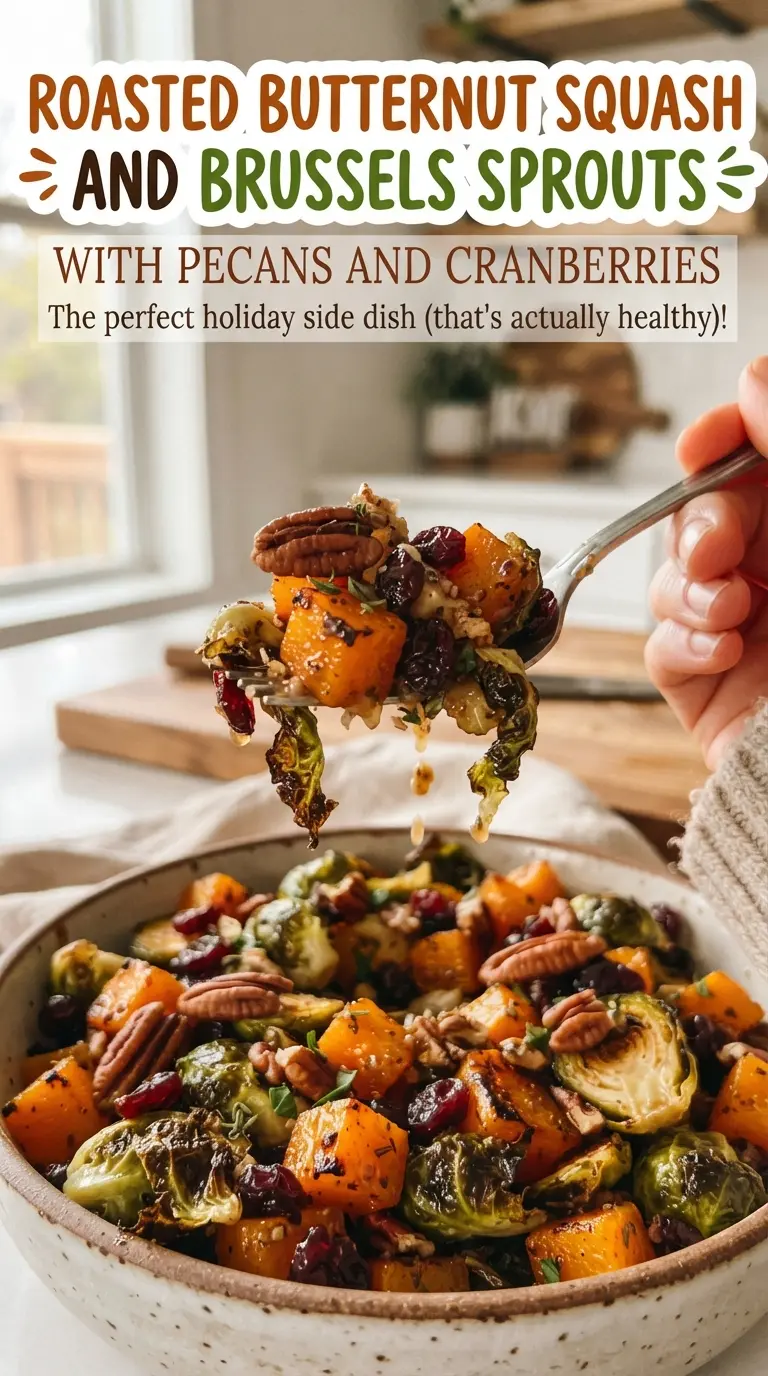
Roasted butternut squash and Brussels sprouts get a lot better when the edges have time to caramelize and the finishing touches bring a little contrast. The squash turns soft and sweet, the sprouts pick up crisp, browned leaves, and the cranberries and pecans keep every bite from feeling one-note. That mix of tender, toasty, tart, and crunchy is what makes this side dish disappear fast.
The trick is heat and space. A hot oven and a crowded sheet pan are not the same thing, and this recipe depends on enough room for the vegetables to roast instead of steam. The maple-balsamic drizzle goes on at the end, so it clings to the vegetables without making them soggy, and the pecans stay crisp instead of going soft in the oven.
Below, you’ll find the small details that matter most: how to cut the squash so it cooks evenly with the sprouts, when to toss for the best browning, and what to change if you need to make it dairy-free, nut-free, or ahead for a holiday table.
The squash browned beautifully and the sprouts stayed crisp at the edges instead of getting mushy. That little maple-balsamic toss at the end pulled everything together without making the pecans soft.
Save this roasted butternut squash and Brussels sprouts with pecans and cranberries for a caramelized side that brings sweet, tart, and crunchy all in one pan.
The Reason These Vegetables Brown Instead of Steam
Roasting works here because both vegetables need direct heat and enough surface area to brown. If the pan is crowded, the squash and Brussels sprouts release moisture, and the whole tray turns soft before it ever develops those browned edges you want. A 425°F oven gives you enough intensity to caramelize the squash while crisping the cut sides of the sprouts.
Cut matters too. Keep the squash pieces close to the same size as the Brussels sprouts so they finish at the same time. If the squash chunks are too large, the sprouts burn before the squash turns tender; if they’re too small, the squash collapses before it can pick up color.
- High heat — It pushes moisture off the vegetables fast, which is what creates browning.
- One large sheet pan — Use it, but don’t overload it. Space is part of the recipe.
- Tossing halfway — This exposes new surfaces to the pan and keeps the roasting even.
What Each Ingredient Is Actually Doing in This Recipe
- Primary ingredient (the star) — Quality matters most. Choose the best you can find.
- Cooking medium (oil, butter, or broth) — This carries flavors and prevents dryness.
- Seasonings (salt, pepper, spices, herbs) — Layer flavors so nothing overpowers. Build depth gradually.
- Aromatics (garlic, onion, herbs) — Cook with fat to bloom flavors. Become the foundation.
- Supporting ingredients — Complement the main ingredient without overpowering it.
- Sauce or liquid (if applicable) — Brings flavors together. Balance richness with acid.
- Acid (lemon, vinegar, wine, or other) — Brightens and prevents flat-tasting results.
- Final finish (garnish, glaze, or sauce) — Prevents one-dimensional taste and adds visual appeal.
What the Maple, Balsamic, and Toasted Nuts Are Doing Here
- Butternut squash — It brings the sweet, soft base. Fresh squash is worth the effort here because pre-cubed squash often cooks unevenly and can dry out at the edges before it softens in the center.
- Brussels sprouts — Halved sprouts give you the best combination of tender centers and browned cut faces. Trim off any tough ends, but don’t peel away too many outer leaves; those loose bits crisp up beautifully in the oven.
- Maple syrup — This is the gloss and the gentle sweetness. It’s worth using real maple syrup, not pancake syrup, because the flavor stays cleaner and less cloying.
- Balsamic vinegar — It cuts through the sweetness and wakes up the whole tray. If yours is especially sharp, use a little less and taste after tossing.
- Pecans — Toasted pecans bring the crunch that makes this feel finished. If you skip toasting, they still work, but they won’t taste as deep or nutty.
- Dried cranberries — Add them at the end so they stay plump. Heat can toughen them and mute the tart pop that balances the dish.
Roasting First, Drizzling Last
Seasoning the Pan
Toss the squash and Brussels sprouts with olive oil, salt, and pepper until every cut surface has a light coating. The oil helps the vegetables brown instead of sticking, and the salt pulls just enough moisture to season them from the outside in. If the vegetables look dry and patchy on the pan, add a little more oil before they go into the oven.
Getting the Caramelization
Spread everything in a single layer and roast for 25 to 30 minutes, tossing once halfway through. You’re looking for deeply browned edges on the sprouts and squash that can be pierced easily with a fork but still hold their shape. If the vegetables are pale when the timer goes off, give them a few more minutes; soft but uncolored vegetables taste flat.
Finishing With Contrast
Whisk the maple syrup and balsamic vinegar together, then toss it with the hot vegetables, cranberries, and pecans right before serving. Doing this at the end keeps the pecans crisp and lets the glaze cling without soaking in. If you add the cranberries too early, they’ll get chewy instead of staying pleasantly soft.
Make It Dairy-Free and Naturally Vegetarian
This recipe already fits a vegetarian table, and it’s naturally dairy-free as written. That makes it easy to serve alongside a holiday roast or as a main addition to a grain bowl. If you want a little richness without dairy, finish with an extra drizzle of olive oil right before serving.
Make It Nut-Free
Skip the pecans and use roasted pumpkin seeds or sunflower seeds instead. You’ll still get crunch, but the flavor will be a little earthier and less buttery. Toast the seeds first if they’re raw so they stand up to the maple-balsamic finish.
Use Sweet Potatoes Instead of Butternut Squash
Sweet potatoes work well if that’s what you have, but they brown a little differently and can get softer faster. Cut them into the same size pieces as the sprouts and watch the pan near the end so they don’t collapse. The result is a touch denser and sweeter than the squash version.
Storage and Reheating
- Refrigerator: Store leftovers in an airtight container for up to 4 days. The sprouts soften a bit, but the flavor stays good.
- Freezer: It freezes, but the texture of the squash and sprouts will soften after thawing. Freeze only if you’re fine with a more tender, less crisp result.
- Reheating: Warm on a sheet pan in a 400°F oven until heated through and the edges start to crisp again. The microwave works in a pinch, but it makes the pecans soft and the vegetables more watery.
Questions I Get Asked About This Dish
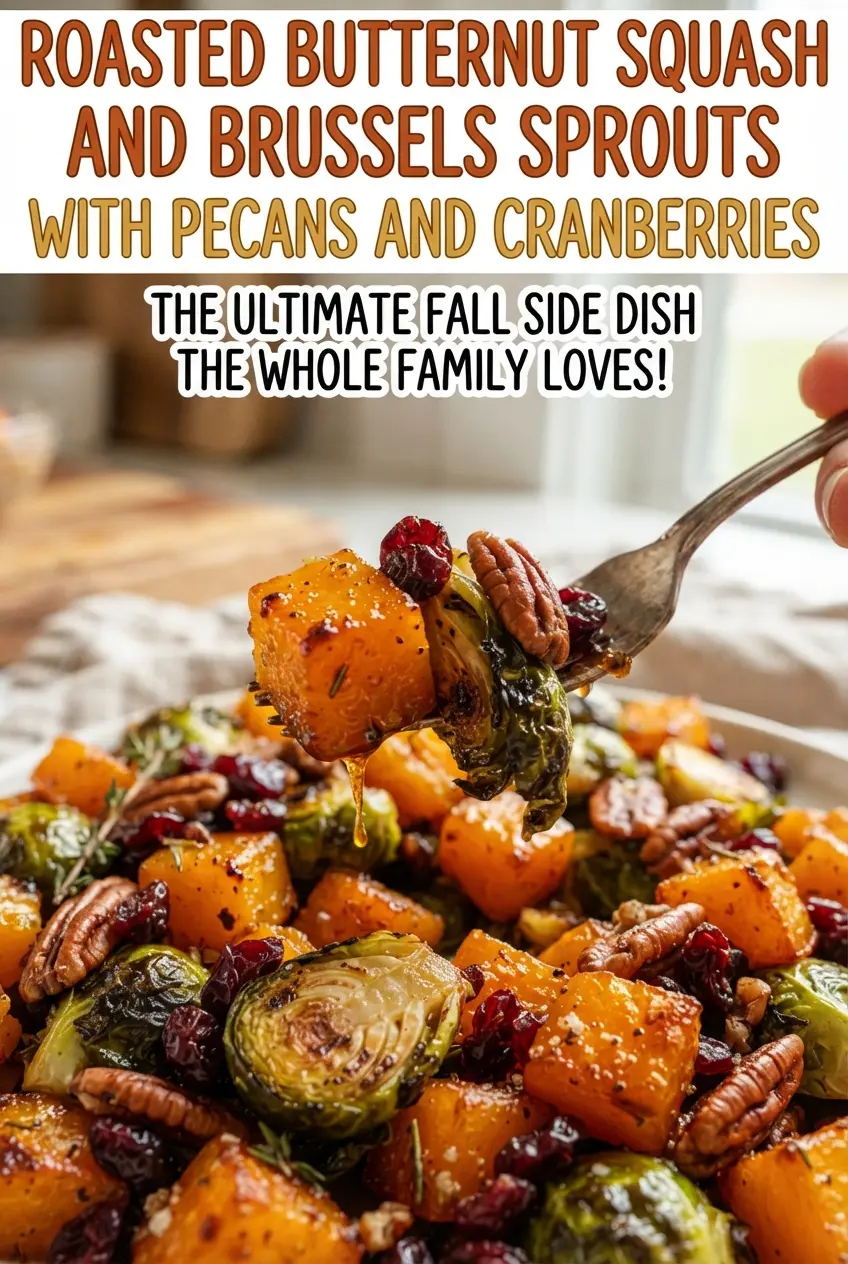
Roasted Butternut Squash and Brussels Sprouts with Pecans and Cranberries
Ingredients
Equipment
Method
- Preheat the oven to 425F so it’s hot and ready for caramelization. A quick preheat cue: the oven should be fully to temperature before the pan goes in.
- Toss the butternut squash and Brussels sprouts with olive oil, salt, and black pepper on a large sheet pan. Mix until the vegetables look evenly coated and the seasoning is clinging to every surface.
- Roast for 25-30 minutes, tossing halfway, until tender and caramelized. Look for browned edges on the squash and crisped, browned sprouts.
- Whisk maple syrup and balsamic vinegar until smooth and glossy. The mixture should look uniform with no syrup streaks.
- Toss the roasted vegetables with the maple balsamic, dried cranberries, and toasted pecans, then serve warm. The glaze should lightly coat everything, with cranberries and pecans visibly scattered throughout.