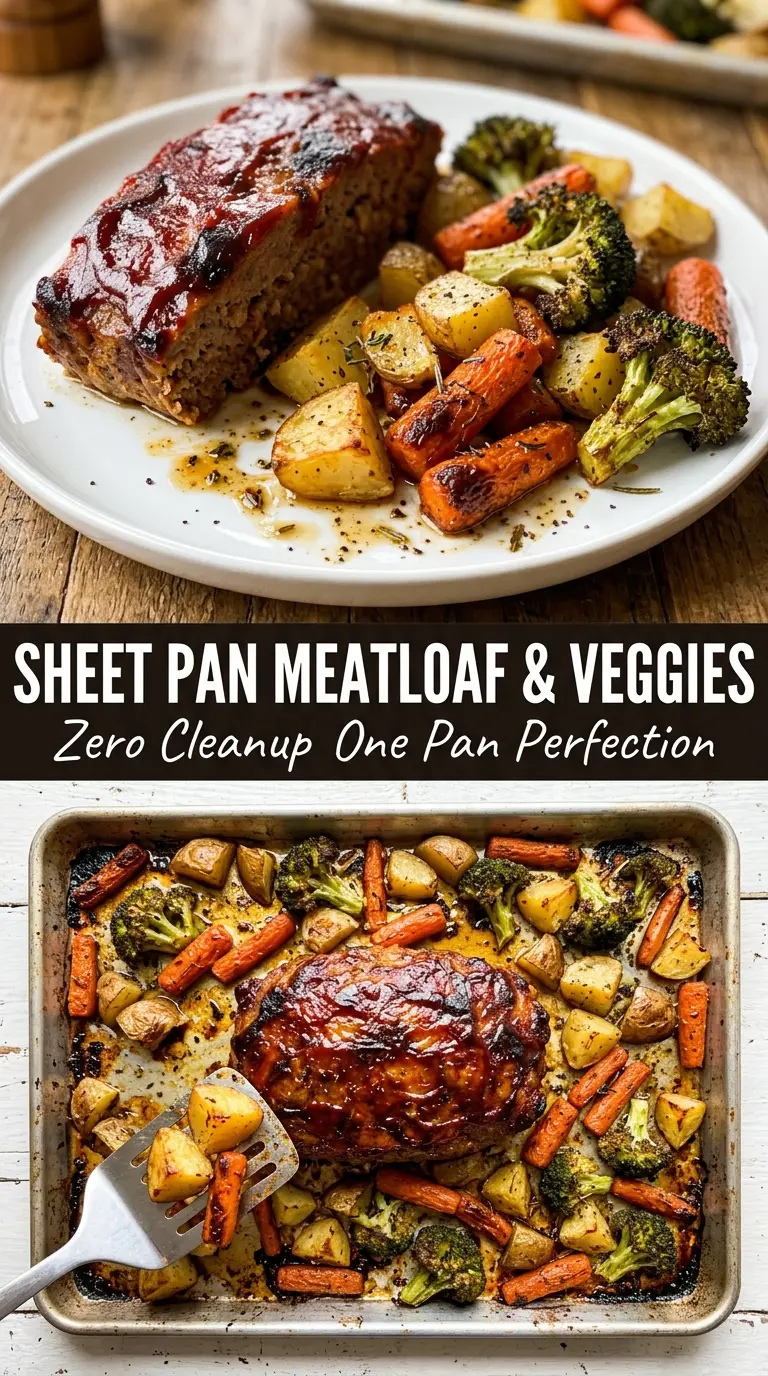
Sheet pan meatloaf gives you the comfort of the classic loaf without waiting nearly as long for the center to cook through. The flatter shape means more of that savory, ketchup-glazed surface gets caramelized, and the vegetables pick up the drippings as they roast alongside. You end up with a pan that feels like a full dinner, not just the meat portion of one.
The trick is spreading the meat mixture into a compact rectangle about an inch thick, not a mound. That shape is what keeps the cook time tight and gives you better browning across the top and edges. Grated onion and milk keep the loaf tender, while breadcrumbs and eggs hold it together without turning dense. The glaze goes on before baking so it can set into a sticky, glossy layer instead of sitting on top like sauce.
Below, I’ve included the small details that matter most: how to keep the meatloaf from drying out, when to add the vegetables so they finish at the same time, and a few easy swaps if you want to change up the pan without losing that fast-cooking, one-pan payoff.
The meatloaf stayed juicy, and the glaze baked into a sticky top instead of sliding off. I also loved that the potatoes and carrots picked up all the flavor from the pan.
Save this sheet pan meatloaf for the nights when you want a faster loaf, caramelized vegetables, and less cleanup.
The Flat Shape Is What Keeps This Meatloaf Fast
Traditional meatloaf takes its time because the center is thick and insulated. This version cooks faster because the mixture is pressed into a wide rectangle, which gives heat more surface area to work with and lets the middle reach temperature without drying out the edges. That’s the whole advantage here: faster bake time, better browning, and a cleaner slice.
The biggest mistake is packing the meat too tightly or making the loaf too tall. Both slow the bake and can leave you with a dense, pale center. Keep the thickness close to 1 inch, and shape it with your hands just enough to hold together. If you want the top to glaze and caramelize, don’t cover the meatloaf or tent it while it bakes. It needs direct oven heat.
- Ground beef — Use an 80/20 blend if you can. Leaner beef can work, but the loaf won’t stay as juicy, especially since the shape is flatter and exposes more surface.
- Breadcrumbs — These absorb moisture and keep the texture tender. Plain or seasoned both work; plain gives you more control over the seasoning.
- Grated onion — This melts into the mixture and adds moisture without leaving harsh bits. If you only have finely minced onion, cook it for a minute or two first so it softens.
- Worcestershire sauce — This is the built-in depth. There isn’t a perfect substitute for its savory tang, but soy sauce plus a splash of vinegar will get you close.
What Each Ingredient Is Actually Doing in This Recipe
- Primary ingredient (the star) — Quality matters most. Choose the best you can find.
- Cooking medium (oil, butter, or broth) — This carries flavors and prevents dryness.
- Seasonings (salt, pepper, spices, herbs) — Layer flavors so nothing overpowers. Build depth gradually.
- Aromatics (garlic, onion, herbs) — Cook with fat to bloom flavors. Become the foundation.
- Supporting ingredients — Complement the main ingredient without overpowering it.
- Sauce or liquid (if applicable) — Brings flavors together. Balance richness with acid.
- Acid (lemon, vinegar, wine, or other) — Brightens and prevents flat-tasting results.
- Final finish (garnish, glaze, or sauce) — Prevents one-dimensional taste and adds visual appeal.
Building the Pan So the Meatloaf and Vegetables Finish Together
Mixing the Meat Without Overworking It
Combine the meatloaf ingredients just until everything looks evenly distributed. If you keep mixing after that, the meat tightens up and the finished loaf feels springy instead of tender. The mixture should hold its shape when pressed, but it shouldn’t look paste-like. If it feels loose, let it sit for a minute so the breadcrumbs can absorb the milk before you shape it.
Shaping the Loaf and Setting the Vegetables
Press the meat into a flat rectangle on one side of the sheet pan, leaving space for the vegetables. The edges should be neat and the thickness even so the center cooks at the same pace as the corners. Toss the potatoes, green beans, and carrots with oil, salt, and pepper, then spread them out in a single layer. Crowding the vegetables makes them steam, and that steals the browned edges you want.
Glazing and Baking to the Right Temperature
Spread the ketchup glaze over the top before the pan goes in the oven. That layer will thicken and darken as it bakes, giving you a sticky finish instead of a wet sauce. Bake until the meatloaf reaches 160°F in the center and the vegetables are golden and tender. If the vegetables are done before the meat, they were cut too small; if the meat is done first, the loaf was too thick.
Resting Before You Slice
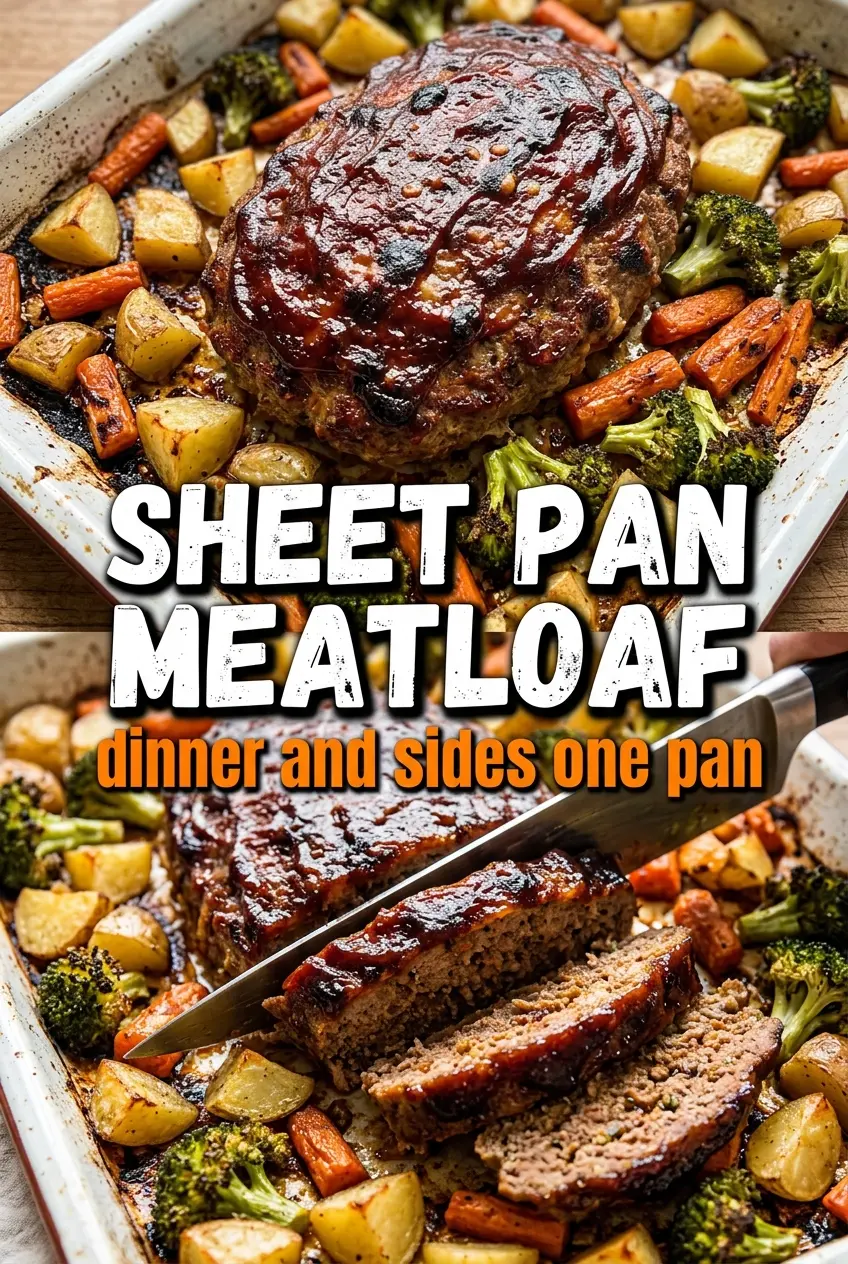
Give the meatloaf a full 10-minute rest after it comes out of the oven. That pause lets the juices settle so the slices hold together instead of spilling onto the pan. If you cut too early, the center can look underdone even when it’s cooked properly. The rest time is part of the recipe, not an optional extra.
How to Change the Pan Without Losing the Character of the Dish
Swap the Potatoes for a Faster Veggie Mix
If you want the whole pan to finish in one shot, use faster-cooking vegetables like broccoli florets, zucchini, or bell peppers instead of potatoes. Those vegetables brown quickly and don’t need the extra head start that potatoes do. The tradeoff is less hearty bulk, but you gain a lighter pan with more charred edges.
Make It Dairy-Free Without Changing the Texture Too Much
Replace the milk with unsweetened oat milk or another plain, neutral dairy-free milk. The liquid is there to soften the breadcrumbs, so you still get a tender slice without needing dairy. Skip anything strongly flavored or sweetened, or the meatloaf can taste off once it bakes.
Use Ground Turkey for a Lighter Version
Ground turkey works, but it needs a little more help staying juicy. Use dark meat turkey if you can, and don’t overbake it past temperature or it dries out fast in a flat shape. The flavor is milder, so keep the Worcestershire and garlic in the mix.
Storage and Reheating
- Refrigerator: Store leftovers in an airtight container for up to 4 days. The vegetables will soften a bit, but the meatloaf slices stay firm enough for lunches.
- Freezer: Freeze sliced meatloaf tightly wrapped for up to 2 months. The roasted vegetables freeze less well, so pack those separately if you can.
- Reheating: Warm slices in a covered skillet over low heat with a splash of water, or bake them at 300°F until heated through. High heat dries out the edges before the center is warm.
Questions I Get Asked About This Recipe
Sheet Pan Meatloaf
Ingredients
Equipment
Method
- Preheat oven to 400°F and line a large sheet pan with foil for easy cleanup. Arrange the pan so one side will hold the vegetables and the other side will hold the flat meatloaf.
- In a bowl, mix ground beef with breadcrumbs, eggs, milk, grated onion, minced garlic, Worcestershire sauce, garlic powder, salt, and pepper. Press the mixture into a flat rectangle about 1 inch thick on one side of the sheet pan.
- Toss baby potatoes, green beans, and sliced carrots with olive oil, salt, and pepper. Spread the vegetables on the other side of the sheet pan in a single layer for better browning.
- Stir ketchup and brown sugar, then spread the glaze over the meatloaf. Make an even layer so it caramelizes across the surface.
- Bake at 400°F for 35–40 minutes, until the meatloaf reaches 160°F. Look for vegetables that are golden and tender around the edges.
- Rest the sheet pan meatloaf for 10 minutes before slicing to help the juices set. Cut the flat loaf into portions for faster serving than a traditional round loaf.