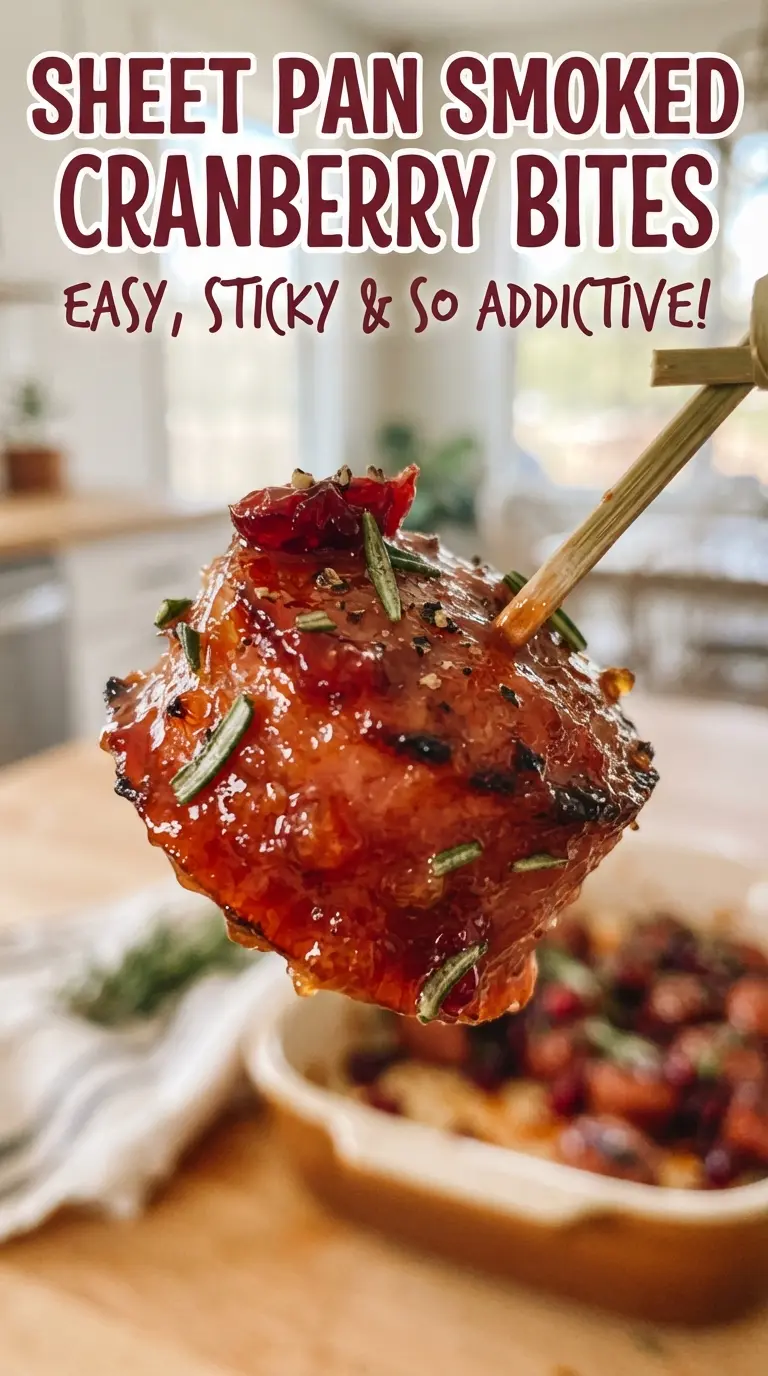
Smoked sausage turns glossy, sticky, and caramelized in the oven when you give it a fast roast before the cranberry glaze goes on. The first pass lets the edges brown, and that little bit of color is what keeps these bites from tasting flat once the sweet-tart sauce comes in. What you get at the end is the kind of appetizer people keep circling back to for one more toothpick.
The glaze works because it balances canned whole berry cranberry sauce with brown sugar, Dijon, and apple cider vinegar. The cranberry brings body, the mustard sharpens it, and the vinegar keeps the sweetness from taking over. Orange zest at the end lifts the whole pan and makes the sausage taste brighter, not heavier.
Below you’ll find the timing that keeps the glaze sticky instead of burnt, plus a few smart swaps if you need to work with what’s already in the pantry.
The glaze got sticky and shiny in the last few minutes, and the sausage stayed browned instead of soggy. I served these with toothpicks and they were gone before I even sat down.
Love the sticky cranberry glaze and caramelized sausage? Save these sheet pan smoked sausage cranberry bites for your next easy appetizer spread.
The Reason the Glaze Stays Sticky Instead of Turning Watery
The biggest mistake with cranberry-glazed sausage is dumping everything together at once. If the sausage goes in raw with the sauce, it steams before it browns, and the glaze has to fight extra moisture the whole time. Roasting the sausage first gives you rendered edges and a dry enough surface for the cranberry mixture to cling instead of sliding off.
Whole berry cranberry sauce matters here because it has enough body to coat the coins without disappearing into the pan. Brown sugar deepens the gloss, Dijon keeps the sweetness in check, and the vinegar keeps the glaze from tasting heavy. The second roast is where the magic happens: the sauce reduces around the sausage instead of thinning out, so you end up with sticky, lacquered bites rather than a loose syrup.
- Smoked sausage — A fully cooked sausage gives you speed and dependable browning. Kielbasa works well here. Chicken sausage can be used, but it won’t caramelize as deeply and the bite will be leaner.
- Whole berry cranberry sauce — The berries hold the glaze together. Jellied cranberry sauce will work in a pinch, but the texture will be smoother and a little less interesting.
- Dijon mustard — This is the sharp edge that keeps the glaze from reading candy-sweet. Yellow mustard will taste flatter, so use Dijon if you have it.
- Orange zest — Add it after roasting, not before. Heat dulls the citrus oils, and you want the fresh aroma sitting on top of the sticky glaze.
What Each Ingredient Is Actually Doing in This Recipe
- Primary ingredient (the star) — Quality matters most. Choose the best you can find.
- Cooking medium (oil, butter, or broth) — This carries flavors and prevents dryness.
- Seasonings (salt, pepper, spices, herbs) — Layer flavors so nothing overpowers. Build depth gradually.
- Aromatics (garlic, onion, herbs) — Cook with fat to bloom flavors. Become the foundation.
- Supporting ingredients — Complement the main ingredient without overpowering it.
- Sauce or liquid (if applicable) — Brings flavors together. Balance richness with acid.
- Acid (lemon, vinegar, wine, or other) — Brightens and prevents flat-tasting results.
- Final finish (garnish, glaze, or sauce) — Prevents one-dimensional taste and adds visual appeal.
How to Roast the Sausage So the Edges Brown Before the Sauce Goes On
Get the First Color on the Sausage
Spread the sliced sausage in a single layer on a foil-lined rimmed sheet pan and give it room. If the coins are crowded, they steam and stay pale. Twelve minutes at 400°F is enough to start browning the edges without drying out the centers, and that early color is what gives the final dish its savory backbone.
Build the Glaze in a Bowl, Not on the Pan
Whisk the cranberry sauce, brown sugar, Dijon, vinegar, garlic powder, and red pepper flakes until the mixture loosens and turns glossy. If the cranberry sauce still looks clumpy, keep whisking; those berry pieces need to break down enough to coat evenly. The glaze should pour, not spoon, and it should taste a little sharper than you want because the sausage will mellow it out in the oven.
Finish Hot and Watch for Bubbling Edges
Pour the glaze over the browned sausage and toss right on the pan so every coin gets coated. Return it to the oven for 10 to 13 minutes, just until the glaze bubbles thickly and starts to cling to the sausage instead of pooling around it. Pull it before the sugars scorch; once the sauce goes dark at the edges, the cranberry turns bitter fast.
Wake It Up With the Final Garnish
Toss the hot bites with orange zest and fresh thyme after they come out of the oven. The zest brightens the glaze, and the thyme gives the pan a little freshness so the whole dish tastes more balanced. Serve warm with toothpicks while the coating is still tacky and shiny.
What to Change When You’re Working With What’s in the Pantry
Make it a little spicier
Add an extra pinch of red pepper flakes or a little hot sauce to the glaze. The heat cuts through the sweetness and makes the cranberry taste brighter, but keep it modest or you’ll drown out the orange and thyme at the end.
Use turkey or chicken sausage for a lighter bite
Turkey or chicken sausage works if you want something a little leaner, but it won’t render as much fat or brown as deeply. Give the pieces a few extra minutes in the first roast and keep an eye on the glaze so it doesn’t over-reduce before the sausage is hot through.
Skip the gluten without changing the method
This recipe is naturally gluten-free if your sausage and Dijon are certified gluten-free, which many are but not all. The technique doesn’t change at all, and that’s one of the reasons this appetizer is such an easy crowd-pleaser.
Storage and Reheating
- Refrigerator: Store leftovers in an airtight container for up to 4 days. The glaze will thicken as it chills.
- Freezer: You can freeze them, but the texture softens a bit after thawing. Freeze in a single layer first, then transfer to a bag or container for up to 2 months.
- Reheating: Warm on a sheet pan at 350°F until hot and sticky again. The microwave works in a pinch, but it can make the glaze separate and the sausage rubbery if you overdo it.
Answers to the Questions Worth Asking
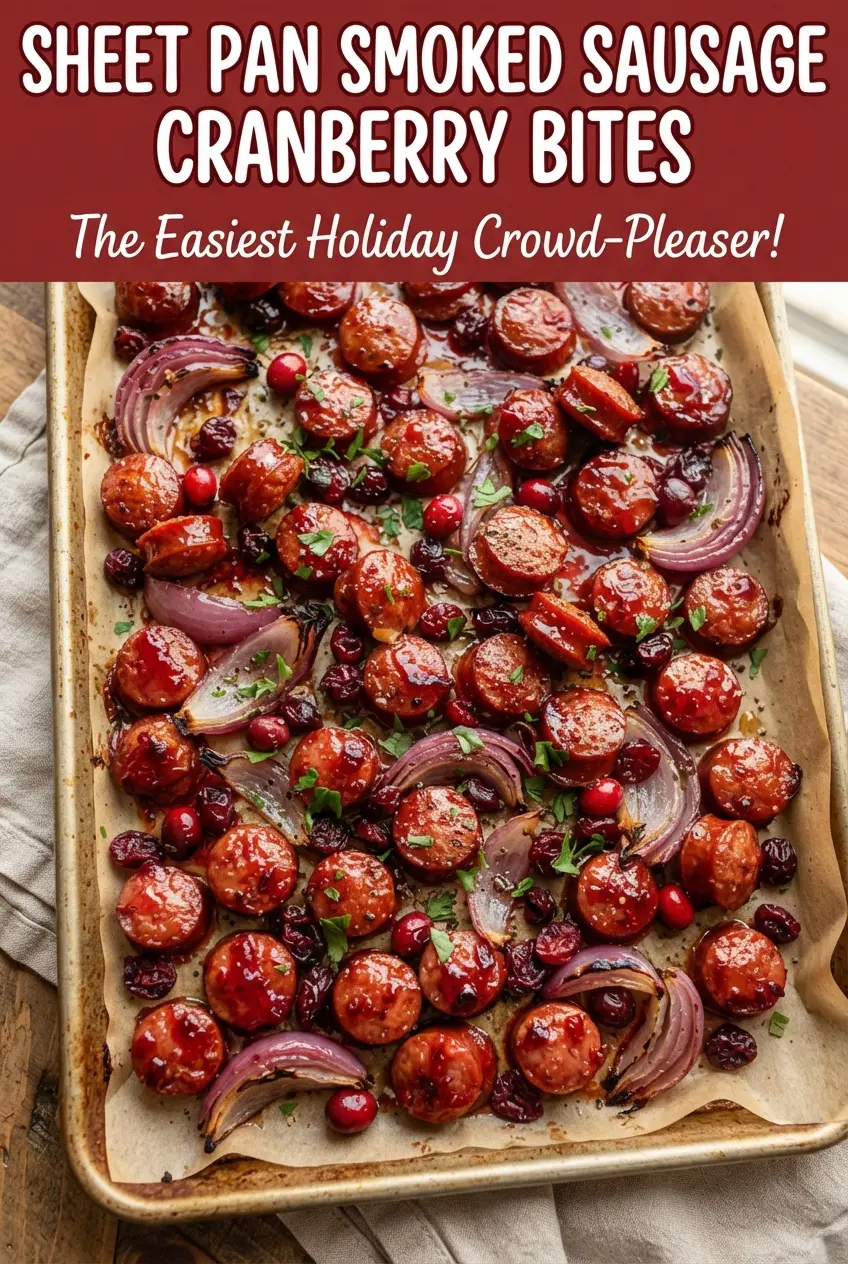
Sheet Pan Smoked Sausage Cranberry Bites
Ingredients
Equipment
Method
- Preheat oven to 400°F and line a rimmed sheet pan with foil for easy cleanup.
- Spread the smoked sausage slices in a single layer and roast for 12 minutes, until browned at the edges.
- Whisk whole berry cranberry sauce, brown sugar, Dijon mustard, apple cider vinegar, garlic powder, and red pepper flakes until smooth.
- Pour the glaze over the sausage and toss to coat, so every coin gets an even sticky layer.
- Roast for 10-13 minutes more at 400°F until the glaze is sticky and bubbling at the edges.
- Toss with orange zest and fresh thyme, then serve warm with toothpicks.