Golden seared chicken breasts tucked into a dark, silky mushroom and wine sauce have a way of making a normal dinner feel finished. The sauce clings to the chicken instead of sliding off, the mushrooms stay meaty, and every spoonful tastes like it cooked longer than it actually did. This is the kind of skillet meal that lands on the table looking polished without asking for much more than a good pan and a little attention at the stove.
What makes this version work is the order. The chicken gets a hard sear first, which builds the browned bits that turn into the backbone of the sauce. The mushrooms cook after the chicken, in the same skillet, so they pick up flavor from the pan instead of steaming in their own moisture. Then the wine goes in to pull everything loose before the broth, cream, and Dijon finish the sauce with body and a gentle tang.
If you’ve ever had a wine sauce turn thin, cloudy, or a little flat, the notes below will help you avoid that. I’ve also included a few swaps that keep the texture right when you need to work with what’s already in the kitchen.
The sauce thickened up exactly right and the mushrooms picked up all the browned bits from the pan. I used red wine and the whole skillet tasted rich without being heavy.
Save this skillet chicken and mushroom wine sauce for a night when you want a glossy pan sauce that feels restaurant-worthy but still comes together in one skillet.
The step that keeps the sauce glossy instead of grainy
The biggest mistake in a wine cream sauce is rushing the heat. If the pan is too hot when the cream goes in, the sauce can split or turn greasy before it has a chance to thicken. This recipe works because the wine reduces first, then the broth and cream simmer together at a steady pace until the sauce coats a spoon.
Another thing that matters here is the chicken sear. You want a deep golden crust, not pale chicken that spends its whole time simmering. That browning gives the sauce depth, and it keeps the final dish tasting layered instead of flat.
- Seared chicken — The browned surface carries flavor into the sauce. If your chicken breasts are thick on one end, pound them lightly so they cook evenly and finish at the same time.
- Dry red wine — Use a wine you’d actually drink. It doesn’t need to be expensive, but it should taste clean and dry, because the sauce concentrates everything it starts with.
- Cream — Heavy cream is what gives the sauce body without curdling easily. Half-and-half can work in a pinch, but the sauce will be thinner and a little less stable.
- Dijon mustard — This doesn’t make the sauce taste mustardy. It sharpens the cream and helps the sauce taste complete.
Building the mushroom wine sauce in the right order
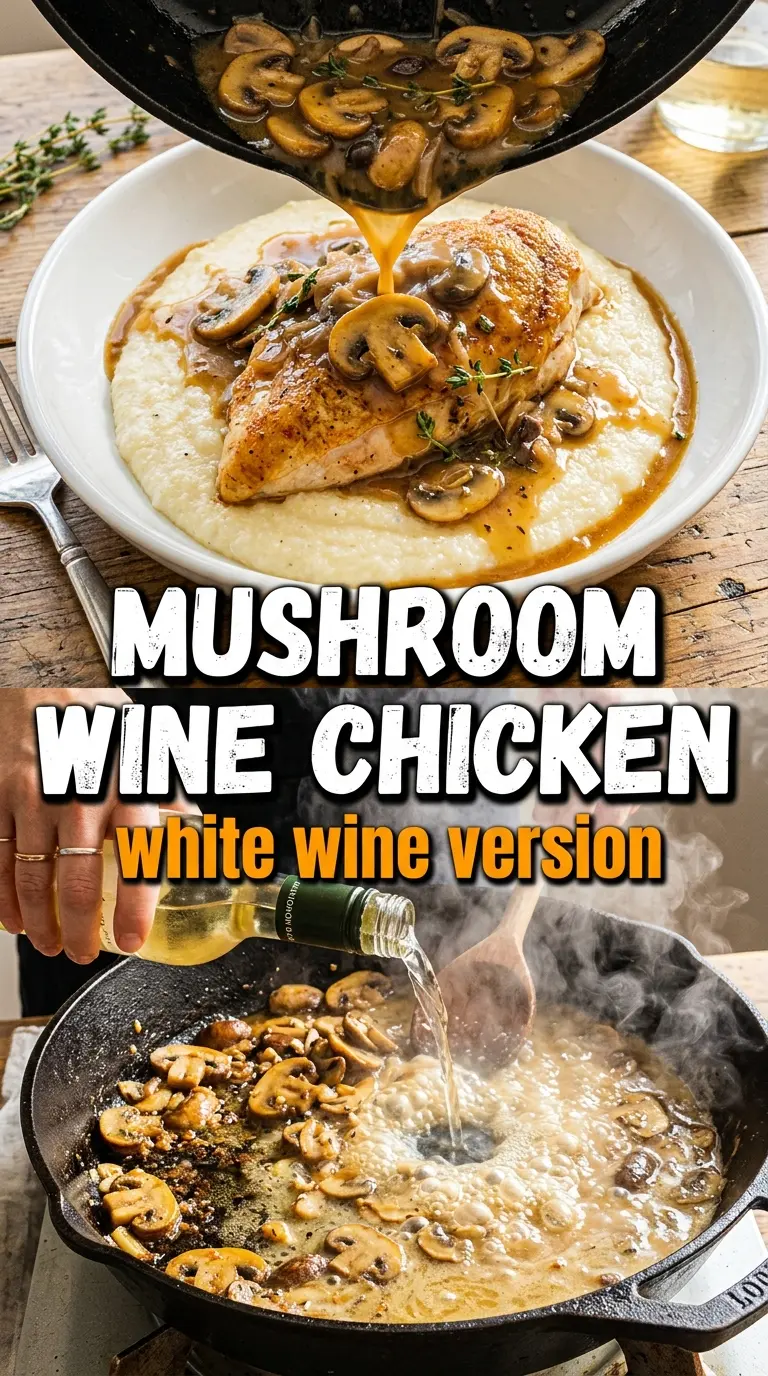
- Chicken breasts — Boneless, skinless breasts keep this quick and elegant. If yours are very large, slice them in half horizontally or pound them to even thickness so they don’t dry out before the centers reach temperature.
- Cremini mushrooms — These give the sauce a deeper, earthier flavor than white button mushrooms. Let them sit in the pan long enough to brown; if you stir too often, they’ll release water and steam instead of caramelize.
- Dry red wine — This is the deglazing liquid, and it’s doing important work. It lifts the browned bits from the skillet and leaves behind a darker, more complex base than broth alone. White wine works too, but the sauce will taste lighter.
- Fresh thyme — Fresh thyme tastes brighter and more specific here than dried. If you only have dried thyme, use less, because it can take over quickly once the cream reduces.
How to turn one skillet into a proper pan sauce
Searing the chicken first
Season the chicken generously before it hits the pan, then sear it in olive oil over medium-high heat until the outside is deeply golden and the center reaches 165°F. If the chicken sticks at first, leave it alone; once the crust forms, it releases cleanly. Pull the chicken out as soon as it’s done so it doesn’t overcook while the sauce comes together.
Letting the mushrooms brown, not stew
Add the butter, then the mushrooms, and give them time in the skillet without crowding them or crowding the pan with other ingredients. They should shrink, darken, and pick up some color at the edges before the garlic goes in. If they look wet and pale, keep cooking; the flavor only develops after the moisture cooks off.
Reducing the wine and finishing the sauce
Pour in the wine and scrape the pan well so every browned bit dissolves into the liquid. Let it simmer long enough for the sharp alcohol smell to fade, then add the broth, cream, Dijon, and thyme. The sauce should thicken enough to coat the back of a spoon in about 5 to 6 minutes; if it stays thin, keep it on the heat a little longer, because cream sauces often need a few more minutes than you expect.
Bringing the chicken back at the end
Return the chicken to the skillet only after the sauce has thickened. Spoon the sauce over the top and let the chicken warm through for a minute or two, just enough to soak up the flavor without overcooking. Fresh thyme sprigs at the end add a clean finish and make the skillet look as good as it tastes.
How to adapt this skillet dinner without losing the sauce
Make it dairy-free
Swap the butter for more olive oil and use full-fat coconut cream or an unsweetened dairy-free cooking cream. The sauce will be a little different in flavor, but you’ll still get a thick, spoonable finish if you simmer it long enough.
Use white wine for a lighter sauce
A dry white wine gives you a brighter, slightly cleaner sauce. The result tastes a little less deep than red wine, but it still deglazes the pan well and works especially nicely if you want the mushrooms and thyme to stay front and center.
Make it gluten-free
This recipe is naturally gluten-free as written as long as your chicken broth is certified gluten-free. The sauce gets its thickness from reduction and cream, not flour, which keeps the texture smooth instead of pasty.
Turn it into a mushroom-only sauce
Skip the chicken and double the mushrooms, then serve the sauce over mashed potatoes, rice, or egg noodles. You’ll lose the meaty center of the dish, but the wine reduction and cream still make a rich sauce that stands on its own.
Storage and Reheating
- Refrigerator: Store leftovers in an airtight container for up to 3 days. The sauce may thicken as it chills, and the chicken will absorb some of the liquid.
- Freezer: Freeze with caution. Cream sauces can separate after thawing, so the texture won’t be as smooth, though it’s still usable in a pinch.
- Reheating: Warm gently in a covered skillet over low heat with a splash of broth or cream. High heat is the fastest way to break the sauce and dry out the chicken.
Questions I Get Asked About This Recipe
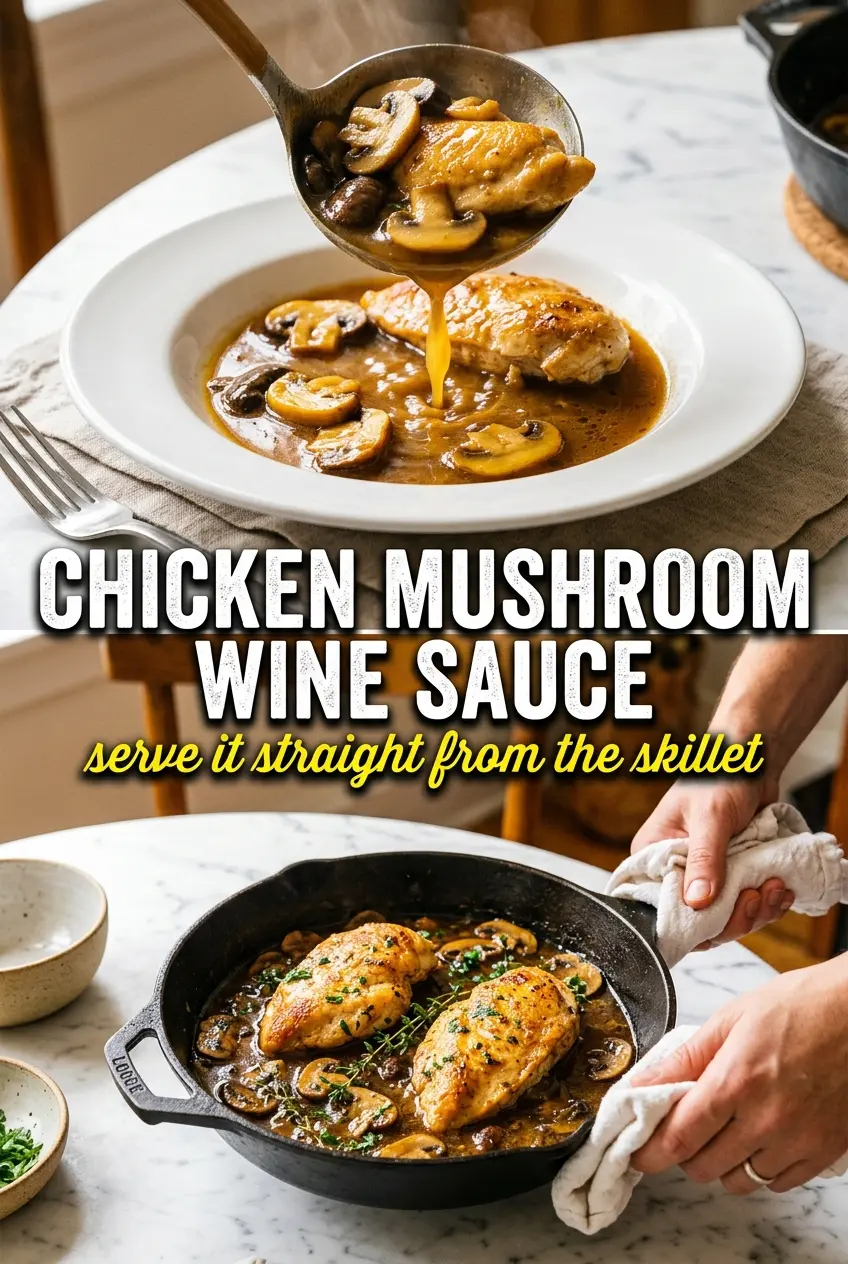
Skillet Chicken and Mushroom Wine Sauce
Ingredients
Equipment
Method
- Season the chicken generously with salt, pepper, garlic powder, and dried thyme. Sear in olive oil in a large skillet over medium-high heat for 5-6 minutes per side until golden and cooked through to 165°F, then remove.
- Melt the butter in the same pan, then cook the sliced cremini mushrooms over medium-high heat for 5-6 minutes until deeply golden. Add the minced garlic and cook for 1 minute.
- Pour in the dry red wine and deglaze, scraping up all browned bits from the pan. Simmer for 3 minutes.
- Add the chicken broth, heavy cream, Dijon mustard, and fresh thyme leaves, then simmer for 5-6 minutes until the sauce thickens. Return the chicken to the pan and spoon the sauce over each breast.
- Garnish with fresh thyme sprigs and serve. Let the chicken rest in the sauce for about 2 minutes so the coating turns dark and glossy as it settles.