Slow cooker chicken breasts turn out best when they stay juicy enough to slice cleanly and tender enough to pull apart with a fork. The broth, butter, and garlic build a light pan sauce right in the slow cooker, so the chicken tastes seasoned all the way through instead of just sitting under a bland layer of liquid. This is the kind of dinner that earns repeat status because it does one simple thing well: it gives you dependable, moist chicken without hovering over the stove.
The key is restraint. Chicken breasts cook fast in a slow cooker, and once they go past the point of tenderness they start drying out along the edges. A short ingredient list works in your favor here because the seasoning goes directly on the meat before cooking, then the broth catches all of it and turns into something worth spooning over the sliced chicken at the end.
Below, I’ll walk through the timing that keeps the chicken tender, the ingredient swaps that still make sense, and the small details that turn plain crockpot chicken breasts into a meal you’ll actually want to repeat.
I cooked it on LOW for just under 4 hours and the chicken was unbelievably tender without falling apart into strings. The broth at the bottom made the best quick sauce, and even my picky kid ate it plain.
Save these slow cooker chicken breasts for a juicy, low-effort dinner with built-in pan sauce and lemony finish.
The Part That Keeps Slow Cooker Chicken Breasts Juicy Instead of Dry
Chicken breasts are lean, which means they don’t give you much room for error. The problem with slow cooker chicken usually isn’t flavor; it’s time. Once the meat gets far past done, the fibers tighten and the texture turns chalky, even if it’s sitting in broth the whole time.
That’s why this recipe leans on a short cook window and a bit of butter for protection. The broth creates moisture around the chicken, but the butter helps carry the seasoning and keeps the cooking liquid from tasting thin. The real trick is pulling the chicken as soon as it reaches tender, opaque meat that still slices cleanly. If it shreds while it’s still in the pot, it’s already headed in the wrong direction.
- Low heat is the safer choice — It gives the chicken more even cooking and a better shot at staying juicy. High heat works in a pinch, but the margin is smaller and the texture can go from tender to dry fast.
- The broth isn’t there to poach the chicken to death — It’s there to season the meat and collect the drippings. You only need enough liquid to keep the bottom from scorching and to build a sauce at the end.
- Resting matters — Five minutes off the heat lets the juices settle back into the meat. If you slice it straight from the crockpot, the plate gets the moisture instead of the chicken.
What Each Ingredient Is Actually Doing in This Dish
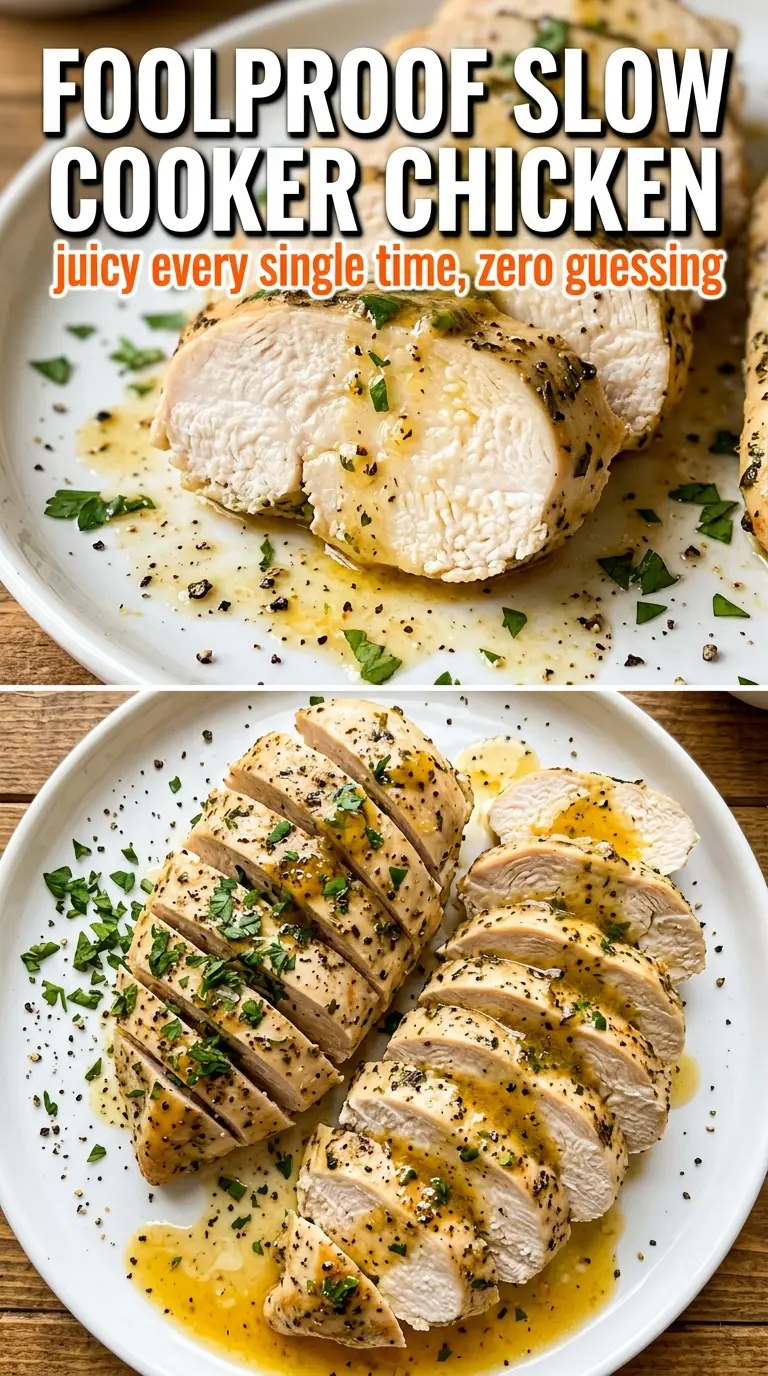
- Chicken breasts — Boneless, skinless breasts are the whole point here, but they need close attention because they dry out faster than thighs. If yours are very thick, pound them lightly to an even thickness so the thinner end doesn’t overcook while the thick end catches up.
- Chicken broth — Use a broth you’d actually taste on its own. It forms the base of the sauce, so a weak broth gives you a weak finish. Low-sodium is fine if you want more control over seasoning.
- Butter — This softens the edges of the broth and gives the sauce a richer, silkier feel. You can use olive oil in a pinch, but it won’t give you the same round finish in the pan juices.
- Garlic powder, onion powder, smoked paprika, and Italian seasoning — These dry seasonings stick to the chicken better than a wet marinade and stay present after hours of cooking. Don’t skip the paprika; it adds a subtle warmth and a little color to the finished sauce.
- Fresh garlic — Add it minced, not whole. Minced garlic melts into the cooking liquid and flavors the sauce evenly, while whole cloves can stay sharp and uneven after slow cooking.
- Lemon and parsley — These go on at the end for brightness. The chicken itself is savory and rich; the lemon wakes it up so the final plate doesn’t taste flat.
The Short Slow-Cooker Window That Makes All the Difference
Seasoning the Chicken First
Rub the spices directly onto both sides of the chicken breasts so the flavor starts on the meat, not in the liquid. This matters because a lot of seasoning dissolves into the broth if it goes in too loose, and the chicken ends up tasting bland on top. A generous coating should look dusty and even, with no bare patches.
Setting Up the Slow Cooker
Lay the chicken in a single layer if you can, then pour the broth around it instead of over the top. That keeps the seasoning in place and helps the top of the chicken stay a little more concentrated in flavor. Add the butter and garlic right before cooking so they melt into the juices as the chicken cooks.
Watching for Doneness
On LOW, start checking around the 3-hour mark. The chicken is ready when it’s opaque all the way through, feels tender when pressed, and slices without resistance. If it starts shredding apart with no effort at all, it’s probably gone too far for neat slices, though it will still work for sandwiches or tacos.
Finishing With the Pan Sauce
Move the chicken to a cutting board and let it rest before slicing. Then spoon the cooking juices over the top, including the butter and garlic from the pot. If the liquid seems thin, that’s normal; it tastes richer once it hits the warm chicken. The mistake here is reducing it hard on the stove and letting the chicken sit too long uncovered, which dries out the meat you just worked to keep tender.
How to Adjust This When You Need a Different Dinner
Make It Dairy-Free
Swap the butter for olive oil or a plant-based butter. You’ll lose a little of the sauce’s round, rich finish, but the broth, garlic, and seasonings still carry the dish well. Use a little extra lemon at the end to brighten it back up.
Turn It Into Meal Prep
Slice or shred the chicken and store it with some of the cooking juices so it reheats moist instead of stringy. It works well for bowls, wraps, salads, or quick rice dinners across the week. The broth keeps it from drying out in the fridge.
Use Chicken Thighs Instead
Boneless, skinless thighs give you even more forgiveness and a richer bite. They usually need a little longer than breasts, and they shred more easily than they slice, but they’re the better choice if you want maximum tenderness with less risk of drying out.
If You Want a Gluten-Free Main
This recipe is naturally gluten-free as written, as long as your broth and seasoning blends are certified gluten-free. That’s worth checking because some boxed broths and spice mixes sneak in wheat-based additives.
Storage and Reheating
- Refrigerator: Store in an airtight container with some of the broth for up to 4 days. The chicken stays more tender if it’s not packed completely dry.
- Freezer: It freezes well. Cool completely, portion with a little sauce, and freeze up to 3 months. Thaw overnight in the fridge before reheating.
- Reheating: Warm gently in a covered skillet over low heat or in the microwave at reduced power with a spoonful of broth. High heat is what turns leftover chicken stringy and dry.
Answers to the Questions Worth Asking

Slow Cooker Chicken Breasts
Ingredients
Equipment
Method
- Season the chicken breasts generously on both sides with garlic powder, onion powder, smoked paprika, Italian seasoning, salt, and cracked black pepper until well coated.
- Place the seasoned chicken breasts in the slow cooker and pour the chicken broth around the chicken, not on top only, to keep the breasts in liquid.
- Add the butter and minced garlic to the slow cooker so they melt into the broth for flavor distribution.
- Cover and cook on LOW for 3-4 hours (or HIGH for 2-2.5 hours) and do not overcook so the chicken stays tender.
- Remove the chicken and let it rest 5 minutes before slicing to keep the juices in the meat.
- Slice the chicken and pour the cooking juices over the top as a pan sauce for a glossy finish.
- Garnish with fresh parsley and lemon wedges right before serving for bright, fresh flavor.