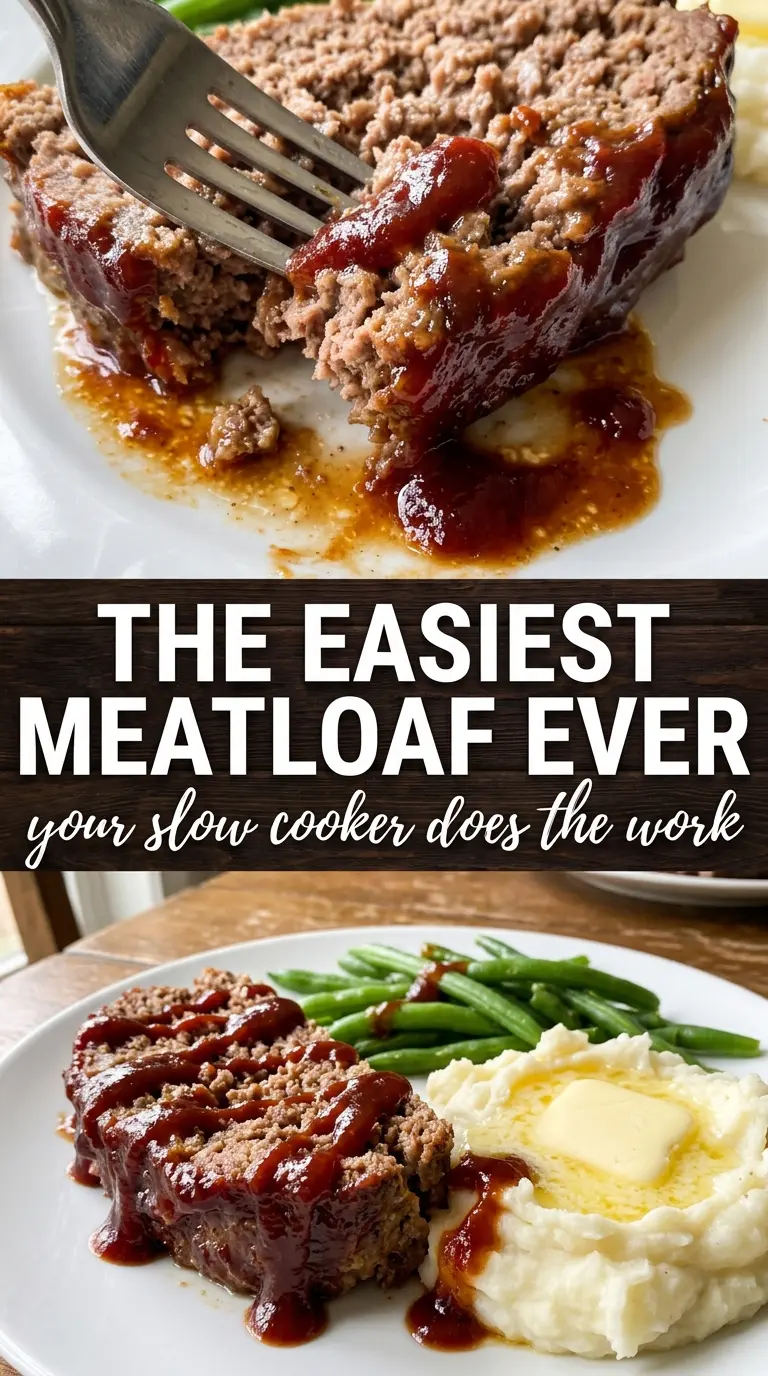
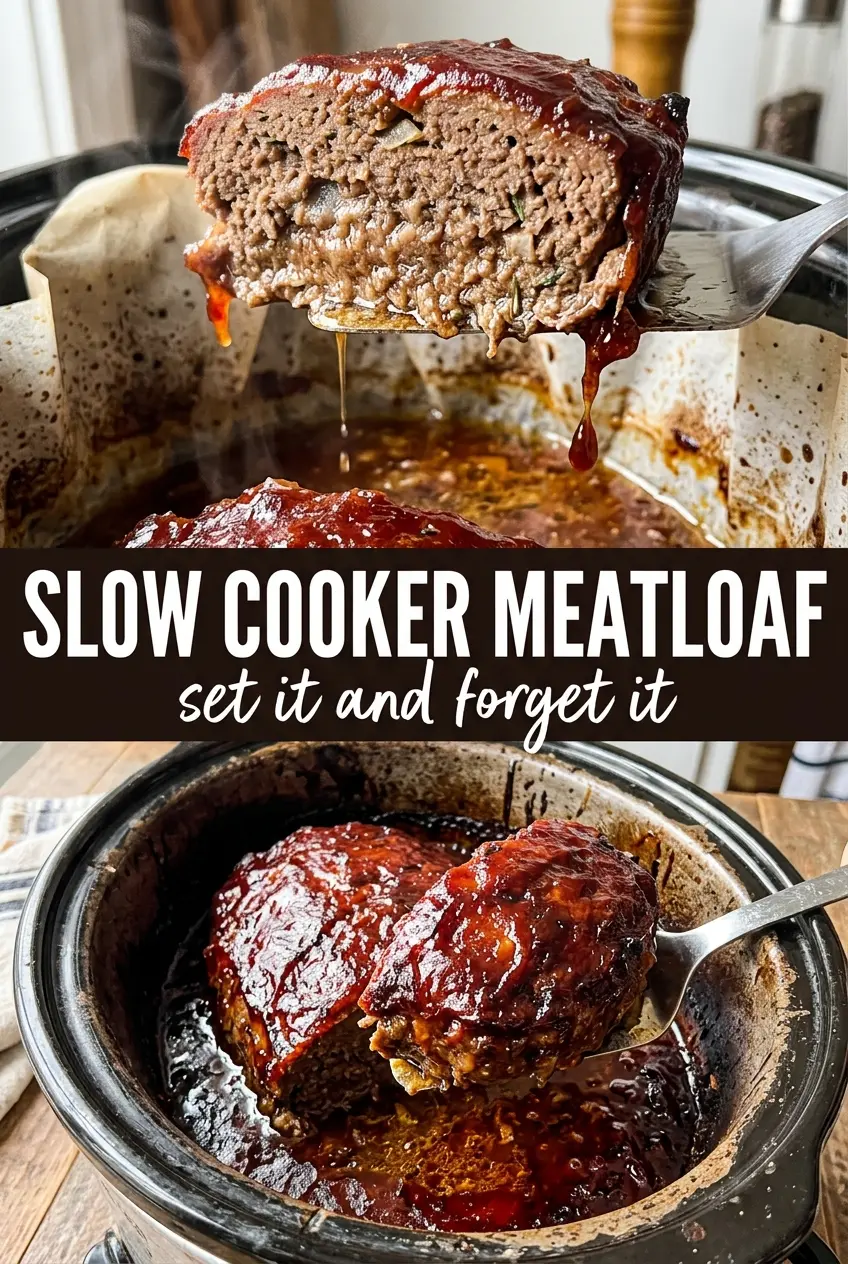
Slow cooker meatloaf comes out tender, juicy, and neatly glazed without turning the kitchen into a heat trap. The slow cooker does what an oven can’t always do on a busy night: it keeps the loaf gently steaming while the fat and juices stay in the meat instead of drying out on the pan. The result is a slice that holds together at the table but still cuts like a fork-tender dinner.
The trick is in the balance. Breadcrumbs and milk keep the texture soft, grated onion melts into the mixture so you get flavor without big raw bits, and the glaze goes on in two stages so it sets glossy instead of burning into a sticky mess. I also line the cooker with foil, which makes lifting the meatloaf out much easier and helps the bottom stay intact.
Below, I’ll show you how to keep the loaf from getting dense, how to tell when the center is done, and how to swap the seasoning around if you want to lean more classic, more garlicky, or a little sweeter.
The glaze set up perfectly and the loaf stayed so moist in the slow cooker. Mine sliced cleanly after the rest, which never happens with my oven meatloaf.
Save this slow cooker meatloaf for a tender, glazed dinner that slices cleanly and stays moist from the first serving to the last.
The Reason Slow Cooker Meatloaf Stays Tender Instead of Tight
The biggest mistake with meatloaf in a slow cooker is packing the mixture too firmly. A dense loaf has nowhere to relax while it cooks, so it turns bouncy and compact instead of tender. Mix until the ingredients are just combined, then stop. That’s enough for the breadcrumbs to hydrate and the seasoning to spread through the meat without working it into a paste.
The second thing that matters is shape. A loose loaf with a little height cooks more evenly than a flattened slab, and the foil sling keeps it from sticking to the insert when it’s time to lift it out. If your meatloaf has a greasy bottom, it usually means it sat directly in the rendered fat with no easy way to remove it cleanly. The foil solves that, and it makes slicing far less messy.
- Ground beef — Use 80/20 if you can. It has enough fat to stay juicy through the long cook, but not so much that the loaf turns oily.
- Breadcrumbs and milk — This is what gives the meatloaf its soft, sliceable texture. Plain breadcrumbs work fine, and the milk can be swapped for unsweetened dairy-free milk if needed.
- Grated onion — Grating the onion matters more than chopping it. It melts into the loaf and seasons the meat from the inside without leaving crunchy bits behind.
- Worcestershire sauce — This adds the savory depth that keeps the loaf from tasting flat. There isn’t a perfect substitute, but soy sauce plus a little extra ketchup in the glaze can stand in if that’s what you have.
- Glaze — The brown sugar and ketchup create the sticky top, and the second round at the end keeps it shiny instead of baking off into a dull crust.
What Each Ingredient Is Actually Doing in This Meatloaf or Meatballs
- Ground meat (the protein foundation) — Use 80/20 so it stays moist. Handle gently to keep texture tender instead of dense.
- Breadcrumbs or fillers (the binder) — These hold the meat together without making it dense. Soak in milk first so they add moisture.
- Egg (the structural binding agent) — This holds everything together during cooking. One egg per pound of meat is the right ratio.
- Onion and aromatics (the base flavor) — Mince finely so they distribute evenly. Raw onion softens as it cooks and becomes part of the texture.
- Seasonings (salt, pepper, Worcestershire, spices) — Build flavor boldly. The meat mixture carries the entire flavor profile.
- Milk or liquid (the moisture keeper) — This keeps the meatloaf tender instead of dense and dry. Don’t skip this step.
- Glaze or sauce (ketchup-based or other) — This adds sweetness, moisture, and flavor to the exterior. Apply strategically so it caramelizes.
- Resting time (the final step) — Let the meatloaf rest 10 minutes so it sets and slices cleanly. Cutting too soon makes it fall apart.
Building the Loaf So It Cooks Evenly in the Crockpot
Mixing the Meat Without Overworking It
Combine the beef, breadcrumbs, eggs, milk, onion, garlic, Worcestershire, seasoning, salt, and pepper in a large bowl, then use your hands to mix only until everything looks evenly distributed. If you keep squeezing after that point, the proteins tighten and the loaf turns rubbery. The mixture should hold together when pressed, but it shouldn’t feel pasty.
Shaping and Lining the Slow Cooker
Press the mixture into a loaf shape that leaves a little space around the sides of the slow cooker. That airflow helps the heat move around the meat instead of trapping it in a dense mass. The foil lining should hang over the edges so you can lift the loaf out after cooking; if the ends aren’t long enough, you’ll fight the pan and break the crust.
Using the Glaze in Two Passes
Spread half the glaze over the loaf before cooking, then save the rest for the finish. The first layer melts into the top and seasons the surface, while the second layer gets that glossy, sticky finish people expect from good meatloaf. If you put all the glaze on at the start, the sugar can get too dark and the top loses that fresh, shiny look.
Knowing When It’s Done
Cook until the center reaches 160°F, not just until the outside looks firm. Slow cooker meatloaf can look finished before the middle is fully cooked, especially if the loaf is thick. After the final glaze sets, let it rest for 10 minutes so the juices settle back into the slices instead of running across the board.
How to Adapt Slow Cooker Meatloaf Without Losing the Texture
Gluten-Free Version
Swap the breadcrumbs for certified gluten-free breadcrumbs or crushed gluten-free crackers in the same amount. You still need that dry binder to hold the loaf together and keep it tender, so don’t skip the replacement entirely.
Dairy-Free Version
Use unsweetened almond milk, oat milk, or soy milk in place of the regular milk. The texture stays close to the original as long as the milk is unsweetened and plain; flavored plant milks can make the loaf taste off.
Turkey Meatloaf Swap
You can use ground turkey, but the loaf will be leaner and a little less rich. Add an extra tablespoon of milk or a splash more Worcestershire so it doesn’t dry out during the longer cook.
Make It a Little Sweeter or More Savory
For a sweeter glaze, add another teaspoon of brown sugar. For a more savory version, cut the sugar back slightly and add a teaspoon of Dijon to the glaze; it sharpens the ketchup and keeps the top from tasting flat.
Storage and Reheating
- Refrigerator: Store leftovers in an airtight container for up to 4 days. The loaf stays moist, and the glaze actually settles in nicely overnight.
- Freezer: Freeze slices wrapped tightly or in a freezer container for up to 2 months. Thaw in the refrigerator before reheating so the texture stays intact.
- Reheating: Warm slices covered in the oven at 325°F with a splash of water or broth, or microwave in short bursts. The mistake people make is blasting it too long, which squeezes out the juices and leaves the edges tough.
Answers to the Questions Worth Asking
Slow Cooker Meatloaf
Ingredients
Equipment
Method
- Line a slow cooker with foil, leaving overhang on the sides so you can lift the meatloaf out after cooking.
- In a large bowl, mix ground beef, breadcrumbs, eggs, milk, onion, garlic, Worcestershire sauce, Italian seasoning, salt, and pepper until combined.
- Shape the mixture into a loaf and place it into the foil-lined slow cooker.
- Mix the glaze ingredients (ketchup, brown sugar, and Worcestershire sauce) and spread half over the top of the loaf.
- Cook on Low for 4–5 hours (or High for 2–3 hours) until the internal temperature reaches 160°F, watching for a set exterior.
- Spread the remaining glaze over the top and cook on High for 15 minutes to set the glaze, until glossy.
- Rest the meatloaf for 10 minutes so juices redistribute, then lift it out using the foil overhang.
- Slice and serve, showing the moist interior and sticky glazed top.