Smoked meatloaf earns its place on the table because the outside turns deep and savory while the inside stays tender and juicy. The smoke adds a quiet backbone that you just don’t get from the oven, and the BBQ glaze finishes it with a sticky, caramelized shell that slices cleanly instead of crumbling apart.
The key is treating the mix gently. Ground beef, pork, eggs, and breadcrumbs need only enough mixing to hold together; overworking it packs the meat and gives you a dense loaf. Grating the onion is worth the extra minute because it disappears into the meat, bringing moisture and flavor without leaving raw chunks behind. Low and slow heat does the rest, giving the loaf time to pick up smoke before the glaze goes on.
Below you’ll find the exact point where the glaze should be added, why the internal temperature matters more than the clock, and a few smart swaps if you’re using what you’ve got in the pantry.
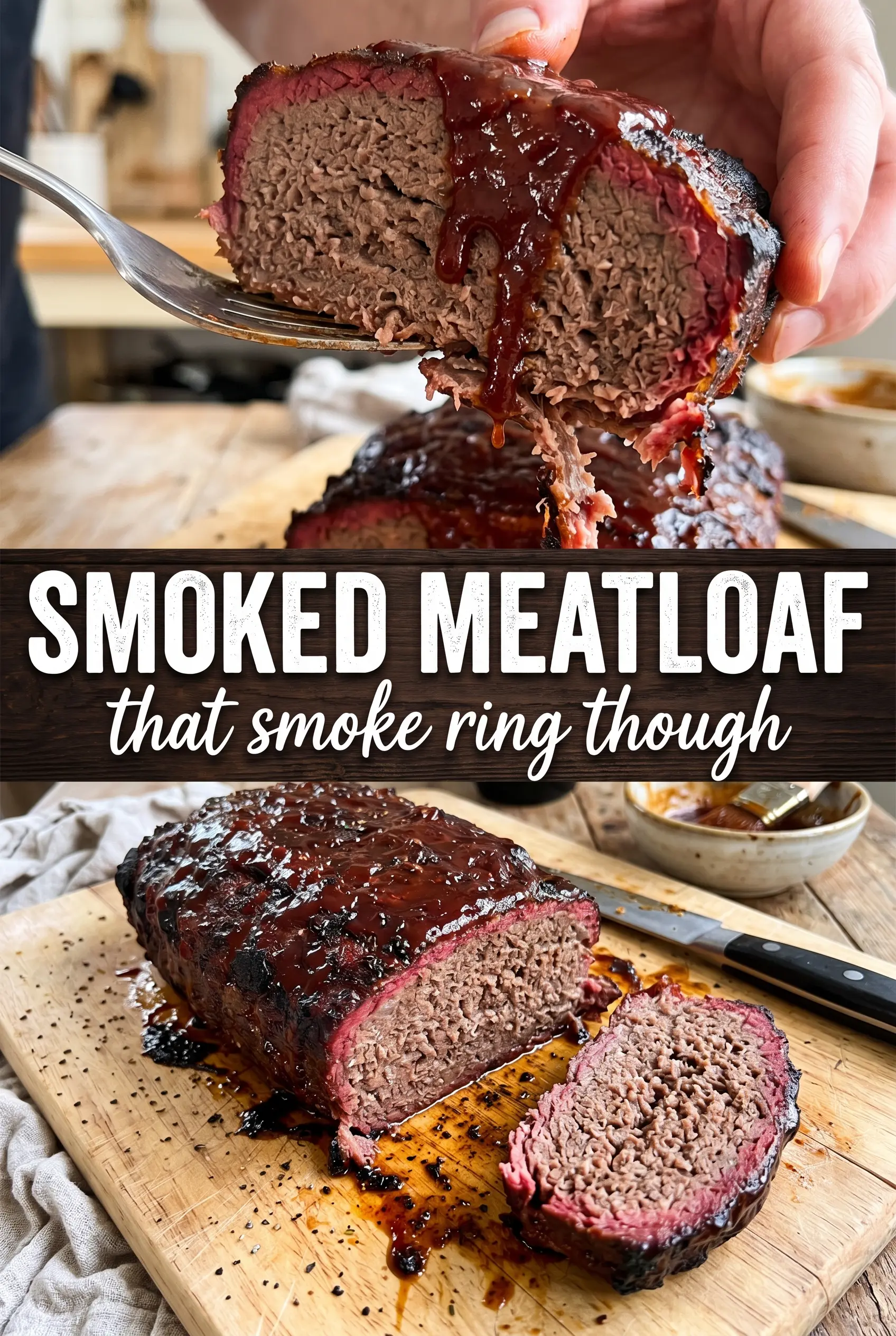
The loaf held together beautifully and the glaze set up with that sticky finish I was hoping for. I pulled it at 160 and let it rest, and every slice had a clean smoke ring and stayed juicy.
Save this smoked meatloaf for the next time you want a smoky main dish with a caramelized BBQ glaze and a juicy sliceable center.
The Smoke Ring Starts With a Loose Loaf, Not a Packed One
Smoked meatloaf can go wrong in two easy ways: it gets dense from overmixing, or it dries out because the heat is too high and the loaf sits on the smoker too long before the center catches up. The fix is a gentle mix and a free-form loaf that isn’t pressed into a tight pan shape. A little air around the meat helps the smoke reach the surface and helps the bark-like crust form instead of steaming.
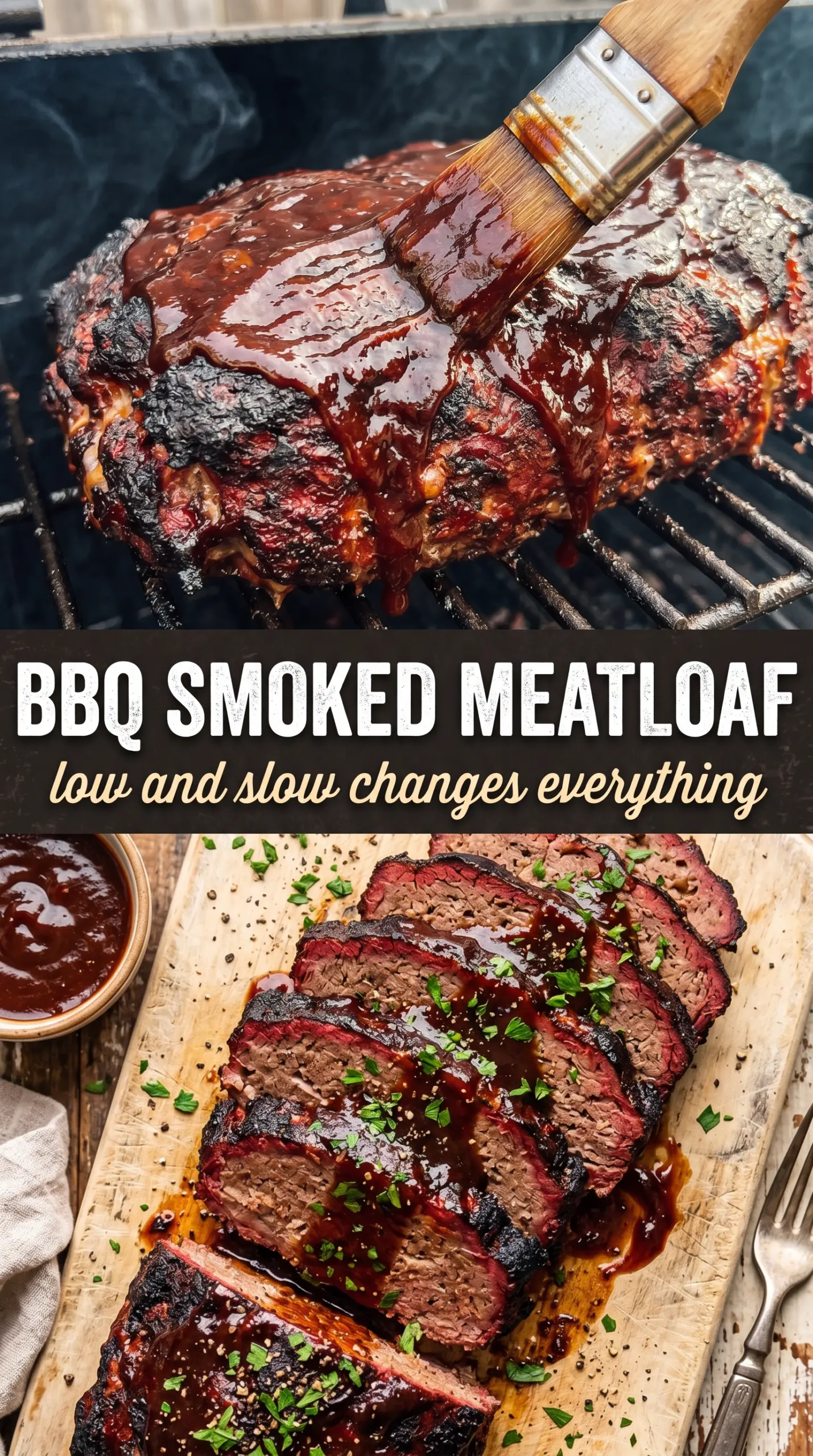
The other mistake is glazing too early. BBQ sauce has sugar, and sugar burns if it sits over smoke and heat for the full cook. Let the loaf take on smoke first, then brush on the glaze near the end so it can set into a sticky finish instead of turning bitter.
What the Beef, Pork, and Glaze Are Each Doing Here
- 80/20 ground beef — This is the backbone of the loaf. The fat keeps the slices moist through a long smoke, and leaner beef can turn dry before the center reaches temperature.
- Ground pork — Pork softens the texture and adds a little sweetness that plays well with smoke. If you skip it, the loaf will still work, but it tastes a little tighter and beef-forward.
- Grated onion — Grating matters because the onion melts into the mix and brings moisture without leaving hard pieces behind. Diced onion won’t disappear the same way.
- Breadcrumbs, eggs, and milk — These hold the loaf together and keep it tender. If you need a gluten-free version, use certified gluten-free breadcrumbs or finely crushed gluten-free crackers; the texture stays close as long as you don’t pack the mixture down.
- Worcestershire, mustard, and smoked paprika — These add depth without making the meat taste like a sauce. The paprika reinforces the smoker flavor, and the mustard sharpens the beef instead of making it taste flat.
- BBQ glaze — The honey helps it caramelize, the vinegar keeps it from tasting cloying, and the sauce gives it shine. Brush it on at the end so it sets instead of scorching.
- Hickory or cherry wood — Hickory gives a stronger, more classic smoke flavor. Cherry is milder and adds a slightly sweeter edge, which is a better choice if you don’t want the smoke to dominate the meat.
The Part of the Smoke Process That Actually Changes the Texture
Mixing Without Compacting the Meat
Combine the beef, pork, breadcrumbs, eggs, milk, onion, garlic, Worcestershire, mustard, paprika, salt, and pepper just until everything looks evenly distributed. The mixture should still feel soft, not paste-like. If you keep mixing after that point, the proteins tighten up and the finished loaf turns heavy. Shape it into a free-form loaf on a wire rack or grill-safe pan so the smoke can move around it.
Smoking at Low Heat
Set the smoker between 225 and 250°F and give it time to stabilize before the meat goes on. At that temperature, the loaf cooks through slowly enough to absorb smoke without the outside drying out. You want a steady stream of smoke, not billowing clouds, because harsh smoke can leave the crust tasting bitter. The loaf is ready for glaze when the internal temperature reaches about 145°F.
Glazing for a Sticky Finish
Stir the BBQ sauce, honey, and apple cider vinegar together, then brush it generously over the loaf. The glaze should look glossy and cling to the surface right away. Put the meatloaf back in the smoker for 30 to 45 minutes, just until the glaze darkens and the internal temperature reaches 160°F. If the glaze starts to look dark before the meat is done, the smoker is running too hot.
Resting Before the First Slice
Let the loaf rest for 15 minutes before cutting. That short pause lets the juices settle back into the meat instead of running out onto the board. Slice too early and the center looks loose even when it’s fully cooked. Resting gives you those clean slices with the smoke ring intact and the glaze staying on top where it belongs.
How to Adapt This Smoked Meatloaf for Different Pans, Diets, and Leftovers
Gluten-Free Smoked Meatloaf
Use certified gluten-free breadcrumbs or a similar plain gluten-free binder in place of regular breadcrumbs. Keep the amount the same at first, because too much dry binder makes the loaf crumble once it cools. The flavor stays the same, but the texture depends on not overpacking the mix.
All-Beef Version
If you don’t have pork, replace it with another half pound of 80/20 beef. The loaf will taste a little more robust and less tender, so don’t overcook it past 160°F. A small splash more milk can help keep the texture from feeling tight.
Spicier BBQ Finish
Stir a little hot sauce or chipotle powder into the glaze if you want more heat. Add it to the sauce, not the meat, so the smoke flavor stays clean and the glaze carries the spice where people actually taste it first. Start small; the smoke already deepens the flavor, so you don’t need much.
Storage and Reheating
- Refrigerator: Store leftovers in an airtight container for 3 to 4 days. The smoke flavor deepens by the next day, and the slices stay moist if you don’t let them dry out uncovered.
- Freezer: Wrap individual slices tightly and freeze for up to 2 months. Freeze them flat first so they stack easily, then move them to a bag or container.
- Reheating: Warm slices covered in a 300°F oven with a spoonful of water or extra BBQ sauce until heated through. The common mistake is blasting them in the microwave until the edges turn rubbery and the glaze splits.
Answers to the Questions Worth Asking
Smoked Meatloaf
Ingredients
Equipment
Method
- Preheat the smoker to 225–250°F using hickory or cherry wood chips, building clean smoke before you add the loaf (visual cue: steady, light smoke wisp).
- Mix the ground beef, ground pork, breadcrumbs, eggs, milk, grated onion, minced garlic, Worcestershire sauce, yellow mustard, smoked paprika, salt, and black pepper until just combined (visual cue: cohesive mixture with no dry pockets).
- Shape the mixture into a free-form loaf on a wire rack or grill-safe pan (visual cue: loaf holds together as one piece).
- Place the loaf in the smoker and smoke for 2–2.5 hours until the internal temperature reaches 145°F (visual cue: smoke-darkened surface forming a light bark).
- Mix BBQ glaze (BBQ sauce, honey, and apple cider vinegar) and brush generously over the meatloaf (visual cue: glossy coat covering the top and sides).
- Continue smoking for 30–45 minutes until the glaze caramelizes and the internal temperature reaches 160°F (visual cue: dark mahogany sheen with sticky, set glaze).
- Rest the smoked meatloaf for 15 minutes before slicing and serving (visual cue: juices settle and slices hold shape).