Smothered chicken and rice is the kind of skillet dinner that earns its place in the rotation fast. The chicken stays tender, the onions melt into a dark gravy, and the rice soaks up every bit of broth and seasoning underneath it. When it’s done right, the spoon slides through fluffy grains, silky sauce, and crisp-edged chicken skin all in one bite.
What makes this version work is the order of the cooking. The chicken gets a real sear first, which gives the gravy a deeper base before the onions ever go in. Then the flour cooks with the onions long enough to lose that raw taste, and the broth is added slowly so the sauce turns smooth instead of lumpy. The rice goes in uncooked, so it finishes in the pot and picks up all the savory drippings instead of tasting like a separate side dish.
Below, I’ll show you the small cues that matter most: how dark the onions should get, what the simmer should look like before you cover the pot, and how to keep the rice from turning sticky or underdone.
The rice came out fluffy, not mushy, and the onion gravy thickened up beautifully around the chicken. I used thighs like suggested, and they stayed juicy even after the full simmer.
Save this smothered chicken and rice for a one-pot dinner with tender chicken, rich onion gravy, and fluffy rice that cooks right in the pot.
The Sear Is the Difference Between Deep Gravy and Flat Gravy
The biggest mistake with smothered chicken and rice is rushing past the sear. If the chicken doesn’t get a deep golden skin first, the gravy tastes thinner and the whole dish leans one-note. Those browned bits stuck to the bottom of the pot are the backbone of the sauce, and they matter more than extra seasoning ever will.
Use bone-in, skin-on thighs here. They handle the simmer better than breasts, which can turn dry before the rice is finished. The skin should go down first and stay there long enough to render and brown; if the pot looks crowded or the heat is too low, the chicken will steam instead of sear and you’ll miss the fond that gives the gravy its depth.
What the Chicken, Rice, and Cream Each Bring to the Pot
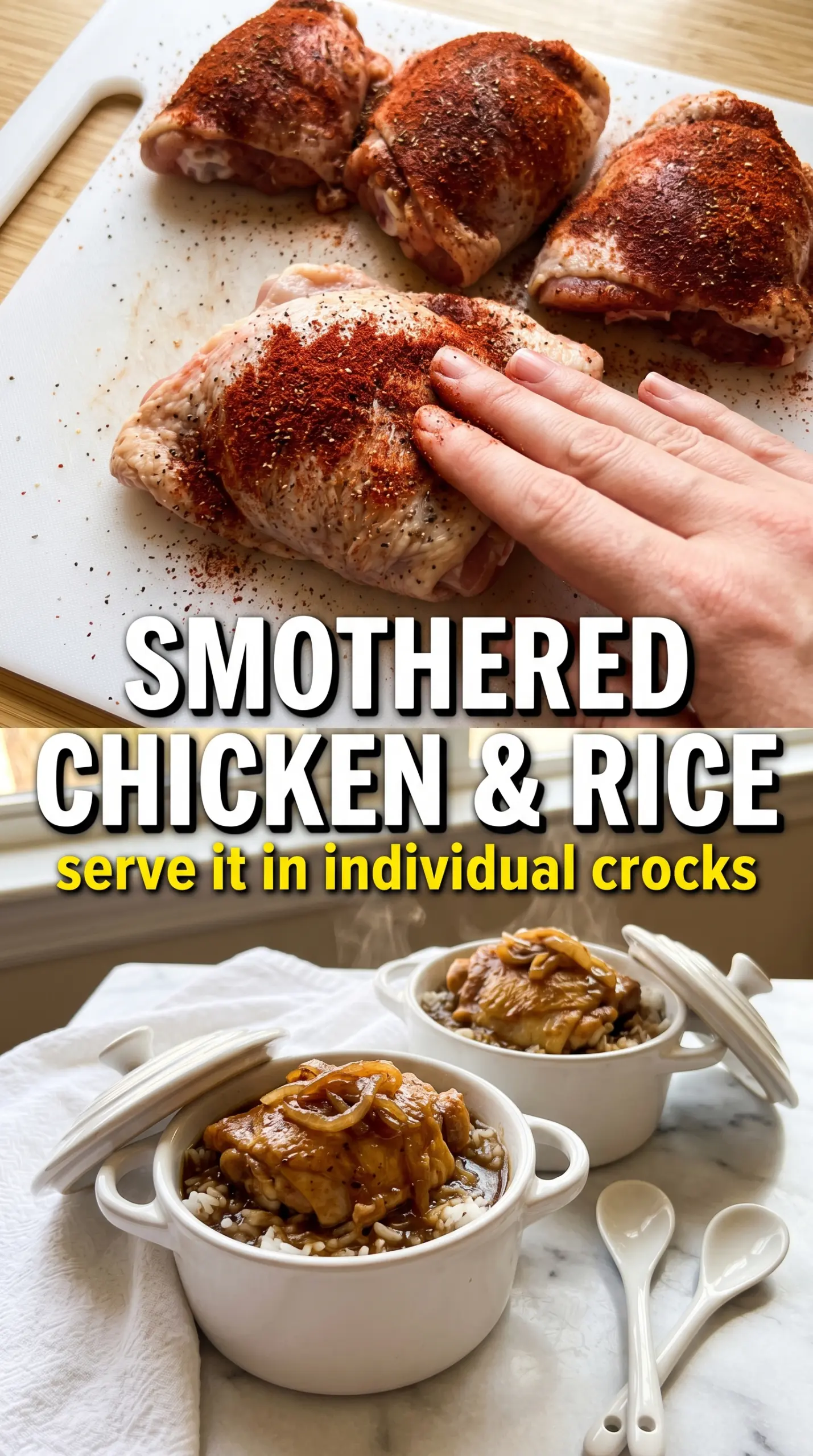
- Bone-in, skin-on chicken thighs — These stay juicy through the full simmer and leave enough fat behind to flavor the onions. Boneless thighs will work in a pinch, but you’ll lose some of the richness and the skin-on browning that makes the gravy taste cooked, not mixed.
- Yellow onion — This is where the gravy gets its sweetness and body. Slice it thin enough to soften and darken without burning; if you rush this part, the sauce tastes sharp instead of round.
- Flour — The flour cooks with the onions to thicken the broth into a proper gravy. Let it toast for about a minute before adding liquid, or the sauce can taste pasty.
- Heavy cream — Just a half cup changes the sauce from brothy to smothered. Half-and-half can work, but it won’t coat the rice the same way and it’s more likely to look thin by the time the chicken is done.
- Long-grain white rice — This is the right rice for a fluffy finish. Short-grain rice turns softer and stickier, and brown rice needs a different timing and more liquid than this recipe provides.
- Worcestershire sauce — It adds a quiet hit of savoriness that makes the gravy taste deeper without tasting like a separate ingredient. Don’t skip it unless you have to; even that small amount helps the sauce taste finished.
Building the Pot so the Rice Cooks Without Going Mushy
Season and sear the chicken first
Coat the thighs evenly with the garlic powder, onion powder, smoked paprika, salt, and pepper, then lay them skin-side down in hot oil. You want a steady sizzle and a skin that pulls free easily once it’s browned; if it sticks, it needs another minute. The goal is not to cook the chicken through here, just to build color and flavor before anything else goes into the pot.
Caramelize the onions in the same pot
Once the chicken is out, the onions go into the same pot so they can pick up the browned bits. Cook them over medium heat until they turn soft, glossy, and deep golden at the edges, which usually takes 8 to 10 minutes. If they start to scorch before they soften, the heat is too high; lower it and keep going, because burnt onion turns the whole gravy bitter.
Thicken the gravy before the rice goes in
Stir the flour into the onions and let it cook for a full minute, then add the broth gradually while scraping the bottom. The liquid should go from thin to silky and slightly thickened, not clumpy. Stir in the cream and Worcestershire before adding the rice so the seasoning is even throughout the pot and the sauce is already stable when the grains hit it.
Let the rice finish under a tight lid
Stir in the uncooked rice, nestle the chicken back on top skin-side up, and bring the pot to a gentle simmer before covering it. The heat should stay low enough that you hear a soft bubble, not an aggressive boil; too much heat can scorch the rice on the bottom before the center cooks. When it’s done, the rice will be tender and the chicken should hit 165°F, with the sauce absorbed enough to cling to every bite.
Make It With Chicken Breasts
Chicken breasts can work, but they need less simmer time and a little more attention. Sear them the same way, then start checking early so they don’t dry out while the rice finishes. The tradeoff is less richness in the sauce, since thighs give you more flavor and a juicier result.
Dairy-Free Version
Swap the heavy cream for full-fat coconut milk or an unsweetened dairy-free cooking cream. Coconut milk brings more body than flavor once it simmers with the onions and broth, but it will make the sauce slightly softer and less classic-tasting. Use an unsweetened version so the gravy stays savory.
Gluten-Free Adjustment
Use a 1:1 gluten-free flour blend in place of the all-purpose flour. Cook it with the onions just like the original so the raw starch flavor cooks out before the broth goes in. The texture stays close, though the gravy may look a touch softer once it rests.
Adding Vegetables Without Throwing Off the Rice
Stir in a handful of thawed peas or sliced mushrooms near the end of the simmer so they don’t steal liquid from the rice. Fresh carrots or celery need to cook with the onions at the start, or they’ll stay too firm by the time the dish is done. Keep the add-ins modest so the rice still gets enough broth to cook properly.
Storage and Reheating
- Refrigerator: Store leftovers for up to 4 days. The rice will firm up as it chills, and the gravy will thicken a little more.
- Freezer: It freezes, but the rice softens after thawing. Freeze in portions for up to 2 months if you don’t mind a softer texture.
- Reheating: Reheat gently on the stove or in the microwave with a splash of broth to loosen the sauce. High heat can dry out the chicken and make the rice gummy, so warm it slowly until it’s heated through.
Questions I Get Asked About This Recipe

Smothered Chicken and Rice
Ingredients
Equipment
Method
- Season the chicken thighs with garlic powder, onion powder, smoked paprika, salt, and pepper.
- Heat the vegetable oil in a large Dutch oven and sear the chicken skin-side down over medium-high heat for 6-7 minutes until golden.
- Flip the chicken and sear for 4 minutes, then remove the thighs to a plate.
- Cook the sliced onion in the same pot over medium heat for 8-10 minutes until caramelized.
- Add the minced garlic and cook for 1 minute, stirring to prevent burning.
- Sprinkle the flour over the onions and stir for 1 minute.
- Gradually add the chicken broth while scraping up the browned bits from the bottom of the pot.
- Stir in the heavy cream and Worcestershire sauce until smooth.
- Stir in the uncooked long-grain white rice.
- Nestle the chicken thighs skin-side up into the broth.
- Bring the mixture to a simmer.
- Cover tightly and cook over low heat for 20-22 minutes until the rice is cooked and the chicken reaches 165°F.
- Garnish with fresh parsley and serve hot.