Sour Cream and Onion Chicken comes out with a crackly, golden top that gives way to juicy chicken and a tangy, creamy layer underneath. It tastes familiar in the best way, like the onion dip everyone goes back to, but turned into a proper dinner instead of an appetizer. The crispy onion coating bakes into a puffy crust that holds its crunch just long enough to make every bite worth serving right away.
What makes this version work is the balance between the sour cream layer and the dry topping. The sour cream keeps the chicken protected in the oven and gives the onion soup mix a chance to bloom into something savory and punchy, while the crushed fried onions and Parmesan add salt, texture, and browning. Pressing the topping on firmly matters more than people think; that’s what keeps the crust from sliding off as it bakes.
Below, you’ll find the little details that help this chicken bake evenly, plus a few swaps that still keep the crust crisp and the flavor bold. If you’ve ever had a chicken bake turn soggy or bland, this one fixes both problems.
The sour cream kept the chicken unbelievably juicy, and the onion-Parmesan topping baked into a real crust instead of sliding off. I served it with rice, and even the edges stayed crisp.
Save this Sour Cream and Onion Chicken for the nights when you want a crispy baked chicken dinner with a tangy, savory crust.
The Coating Needs Firm Pressure, Not Extra Time
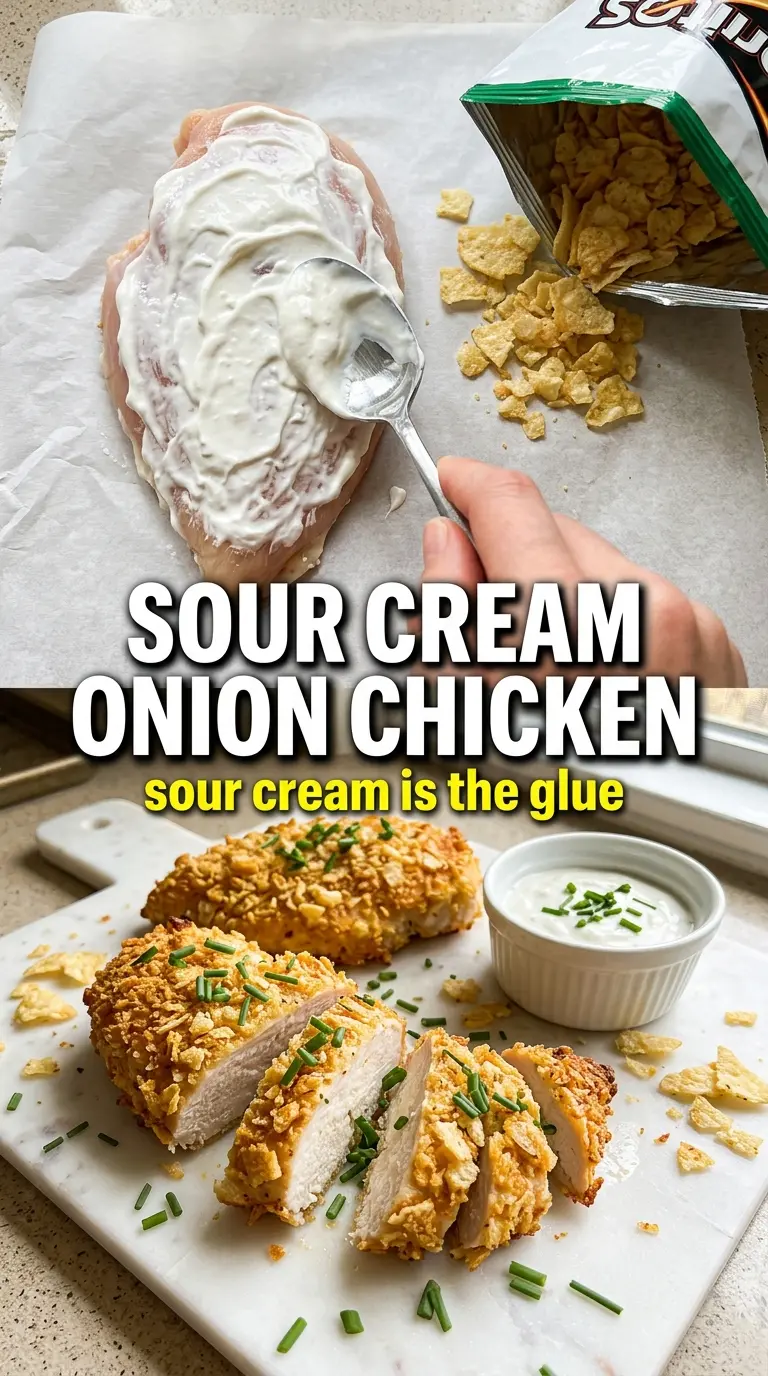
The most common mistake with a chicken bake like this is treating the topping like a breadcrumb crust. It isn’t. The sour cream mixture is the glue, and the onion-Parmesan layer needs to be pressed on firmly so it can set into one cohesive shell instead of falling off in sandy clumps.
Chicken breasts also vary a lot in thickness, and that changes everything in the oven. If the tops brown before the center is done, the chicken was probably too thick. Pounding them to an even thickness or at least choosing pieces that are close in size keeps the coating from burning before the meat reaches 165°F.
- Sour cream — This is the moisture and tang in the dish. Full-fat sour cream gives the best body, but plain Greek yogurt can stand in if you want a sharper finish and don’t mind a slightly leaner texture.
- Onion soup mix — This carries the savory onion flavor without needing to sauté anything first. It’s salted already, so go easy on extra salt until you taste the coating mixture.
- Crispy fried onions — These are the crust. Crushed, they cling better and bake into a more even topping than whole onions would. French-fried onions from a can work perfectly here.
- Parmesan — Parmesan helps the topping brown and gives it a salty, nutty edge. Use grated Parmesan, not the powdery shelf-stable kind, if you want the coating to bake up more nubbly and crisp.
- Garlic powder — A small amount rounds out the onion flavor and keeps the topping from tasting flat. Fresh garlic isn’t a better swap here because it can burn under the crust.
What Each Ingredient Is Actually Doing in This Recipe
- Primary ingredient (the star) — Quality matters most. Choose the best you can find.
- Cooking medium (oil, butter, or broth) — This carries flavors and prevents dryness.
- Seasonings (salt, pepper, spices, herbs) — Layer flavors so nothing overpowers. Build depth gradually.
- Aromatics (garlic, onion, herbs) — Cook with fat to bloom flavors. Become the foundation.
- Supporting ingredients — Complement the main ingredient without overpowering it.
- Sauce or liquid (if applicable) — Brings flavors together. Balance richness with acid.
- Acid (lemon, vinegar, wine, or other) — Brightens and prevents flat-tasting results.
- Final finish (garnish, glaze, or sauce) — Prevents one-dimensional taste and adds visual appeal.
Press, Bake, and Let the Topping Turn Puffy
Mixing the Tangy Base
Stir the sour cream and onion soup mix until the mixture looks smooth and evenly speckled. It should smell salty, oniony, and a little sharp. If it still looks streaky, keep mixing; uneven pockets of soup mix can leave bitter spots on the finished chicken.
Building the Crust
Combine the crushed fried onions, Parmesan, and garlic powder in a separate bowl, then press that mixture onto the sour cream-coated chicken with real pressure. The topping should look thick and slightly messy, not neatly dusted on. If you pat it on too lightly, it’ll bake off in patches instead of forming that crackled top.
Baking Until the Center Catches Up
Slide the dish into the oven and bake until the crust is deeply golden and the chicken reaches 165°F at the thickest point. If the topping is browning too fast, tent the dish loosely with foil for the last few minutes. Pulling it early leaves you with juicy chicken but a soft, underbaked coating, so the temperature matters more than the clock.
Finishing for Crunch
Let the chicken rest for a few minutes before topping it with extra crispy onions and chives. That short rest keeps the juices inside the meat instead of running out the second you cut in. Add the garnish after baking so the extra onions stay crunchy and the chives keep their fresh bite.
How to Adjust the Crust Without Losing the Crunch
Make it gluten-free
Use a gluten-free onion soup mix and certified gluten-free crispy onions. The texture stays close to the original, but you need to check labels carefully because both of those ingredients often hide wheat.
Swap in Greek yogurt
Plain Greek yogurt can replace the sour cream in a 1:1 swap. The chicken still bakes up tender, but the flavor is a little sharper and the sauce layer is less rich.
Use chicken thighs instead
Boneless skinless thighs stay extra juicy and handle a little more browning without drying out. They may need a few extra minutes in the oven, so go by temperature instead of assuming the same bake time.
Make it a little lighter
Use reduced-fat sour cream if that’s what you have, but expect a thinner coating and slightly less richness. The crust still works, though the finished chicken won’t have quite the same creamy body under the topping.
Storage and Reheating
- Refrigerator: Store leftovers in an airtight container for up to 3 days. The crust softens a bit, but the flavor holds up well.
- Freezer: It freezes, but the topping loses some crunch. If you freeze it, wrap portions tightly and thaw in the refrigerator before reheating.
- Reheating: Warm in a 350°F oven until heated through, uncovered, so the coating can dry out and crisp a little again. The microwave makes the topping soggy fast, so skip it unless you don’t care about the crust.
Questions I Get Asked About This Recipe
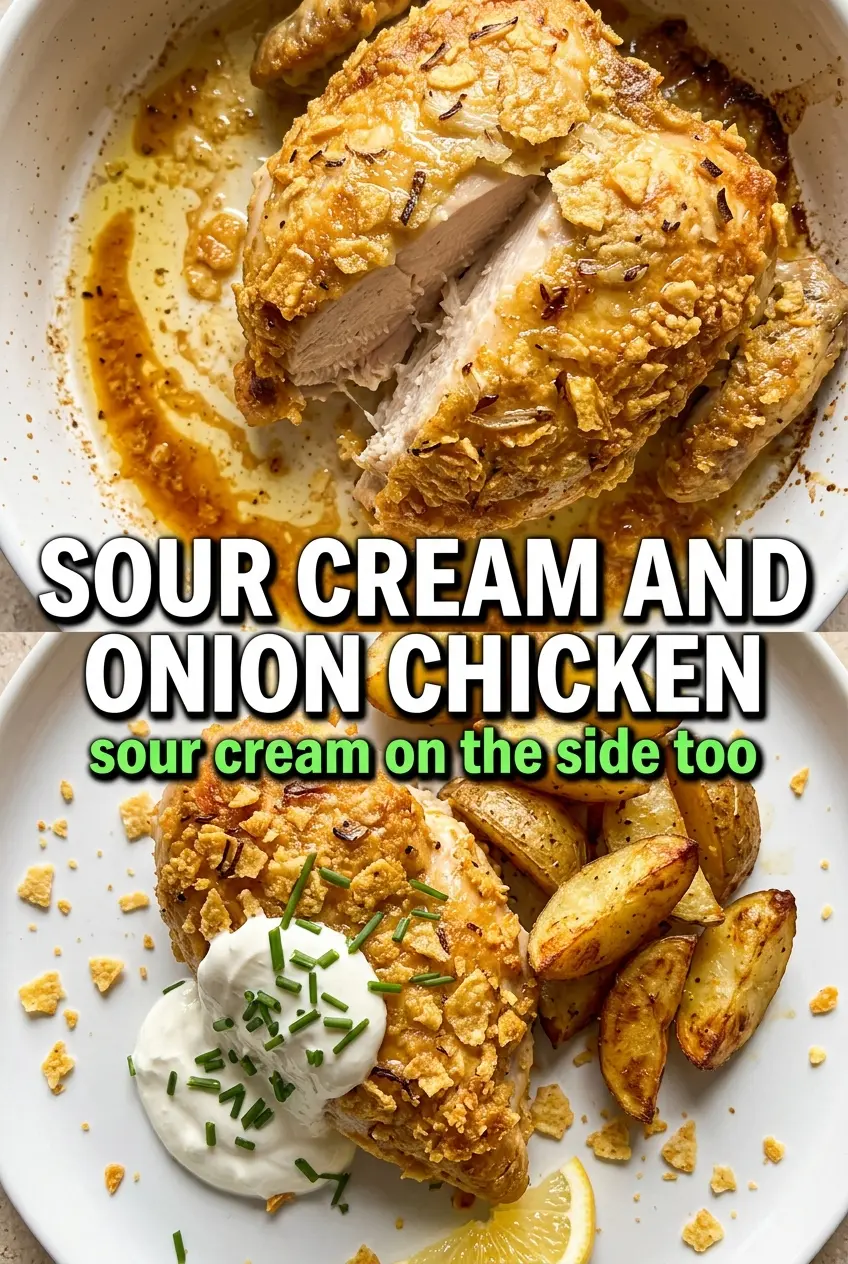
Sour Cream and Onion Chicken
Ingredients
Equipment
Method
- Preheat oven to 375°F and grease a baking dish.
- Mix sour cream and onion soup mix until well combined.
- Combine crushed crispy fried onions, Parmesan, and garlic powder in a separate bowl.
- Season chicken with salt and pepper, then coat each breast thickly with the sour cream mixture.
- Press the onion-Parmesan mixture firmly onto the top of each sour cream-coated breast.
- Bake for 25-28 minutes, until the topping is golden and internal temperature reaches 165°F.
- Garnish with extra crispy fried onions and fresh chives before serving.