Southern fried cabbage lands on the plate tender, savory, and edged with just enough caramelization to keep every bite interesting. The bacon seasons the whole pan from the start, the onion melts into the drippings, and the cabbage softens without turning limp. What you get is a skillet side that tastes deeper than the short ingredient list suggests.
The trick is letting the cabbage spend enough time in the pan to pick up color before you add the vinegar at the end. That last splash wakes everything up and keeps the dish from tasting flat, while a little sugar nudges the onions and cabbage toward a gentle sweetness instead of harsh browning. If the pan looks crowded at first, give it a minute; cabbage shrinks fast, and the extra space opens up for real caramelization.
Below, I’ve included the small timing details that matter most, plus a few swaps for making this work with what you already have. The difference between soggy cabbage and the kind people go back for is usually just a hot skillet and patience.
The cabbage got those golden edges I always miss when I rush it, and the splash of vinegar at the end kept it from tasting heavy. My husband kept sneaking bites from the skillet.
Save this Southern fried cabbage for the night you want crispy bacon, sweet onion, and tender golden cabbage in one skillet.
The Trick to Keeping Fried Cabbage From Going Watery
The biggest mistake with fried cabbage is treating it like a quick stir-fry. Cabbage throws off moisture as it cooks, and if the heat is too low or the pan is too crowded, it steams in its own liquid instead of taking on those browned edges that make the dish worth making. A wide skillet and steady medium heat give the water time to cook off before the cabbage turns soft.
Salt matters here, but it belongs in the pan with the cabbage, not on top at the table. It pulls moisture out early, which sounds like a bad thing until you realize that moisture is exactly what has to evaporate before the vegetables can caramelize. The bacon drippings and butter help with browning, but the real payoff comes from leaving the cabbage alone long enough to catch color before stirring again.
What Each Ingredient Is Doing in the Skillet
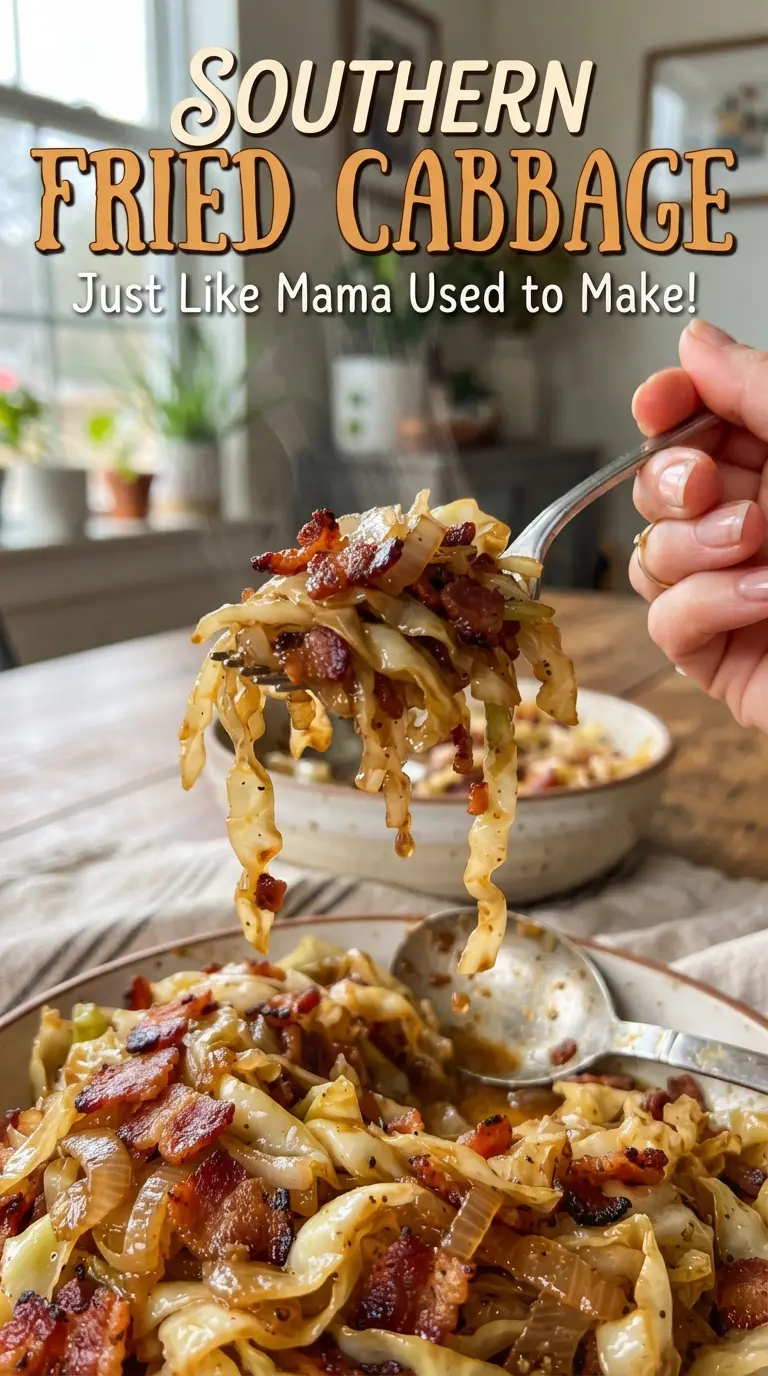
- Bacon — This builds the first layer of flavor and leaves behind fat that carries the onion and cabbage. Thick-cut bacon works fine, but thinner slices crisp faster and render more evenly. Pull it out when it’s crisp so it stays snappy when you stir it back in at the end.
- Yellow onion — Onion softens in the drippings and turns sweet as it cooks, which balances the cabbage’s mild bitterness. If you only have white onion, it’ll work, but it comes on sharper and less mellow. Slice it evenly so it softens at the same pace instead of disappearing in spots and staying crunchy in others.
- Green cabbage — A firm head with tight leaves holds up best here. Pre-shredded cabbage works in a pinch, but it softens faster and tends to go limp sooner, so watch the pan more closely. Core it well and chop into pieces that are small enough to cook through but large enough to keep some bite.
- Apple cider vinegar — This is the finishing move that keeps the dish from tasting heavy. Stir it in at the very end so it lifts the bacon fat and brightens the cabbage instead of cooking off. If you swap in white vinegar, use a little less because it bites harder.
Building the Pan Flavor So the Cabbage Browns, Not Boils
Crisping the Bacon First
Start the bacon in a cold or lightly heated skillet and let it render over medium heat until the pieces are crisp and the fat in the pan looks glossy. If the bacon rushes to dark brown before the fat has time to render, the skillet won’t have enough flavorful drippings to carry the vegetables. Lift the bacon out and leave the fat in the pan; that’s the base of the dish.
Softening the Onion Before the Cabbage
Add the onion next and cook it until it turns translucent with a few browned edges. That early softening matters because raw onion takes longer to mellow than cabbage does, and if both go in together the onion can stay sharp while the cabbage overcooks. Stir in the garlic for just 30 seconds, long enough for it to smell fragrant but not long enough for it to turn bitter.
Letting the Cabbage Sit in the Heat
Add the cabbage with the butter, salt, pepper, red pepper flakes, and sugar, then let it lie in the skillet for a minute before stirring. That pause gives the bottom layer a chance to pick up color. Keep cooking for 12 to 15 minutes, stirring only occasionally, until the cabbage is tender and the edges are turning deep golden. If it looks pale and wet, the heat is too low or the pan is overloaded.
Finishing With Vinegar and Bacon
Stir in the vinegar at the end, then fold the bacon back through the pan. The vinegar should smell sharp for a second and then disappear into the steam, leaving brightness behind rather than a sour finish. Taste it once before serving; if it needs another pinch of salt or pepper, add it now while the skillet is still hot.
Three Ways to Work This Recipe Around What You Have
Make It Without Bacon
Use 2 to 3 tablespoons of olive oil or butter instead of bacon drippings and add a pinch of smoked paprika for depth. You’ll lose the salty porky bite, but the cabbage still browns well and the paprika gives it a subtle smoky edge that keeps it from tasting one-note.
Make It Vegetarian
Skip the bacon and use butter or olive oil, then add a little smoked paprika and an extra pinch of salt. The dish will be softer and less savory, but still rich if you let the onion and cabbage develop enough color in the pan. A splash of liquid smoke is optional, but use it sparingly.
Make It Dairy-Free
Leave out the butter and use extra bacon drippings or a neutral oil instead. The texture stays the same, but the finished dish will taste a little leaner and less rounded. If you want more richness, add another teaspoon of oil right before the cabbage goes in.
Storage and Reheating
- Refrigerator: Store leftovers in an airtight container for up to 4 days. The cabbage will soften a bit more as it sits, but the flavor holds up well.
- Freezer: Freezing isn’t ideal because cabbage loses texture and turns softer after thawing. If you do freeze it, cool it completely first and thaw it in the fridge before reheating.
- Reheating: Warm it in a skillet over medium-low heat with a small splash of water or broth. The common mistake is blasting it in the microwave until it turns mushy; gentle heat keeps the cabbage from collapsing.
Questions I Get Asked About This Recipe
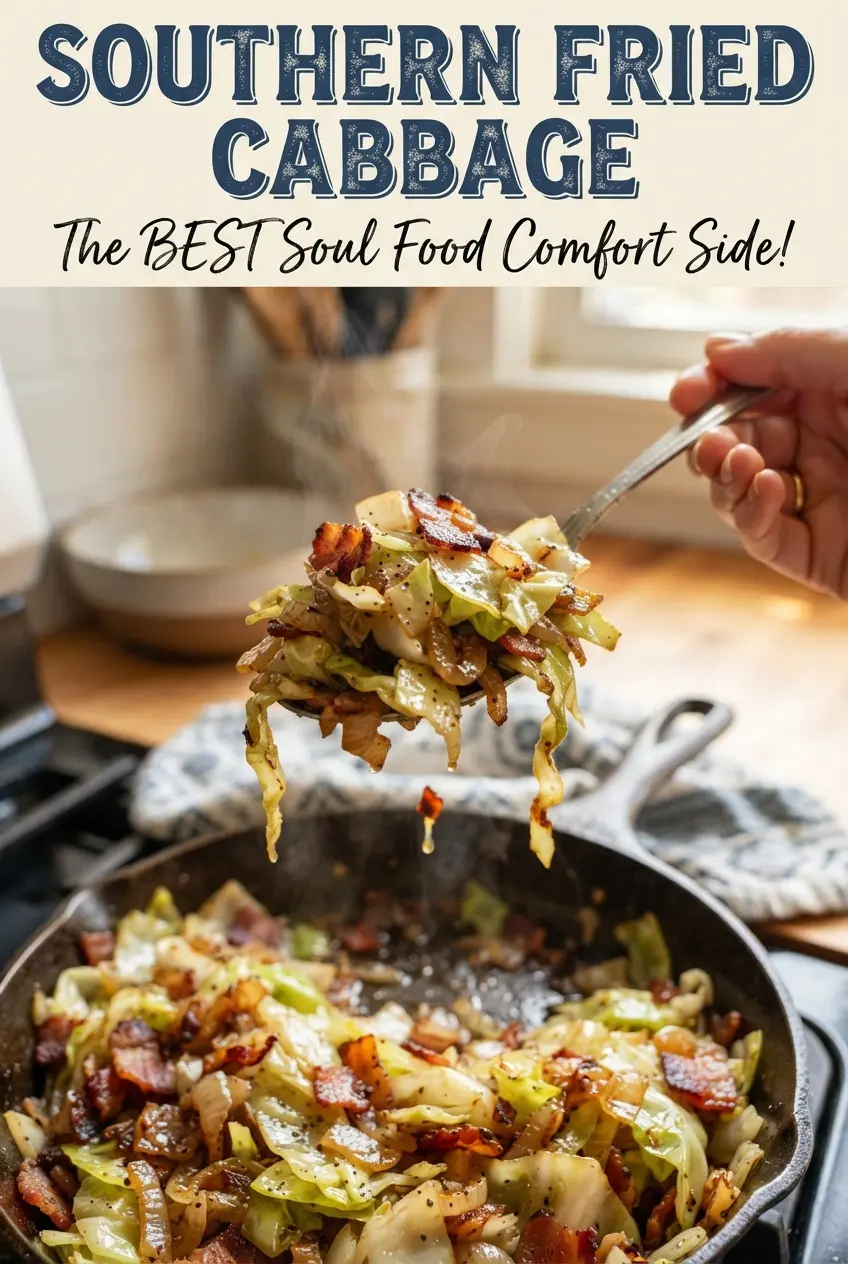
Southern Fried Cabbage
Ingredients
Equipment
Method
- Cook the bacon in a large skillet over medium heat for 8 minutes, until crisp. Remove the bacon and leave the drippings in the skillet.
- Add the onion and cook for 5 minutes, stirring occasionally, until softened. Stir in the garlic and cook for 30 seconds.
- Add the cabbage, butter, salt, black pepper, red pepper flakes, and sugar to the skillet. Cook for 12-15 minutes, stirring occasionally, until the cabbage is tender and caramelized at the edges.
- Stir in the apple cider vinegar and the crispy bacon. Serve warm.