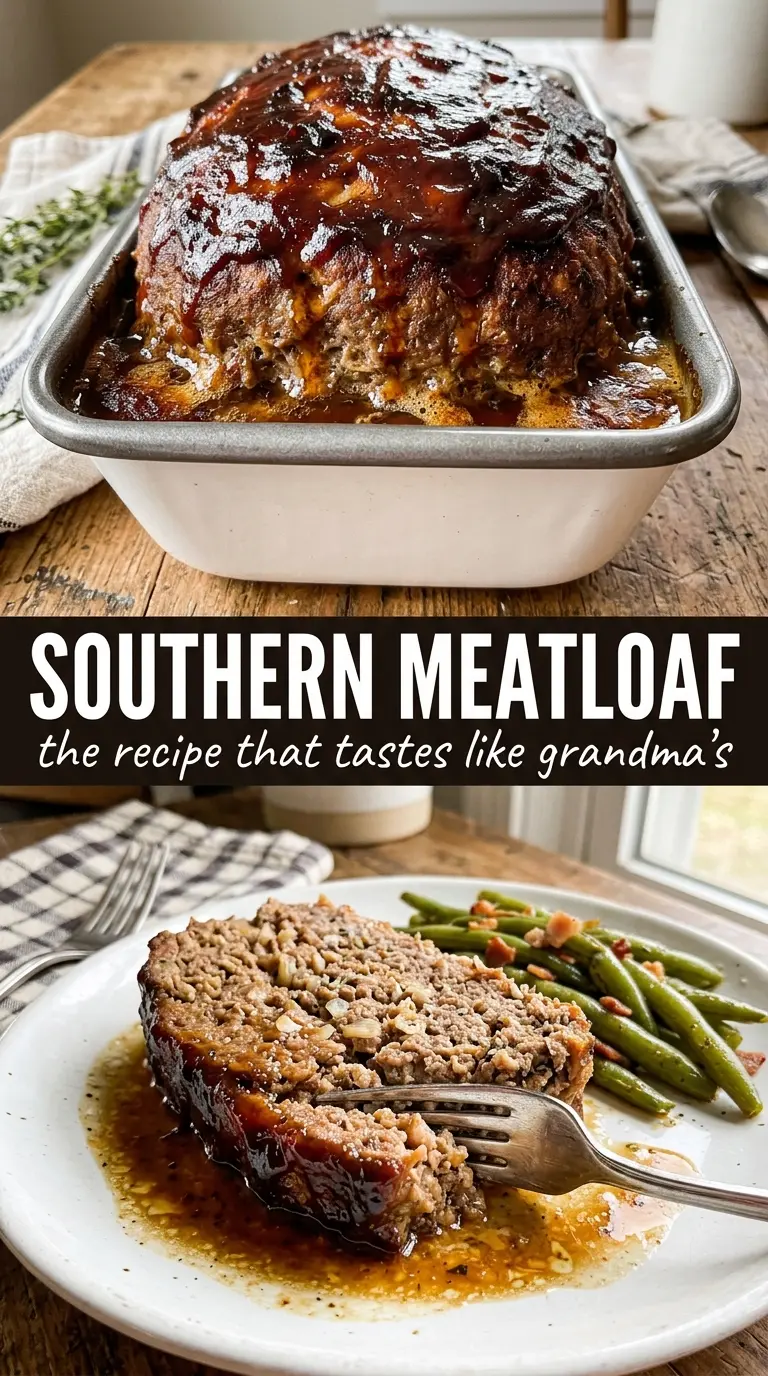
Southern meatloaf lands on the table with a tender slice, a caramelized ketchup-mustard crown, and just enough onion and bell pepper in the middle to keep every bite interesting. The edges set up into a savory crust while the center stays moist and sliceable, which is exactly what you want from a proper loaf pan meatloaf.
What makes this version work is the balance. Saltine crumbs keep the texture light without turning it bready, milk softens the panade, and the diced onion and bell pepper cook down inside the loaf instead of staying sharp or crunchy. The glaze goes on before baking, not after, so it has time to bake into a sticky, tangy layer instead of sitting on top like a cold sauce.
Below, I’ll walk through the part that matters most: how to keep meatloaf from turning dense, why the glaze belongs on early, and the small ingredient choices that make this taste like the Southern meatloaf you remember.
The loaf held together beautifully and sliced cleanly after the rest. That ketchup-mustard top caramelized into this perfect tangy glaze, and the bell pepper kept it from tasting heavy.
Like this Southern meatloaf with its tangy glaze and tender cracker-crumb texture? Save it to Pinterest for an easy comfort-food dinner with classic Southern sides.
The Reason This Meatloaf Stays Tender Instead of Turning Heavy
The mistake most meatloaves make is overworking the beef. Once the mixture starts looking uniform, stop mixing. That’s the line between a slice that holds together and a loaf that bakes up tight and chewy.
The cracker crumbs and milk do more than stretch the meat. They hold onto moisture during the bake, which keeps the interior soft after the loaf rests. If your meatloaf has ever come out dry at the edges and compact in the middle, it usually means there wasn’t enough moisture in the mix or the pan was packed down too firmly.
- Cracker crumbs — Saltines give this a classic Southern texture and a mild, savory backbone. Breadcrumbs work in a pinch, but they don’t bring the same soft, slightly rich finish.
- Sweet onion and green bell pepper — These add the familiar meatloaf flavor you expect, but cut them fine so they melt into the loaf. Big chunks leave pockets that can make slicing messy.
- Worcestershire sauce — This deepens the beef and helps the loaf taste seasoned all the way through. There isn’t a perfect substitute, though a splash of soy sauce can cover part of the same ground if that’s what you have.
What Each Ingredient Is Doing in the Loaf
- Ground beef — Use beef with enough fat to stay juicy. Very lean beef will bake up drier and need extra care with the rest time.
- Eggs — They bind the loaf so it slices cleanly. Without them, the mixture tends to crumble as soon as you cut into it.
- Whole milk — This softens the crumbs and helps the loaf stay tender. Lower-fat milk works, but whole milk gives a better finish.
- Yellow mustard in the glaze — It keeps the topping from tasting flat or overly sweet. Dijon will work, but it shifts the glaze toward sharper and less classic Southern.
- Brown sugar — It helps the glaze caramelize into that sticky top. If you cut it back too far, the glaze will taste thin and one-note.
How to Mix, Glaze, and Bake It Without Losing the Texture
Building the Mixture Gently
Combine the beef, cracker crumbs, eggs, milk, vegetables, Worcestershire, and seasonings in one bowl and mix with your hands just until the ingredients look evenly distributed. The mixture should feel cohesive, not paste-like. If you keep squeezing after that point, the beef tightens up and the finished loaf gets dense. A light hand here pays off at the table.
Pressing It Into the Pan
Pack the mixture into a greased 9×5 loaf pan, but don’t mash it down like clay. You want it settled, not compressed. A gentle press helps it hold its shape while still leaving enough air for the loaf to bake tender. If the top looks perfectly smooth before baking, it’s probably too tightly packed.
Glazing Before the Oven
Mix the ketchup, mustard, and brown sugar until smooth, then spread it evenly over the top before baking. That early glaze time lets the sugars caramelize and the mustard mellow into the meat rather than sitting on top at the end. If the glaze looks thin at first, don’t worry; it thickens as it heats and bakes into a proper shiny cap.
Knowing When It’s Done
Bake until the center reaches 160°F and the glaze is darkened and sticky around the edges, usually 60 to 70 minutes. The loaf should feel set when you touch the center lightly, not jiggly in the middle. If the top is browning too quickly before the center is cooked, lay a loose piece of foil over it for the last stretch.
Three Ways to Make This Southern Meatloaf Work for Your Table
Gluten-Free Version
Swap the saltine crumbs for certified gluten-free cracker crumbs or gluten-free breadcrumbs. The texture stays close to the original, though crackers give a little more of that old-fashioned meatloaf flavor than plain breadcrumbs do.
Dairy-Free Adaptation
Use unsweetened plain oat milk or almond milk in place of whole milk. The loaf still stays tender, but oat milk gives a rounder result than almond milk and behaves more like the original.
Extra-Savory Version
Stir in a tablespoon of finely minced parsley or a small amount of smoked paprika if you want a deeper, more seasoned finish. Don’t overdo it, or you’ll push the loaf away from the clean Southern flavor that makes this version work.
Make-Ahead Friendly
Shape the loaf and mix the glaze up to a day ahead, then keep them covered separately in the refrigerator. Bake it straight from the fridge, but expect to add a few extra minutes so the center catches up fully.
Storage and Reheating
- Refrigerator: Store slices in an airtight container for 3 to 4 days. The flavor deepens overnight, and the texture firms up enough for neater sandwiches or reheat portions.
- Freezer: Meatloaf freezes well. Wrap individual slices or the whole cooled loaf tightly, then freeze for up to 3 months for the best texture.
- Reheating: Warm slices covered in a 300°F oven with a spoonful of water or extra glaze so they don’t dry out. Microwaving works for a quick lunch, but use short bursts or the edges turn tough fast.
Questions I Get Asked About This Recipe
Southern Meatloaf
Ingredients
Equipment
Method
- Preheat the oven to 350°F and grease a 9x5 loaf pan, then set it aside for easy filling. This helps the meatloaf release cleanly after baking.
- Combine ground beef, saltine cracker crumbs, eggs, whole milk, sweet onion, green bell pepper, Worcestershire sauce, garlic powder, onion powder, salt, and black pepper in a mixing bowl until evenly combined. Mix just until incorporated so the loaf bakes tender rather than tough.
- Press the meat mixture into the prepared loaf pan in an even layer with the top smoothed. Packing the loaf helps it hold its shape when sliced.
- Mix ketchup, yellow mustard, and brown sugar, then spread the glaze evenly over the top. Covering the surface all the way ensures a caramelized, glossy finish.
- Bake at 350°F for 60–70 minutes, until the internal temperature reaches 160°F and the glaze is caramelized. Look for deep amber color and bubbling at the edges as the visual cue.
- Rest the meatloaf for 10 minutes before slicing and serving. This brief rest firms the loaf so each thick slice holds together.
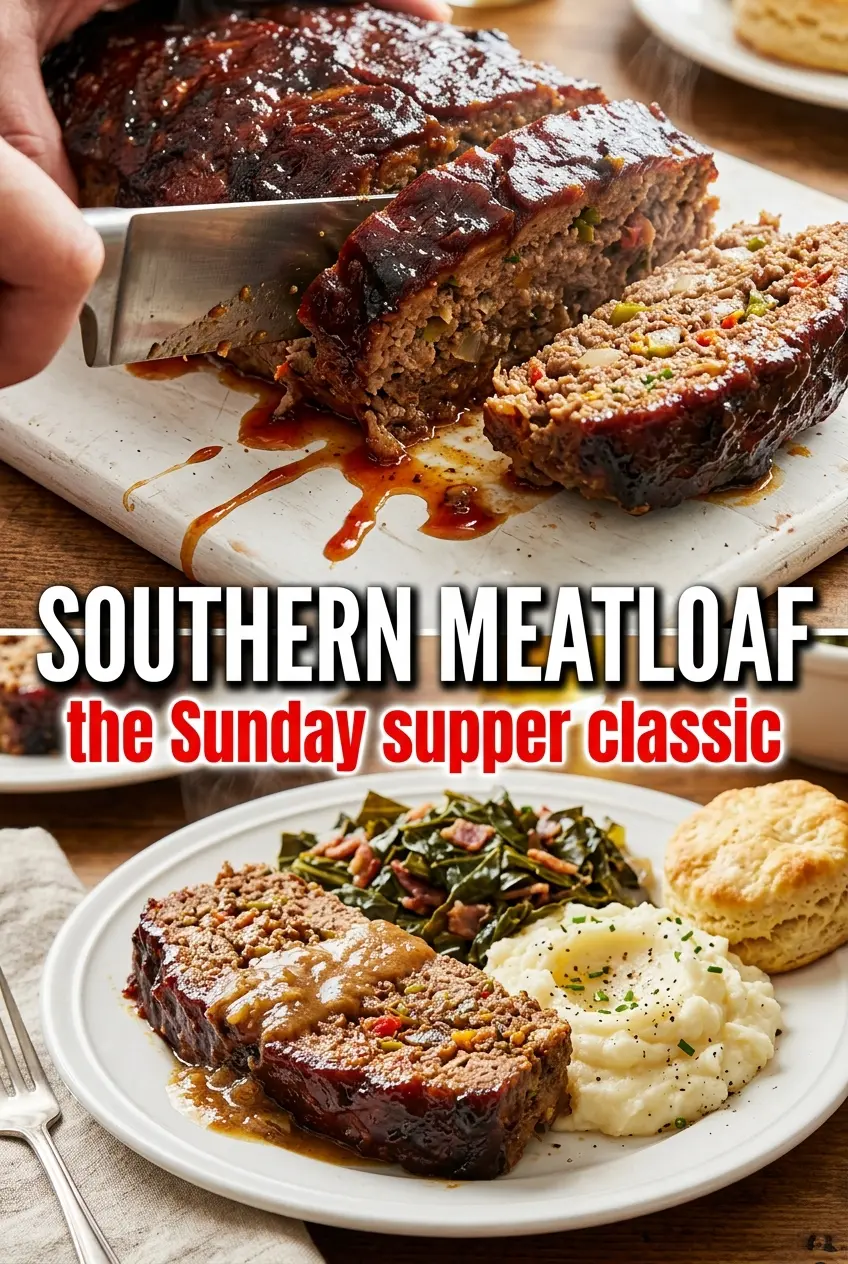
- Serve with classic Southern sides such as mashed potatoes and green beans. Plate thick slices with extra glaze from the pan spooned over the top.