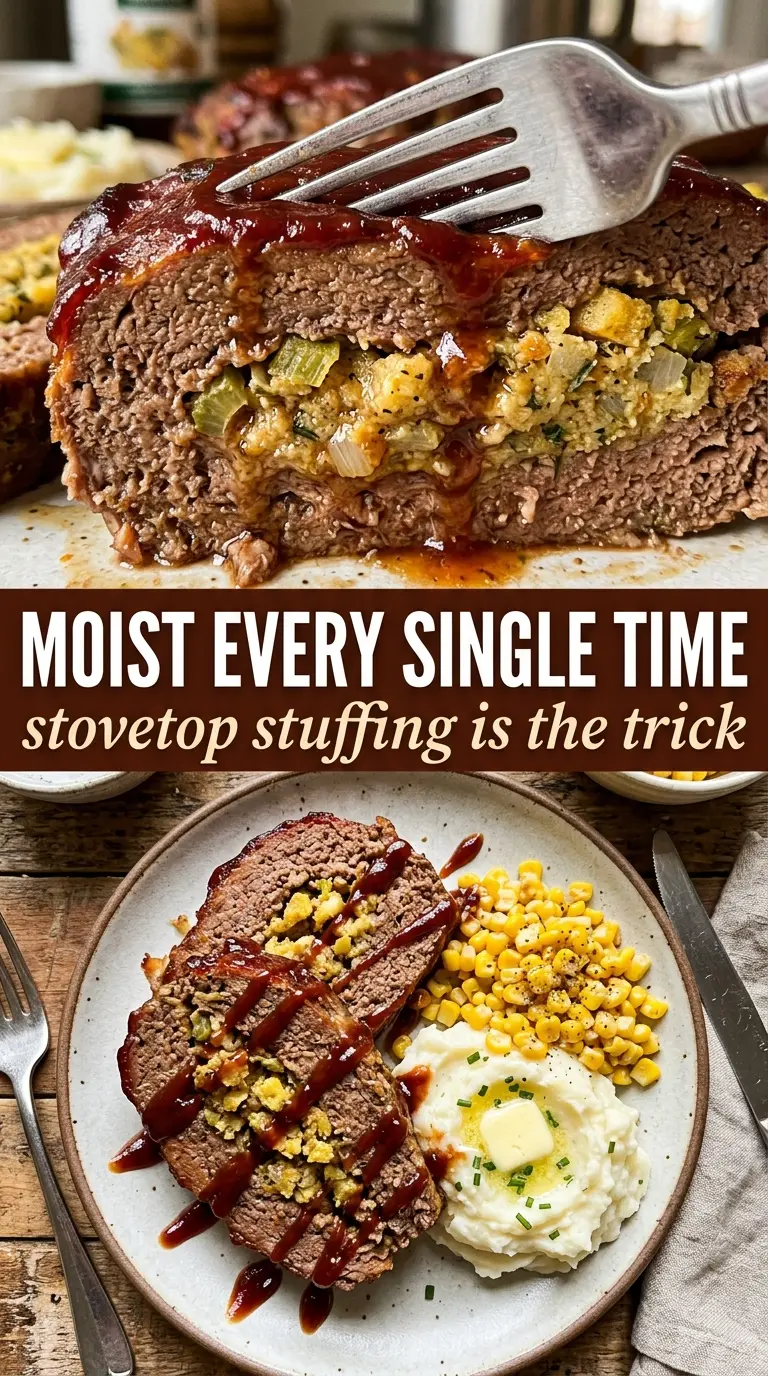
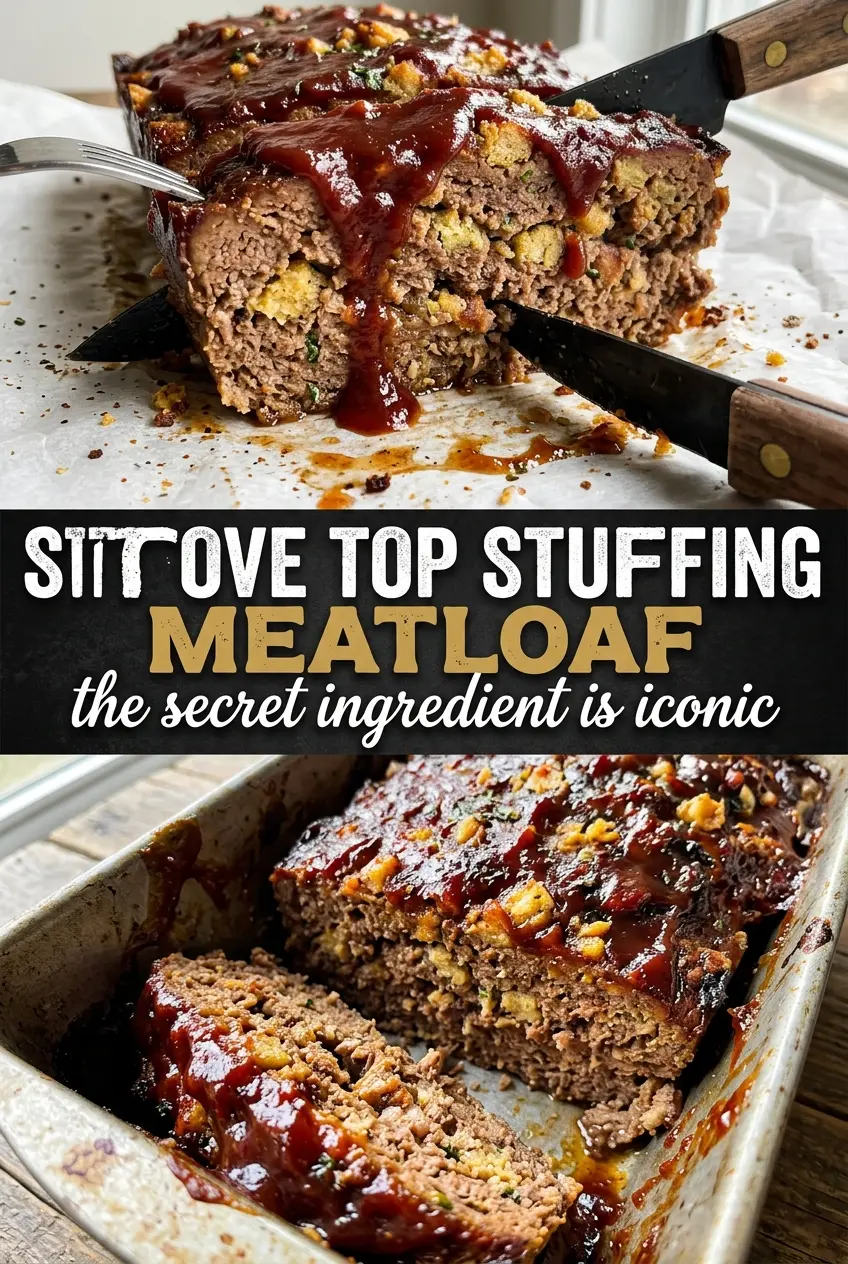
Stove Top stuffing meatloaf comes out moist, sliceable, and packed with savory seasoning without needing a long list of pantry extras. The stuffing mix does more than replace breadcrumbs; it carries the herbs, onion, and bread structure that keep the loaf tender while the beef stays meaty and substantial. The ketchup glaze bakes into a sticky top that clings to each slice instead of sliding off the pan.
The trick is letting the stuffing hydrate before it meets the beef. That short rest gives the mix time to soften so it blends evenly and doesn’t steal moisture from the meat as it bakes. Grated onion works better here than chopped onion because it disappears into the loaf and adds flavor without leaving raw little bites behind.
Below you’ll find the simple timing that keeps the loaf juicy, plus the one step that keeps the glaze glossy instead of burning. There are also a few practical swaps if you’re working with a different stuffing flavor or need to stretch the recipe for a bigger crowd.
The stuffing mix made the texture perfect and it sliced cleanly after resting. I added the glaze again halfway through baking, and the top came out sticky and caramelized instead of dry.
Love how Stove Top stuffing turns this meatloaf into a tender, savory slice with a glossy ketchup glaze? Save it for your next easy comfort-food dinner.
The Reason This Meatloaf Stays Tender Instead of Turning Dense
Stuffing mix changes the usual meatloaf equation. It already contains seasoned bread pieces that absorb moisture, so the loaf gets structure without turning heavy the way a breadcrumb-only version can. That means you can mix the meatloaf until it comes together without worrying as much about a tight, bouncy texture.
The other thing that matters here is the ratio of wet to dry. The water and milk soak the stuffing just enough to soften the bread and wake up the seasoning before it goes into the beef. If you skip that rest, the stuffing keeps pulling moisture from the meat in the oven and the finished loaf eats dry at the edges.
- Stove Top stuffing mix — This is the flavor engine. Any flavor works, but savory herb-style mixes give the most classic meatloaf taste. Generic seasoned stuffing can work too, but avoid anything with large add-ins that won’t soften evenly.
- Grated onion — Grating instead of chopping lets the onion melt into the loaf and season it from the inside. If you only have a chopped onion, mince it as fine as you can so you don’t get crunchy pieces after baking.
- Worcestershire sauce — This adds the deeper, savory note that keeps the loaf tasting beefy instead of just salty. There isn’t a perfect substitute, but soy sauce works in a pinch; use a little less because it’s saltier.
- Eggs — They hold the loaf together so it slices cleanly after resting. Two eggs is enough for this size loaf; adding more makes the texture firmer than it should be.
What Each Ingredient Is Actually Doing in This Meatloaf or Meatballs
- Ground meat (the protein foundation) — Use 80/20 so it stays moist. Handle gently to keep texture tender instead of dense.
- Breadcrumbs or fillers (the binder) — These hold the meat together without making it dense. Soak in milk first so they add moisture.
- Egg (the structural binding agent) — This holds everything together during cooking. One egg per pound of meat is the right ratio.
- Onion and aromatics (the base flavor) — Mince finely so they distribute evenly. Raw onion softens as it cooks and becomes part of the texture.
- Seasonings (salt, pepper, Worcestershire, spices) — Build flavor boldly. The meat mixture carries the entire flavor profile.
- Milk or liquid (the moisture keeper) — This keeps the meatloaf tender instead of dense and dry. Don’t skip this step.
- Glaze or sauce (ketchup-based or other) — This adds sweetness, moisture, and flavor to the exterior. Apply strategically so it caramelizes.
- Resting time (the final step) — Let the meatloaf rest 10 minutes so it sets and slices cleanly. Cutting too soon makes it fall apart.
How to Build the Loaf So the Glaze Stays Sticky
Hydrating the Stuffing First
Stir the stuffing mix with the water and milk, then leave it alone for 5 minutes. The bread pieces should look damp and softened, not soupy. If you add the stuffing straight into the beef, the dry crumbs keep soaking up moisture while the loaf bakes and the texture gets chalky around the edges.
Mixing Without Overworking
Add the beef, eggs, grated onion, Worcestershire, salt, pepper, and the soaked stuffing together and mix only until everything looks evenly combined. Use your hands or a fork and stop as soon as there are no dry pockets left. If you knead it like bread, the meat compacts and the finished loaf turns firm instead of tender.
Shaping and Baking in the Pan
Press the mixture into a greased 9×5 loaf pan and smooth the top so it bakes evenly. The pan helps the loaf hold its shape and keeps the glaze from running all over the oven. Bake at 350°F until the center reaches 160°F; if the top is browning too fast, tent it loosely with foil after the glaze has set.
Finishing with the Glaze
Mix the ketchup, brown sugar, and mustard until glossy, then spread half over the raw loaf before it goes in the oven. Add the second layer at the 45-minute mark so it caramelizes instead of burning. Pull the loaf out and let it rest for 10 minutes before slicing; if you cut too soon, the juices spill out and the slices fall apart.
How to Adapt This When You Need a Different Version
Make It Gluten-Free
Use a certified gluten-free stuffing mix or replace it with gluten-free seasoned bread crumbs plus an extra pinch of dried sage and onion powder. The texture stays close, but you’ll lose some of the built-in seasoning, so the loaf needs a little more help from the Worcestershire and glaze.
Swap the Beef for Turkey
Ground turkey works, but it needs the moisture from the stuffing and milk even more than beef does. Use 93% lean turkey for the best balance, and don’t overbake it; pull it at 160°F just like the beef version so it doesn’t dry out.
Use a Different Stuffing Flavor
Chicken-flavored stuffing gives a softer, more herb-forward loaf, while savory herb or turkey stuffing leans more classic. Cornbread-style stuffing makes the meatloaf a little sweeter, which works if you like a sweeter glaze, but it changes the balance enough that I’d keep the brown sugar in the glaze modest.
Storage and Reheating
- Refrigerator: Store sliced or whole in an airtight container for up to 4 days. The texture stays moist, and the glaze gets even better by day two.
- Freezer: It freezes well. Wrap the cooled loaf tightly, then freeze for up to 3 months. Thaw in the refrigerator overnight before reheating.
- Reheating: Reheat covered in a 325°F oven with a splash of broth or water in the pan until warmed through. The common mistake is blasting it in the microwave, which dries out the beef and makes the glaze rubbery.
Questions I Get Asked About This Recipe
Stove Top Stuffing Meatloaf
Ingredients
Equipment
Method
- Preheat the oven to 350°F and grease a 9x5 loaf pan. This prevents sticking for easy slicing.
- Mix the dry Stove Top stuffing mix with water and milk, then let it stand 5 minutes until moistened. The mixture should look hydrated, not dry.
- Combine ground beef with the soaked stuffing, eggs, grated onion, Worcestershire sauce, salt, and pepper. Mix until evenly distributed.
- Press the mixture into the loaf pan and smooth the top. Make it level so the glaze spreads evenly.
- Mix the ketchup, brown sugar, and mustard, then spread half over the meatloaf. Use a spoon to coat the surface in a thin, even layer.
- Bake for 55–65 minutes total, until the internal temperature reaches 160°F. At the 45-minute mark, spread the remaining glaze over the top.
- Rest the meatloaf for 10 minutes before slicing. Letting it rest helps the juices set for cleaner cuts.