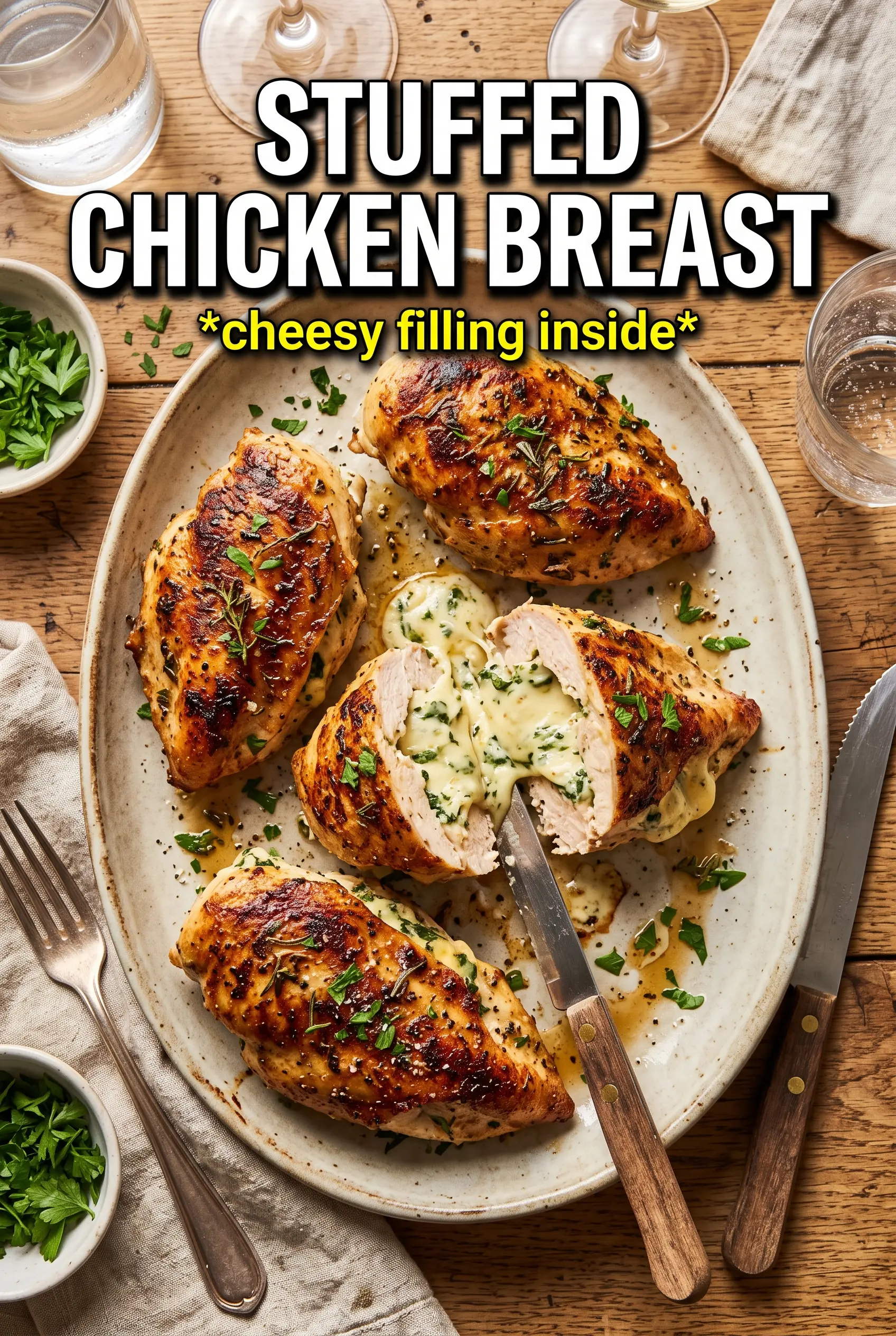
Golden, juicy stuffed chicken breast is the kind of dinner that looks like you spent all afternoon on it, even though the whole thing comes together with a short list of everyday ingredients. The outside gets a savory herb crust and a deep sear, while the center stays creamy and rich with spinach, mozzarella, and sun-dried tomatoes. When you slice into it, the filling should ooze just a little. That contrast is what makes this dish worth making again.
The key is treating the chicken breast like a pocket, not a thin piece to be flattened and rushed. A deep horizontal cut gives you room for the filling without tearing through the side, and a quick sear before baking adds flavor that oven time alone can’t give you. Softened cream cheese helps the filling stay smooth, while chopped spinach keeps it from turning watery. The sun-dried tomatoes add just enough sharpness to keep the whole thing from tasting heavy.
Below, I’ve included the little things that matter most here: how to keep the filling from leaking, when the chicken is actually done, and a few easy swaps if you want to change up the filling without losing that same creamy center.
The filling stayed creamy and didn’t leak out like it usually does for me. Searing first gave the chicken such a good color, and it was still juicy after baking.
Save this stuffed chicken breast for the nights when you want a creamy spinach filling and a golden seared crust without a fussy sauce.
The Pocket Is What Keeps the Filling Where It Belongs
Most stuffed chicken fails for one of two reasons: the pocket is too shallow, or the chicken gets overhandled and tears before it ever hits the pan. A deep horizontal cut gives you a wide cavity for the filling without splitting the breast in half. That matters because a thin seam of filling will leak out as soon as the chicken tightens in the oven.
The other thing worth paying attention to is temperature. Searing sets the outside before the filling has a chance to escape, and finishing in the oven keeps the chicken from drying out. If the skillet is screaming hot, the outside will brown too fast before the center catches up. Medium-high is the right zone here: enough heat for color, not so much that the garlic or herbs burn before the bake.
What Each Ingredient Is Actually Doing In This Dish

- Chicken breasts — Use boneless, skinless breasts that are close to the same size so they finish evenly. If one is much thicker, pound the thick end just enough to even it out before cutting the pocket. That gives you a better seal and less risk of an overdone outside with a raw center.
- Cream cheese — This is the base that makes the filling hold together. It has to be softened, not melted, or the mixture turns loose and harder to pack into the pocket. Low-fat cream cheese works in a pinch, but the texture won’t be as rich or stable.
- Baby spinach — Chop it finely so it disappears into the filling instead of clumping up and opening gaps. Fresh spinach is the right choice here because frozen spinach carries extra water, which can make the filling runny unless you squeeze it very dry.
- Mozzarella — It gives you that stretch and helps the filling set once the chicken bakes. Pre-shredded is fine, but freshly shredded melts a little smoother. If you swap in all Parmesan, the filling gets saltier and less creamy.
- Sun-dried tomatoes — These bring acidity and a little chew, which keeps the filling from tasting flat. Chop them small so they spread through every bite. If yours are packed in oil, blot them first so the filling doesn’t get greasy.
- Garlic and Italian seasoning — These carry the savory backbone of the filling and the outer seasoning. Fresh garlic gives the best punch, but jarred minced garlic works if that’s what you have. Just don’t overload it or the filling will taste harsh after baking.
Seared First, Baked Second, Rested Last
Build the Filling Until It Holds
Stir the cream cheese, spinach, mozzarella, sun-dried tomatoes, garlic, and seasoning together until everything looks evenly combined and the mixture feels thick enough to mound on a spoon. If the cream cheese is still cold, you’ll end up chasing little lumps around the bowl and the filling won’t pack cleanly into the chicken. A smooth, spreadable mixture is the goal.
Cut the Pocket With Control
Slice each breast horizontally, stopping before you cut through the opposite side. Think of it like making a deep pocket, not halving the chicken. If the opening tears, the filling has somewhere to escape while it bakes, and the breast loses its shape. A sharp knife makes this much easier and safer.
Sear for Color Before the Oven Takes Over
Season the outside generously, then sear the stuffed breasts in olive oil until they’re deeply golden on both sides. The pan should be hot enough to sizzle immediately, but not so hot that the seasoning burns before the crust forms. Use toothpicks to keep the seam closed, and lay the chicken in the pan seam-side up first so the pocket has a chance to set.
Bake Until the Center Reaches 165°F
Transfer the skillet to the oven and let the chicken finish gently. Pull it as soon as the thickest part reaches 165°F, because stuffed chicken keeps cooking after it comes out. If you cut too soon, the juices run out and the filling slides away from the center. A five-minute rest gives the meat time to relax and the filling time to settle.
Three Ways to Change the Filling Without Losing the Structure
Make it dairy-free with a whipped plant-based cheese
A dairy-free cream cheese alternative can work here if it’s one that bakes firmly. You’ll still want a product with some body, not a soft spread that turns loose in the oven. The filling won’t have quite the same richness, but the chicken structure stays the same.
Swap the mozzarella for provolone or Monterey Jack
Provolone gives you a slightly sharper, more savory melt, while Monterey Jack keeps things mild and extra creamy. Either one melts well enough to replace mozzarella without changing the method. Avoid hard cheeses as the main melter, or the filling will feel dense instead of gooey.
Use frozen spinach when fresh isn’t available
Frozen spinach works, but it needs to be thawed and squeezed almost dry before it goes into the bowl. If you skip that step, the filling gets watery and can leak out during baking. Measure after squeezing, not before, so you don’t end up with too much moisture in the mix.
Add chopped mushrooms for a deeper savory note
Finely cooked mushrooms can be folded into the filling if you want more depth and a little extra texture. Cook them first to drive off moisture, then let them cool before mixing them in. Raw mushrooms will steam inside the chicken and make the filling wet.
Storage and Reheating
- Refrigerator: Store leftovers in an airtight container for up to 3 days. The filling will firm up as it chills, but the flavor holds well.
- Freezer: Freeze cooked stuffed chicken tightly wrapped for up to 2 months. The texture of the cream cheese filling softens a bit after thawing, but it still reheats well enough for a second dinner.
- Reheating: Warm covered in a 325°F oven until heated through, or use short bursts in the microwave if you’re in a hurry. Don’t crank the heat high, or the chicken dries out before the center is hot.
Answers to the Questions Worth Asking
Stuffed Chicken Breast
Ingredients
Equipment
Method
- Preheat the oven to 400°F. Beat together the softened cream cheese, chopped spinach, shredded mozzarella, sun-dried tomatoes, minced garlic, Italian seasoning, salt, and pepper until smooth and evenly combined.
- Cut a deep horizontal pocket in each chicken breast. Season the inside and outside generously with salt, pepper, garlic powder, Italian seasoning, and smoked paprika.
- Spoon the filling into each chicken pocket and pack it in evenly. Secure the opening with toothpicks so the filling stays in place during searing and baking.
- Heat olive oil in an oven-safe skillet over medium-high heat. Sear the stuffed chicken breasts for 3-4 minutes per side until golden.
- Transfer the skillet to the oven and bake at 400°F for 18-22 minutes until the internal temperature reaches 165°F. The chicken should look firm and browned on the exterior.
- Remove toothpicks and let the chicken rest for 5 minutes. This helps the juices settle so the center stays molten when you cut.
- Slice each chicken breast and serve immediately. You should see a glistening filling of spinach, cream cheese, and mozzarella oozing from the center.