Stuffed meatloaf roll is the kind of dinner that looks like you spent all afternoon on it, but the payoff is in the slice: a tight spiral of melted cheese, roasted peppers, and spinach tucked inside seasoned beef with a browned, savory crust on the outside. It eats like a classic meatloaf, but every cut through the center gives you a little more of the filling, which is exactly why this one earns a repeat spot.
The trick is treating the meat mixture like a rolling canvas instead of a loaf pan project. A little breadcrumb, egg, and milk keep the beef tender, while parmesan and Worcestershire build depth without making it heavy. The filling needs to be dry enough to roll cleanly, so the spinach gets squeezed well and the peppers are patted down before they ever touch the meat.
Below you’ll find the exact method for shaping a tight roll without cracks, plus a few smart swaps if you want to change the cheese or make the filling work with what you’ve got in the fridge.
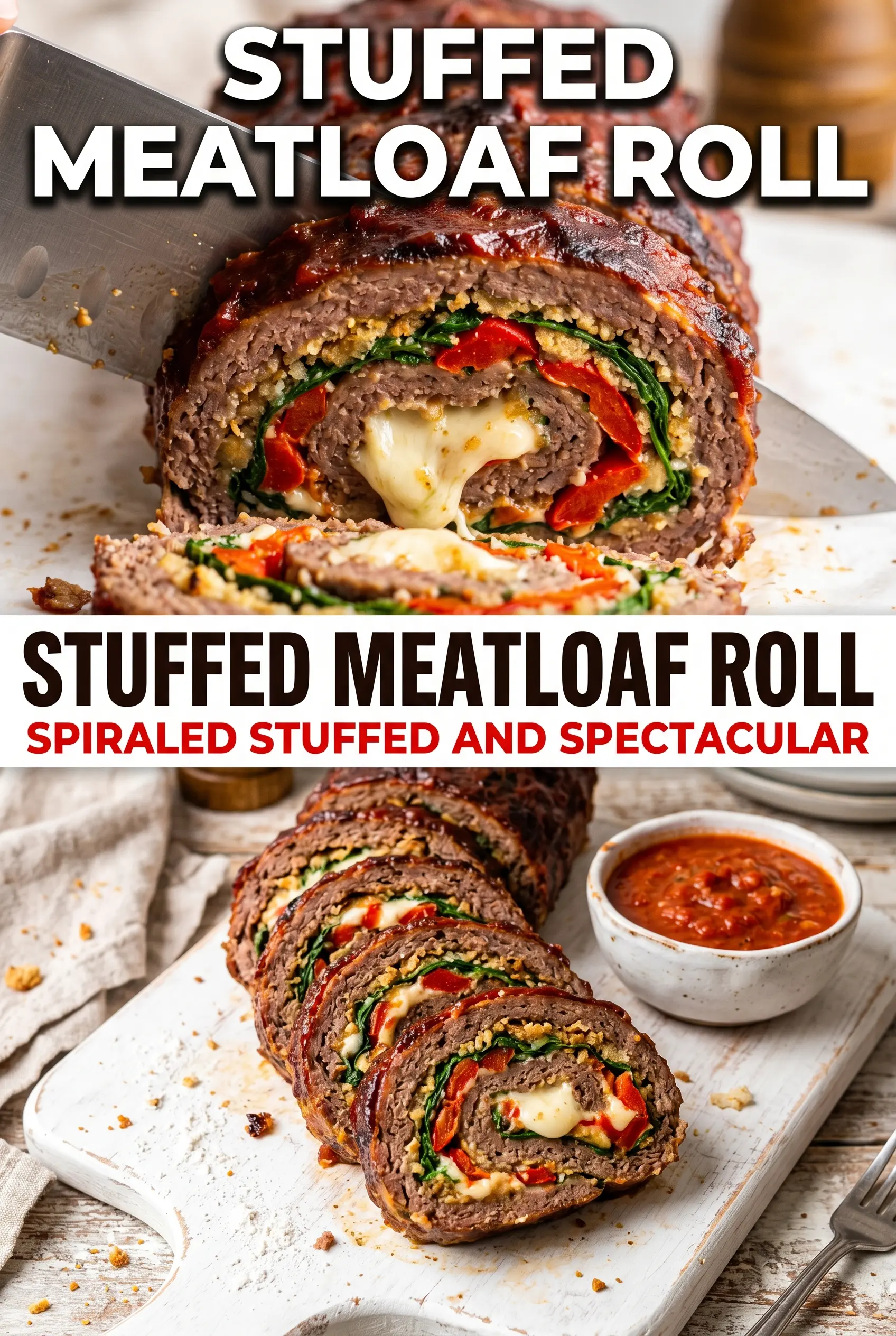
The roll held together beautifully and the spinach and roasted peppers stayed tucked inside instead of leaking all over the pan. I sliced it after resting and every piece had that perfect cheesy swirl.
Love the cheesy spiral and savory filling in this stuffed meatloaf roll? Save it to Pinterest for the nights when you want a dinner that slices like a centerpiece.
The Roll Needs a Tight Spiral, Not a Loose Loaf
The difference between a neat stuffed meatloaf roll and a messy one comes down to how firmly you shape the meat before the bake. If the mixture is too wet or the filling is piled too close to the edges, the roll splits and the cheese escapes before the center finishes cooking. A little patience during shaping gives you that clean cross-section everyone wants.
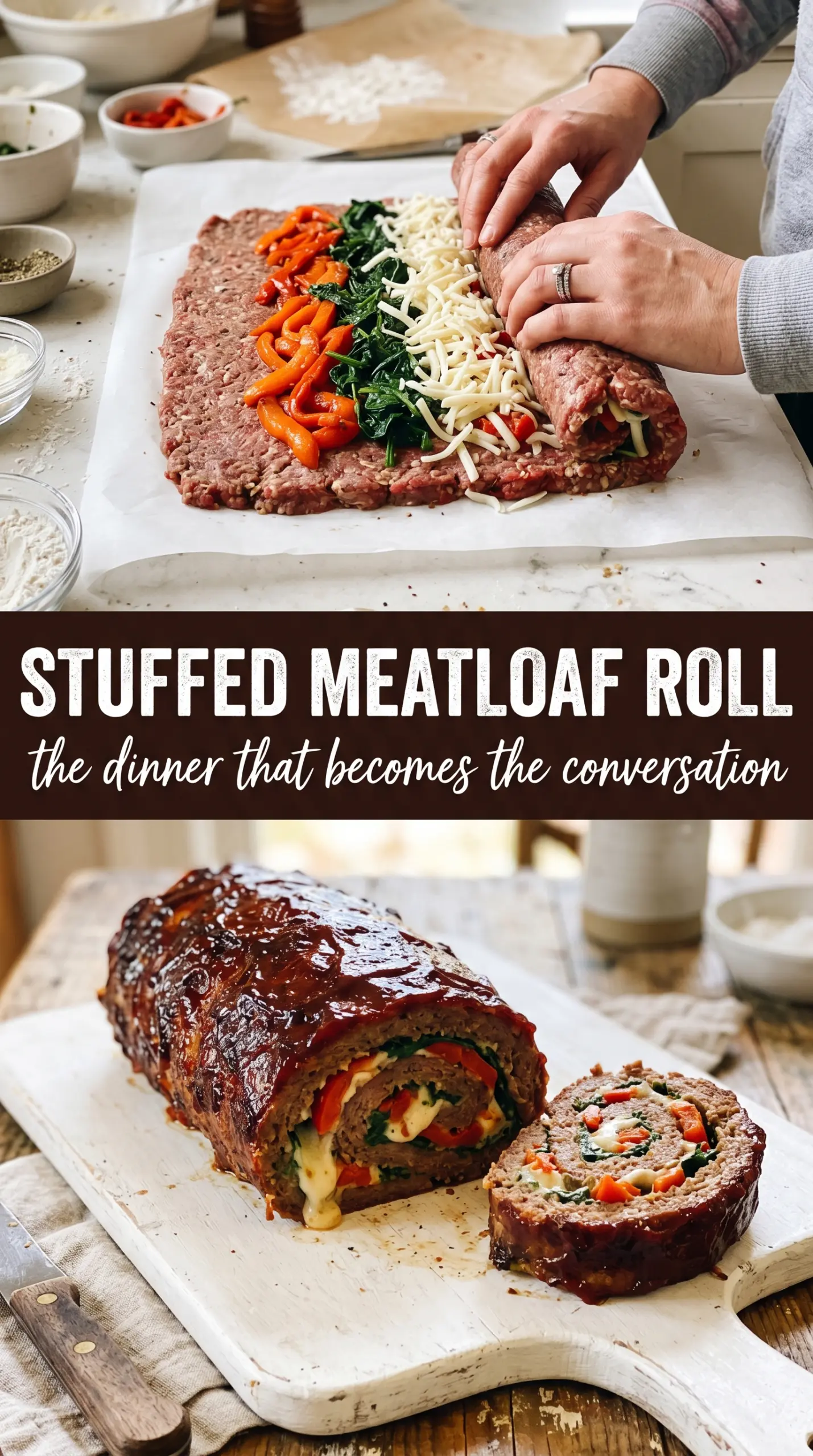
The plastic wrap matters here because it helps you lift and roll the meat without handling it too much. Overworking the beef makes the texture dense, and stuffing it too loosely leaves gaps that collapse as the loaf bakes. You want a rectangle that is even in thickness, with enough border around the filling to seal the roll shut.
- Ground beef — An 80/20 blend gives you enough fat for flavor and juiciness without turning greasy. Leaner beef can work, but the loaf will eat drier unless you keep the milk and breadcrumbs exactly as written.
- Italian breadcrumbs, egg, and milk — This is the binder trio that keeps the roll sliceable instead of crumbly. If you swap in plain crumbs, add a pinch more Italian seasoning and parmesan to keep the same savory backbone.
- Roasted red peppers — They bring sweetness and a little acidity, but only if they’re dried well. Wet peppers leak steam into the center and weaken the seal.
- Spinach — Use it only after wilting and squeezing it dry. Raw spinach sounds convenient, but it releases too much water in the oven and can make the filling slide.
What Each Ingredient Is Doing Inside the Roll
- Ground beef — This is the structure and the main flavor. If you use extra-lean beef, add an extra tablespoon of milk so the slices stay tender.
- Parmesan — It seasons the meat from the inside and helps the exterior brown. The grated kind from the dairy case works fine; just avoid very coarse shreds because they don’t disappear into the mix as well.
- Garlic, Italian seasoning, and Worcestershire — These are the flavor builders that keep the meatloaf from tasting flat. Fresh garlic gives the boldest result, and Worcestershire adds that dark, meaty note that reads as slow-cooked even when the bake time is straightforward.
- Provolone or mozzarella — Provolone brings more salt and a little sharpness, while mozzarella gives you the clean melt and those stretchy slices. Either one works, but use sliced cheese rather than shredded so the spiral stays defined.
- Marinara glaze — The glaze helps the top color and adds a little tomato brightness. Thin it with olive oil so it brushes on easily and doesn’t clump or scorch before the center is cooked.
Shaping It So the Filling Stays Inside
Mixing the Meat Without Making It Tough
Combine the beef, breadcrumbs, eggs, parmesan, milk, garlic, Italian seasoning, Worcestershire, salt, and pepper just until everything looks evenly mixed. Stop there. If you keep squeezing and folding, the beef tightens up and bakes up dense instead of tender. The mixture should hold together when you press it, but it shouldn’t feel sticky or pasty.
Layering the Filling With Enough Border
Press the meat into a 10×14-inch rectangle on plastic wrap and keep the thickness even from edge to edge. Lay the cheese first, then the roasted peppers and spinach, and leave a clean 1-inch border all the way around. That empty border is what lets you seal the log without filling bursting out the seam.
Rolling and Sealing the Log
Use the plastic wrap to lift one long side and roll the meat tightly around the filling. Tight matters here. If the log is loose, the spiral opens up and the center can separate when it slices. Pinch the ends closed and set the roll seam-side down in a greased baking dish so it bakes into shape instead of unrolling.
Baking to the Right Temperature
Brush the marinara-olive oil glaze over the top before it goes into the oven, then bake at 350°F until the center reaches 160°F. The top should look set and browned, and the edges may pull slightly from the dish. Let it rest for 10 minutes before slicing; if you cut too soon, the cheese runs and the spiral falls apart.
Ways to Change the Filling Without Losing the Shape
Make it gluten-free
Swap the Italian breadcrumbs for a gluten-free breadcrumb mix that behaves similarly in the meat. Start with the same amount, then check the texture; if the mix seems dry and crumbly, add another tablespoon of milk so the roll still packs cleanly.
Use different cheese for a sharper finish
Provolone gives a little more bite, while mozzarella keeps the center milder and stretchier. If you want a deeper, saltier slice, use provolone and keep the roasted peppers in place to balance the richness.
Make it dairy-free
Use a dairy-free shredded or sliced melting cheese and swap the parmesan for a dairy-free parmesan-style alternative. The texture stays close, but the flavor will be a little less nutty, so lean on the garlic and Worcestershire to keep the meat savory.
Turn it into a spinach-forward version
If you want more of the spinach-and-cheese idea, add a thin layer of sautéed mushrooms or a spoonful of ricotta in the center, but keep the filling dry. Too much creamy filling softens the spiral and makes the roll harder to slice cleanly.
Storage and Reheating
- Refrigerator: Store leftovers in an airtight container for up to 4 days. The slices hold together well, and the flavor gets even deeper after a night in the fridge.
- Freezer: This freezes well either whole or sliced. Wrap tightly, then freeze for up to 2 months; thaw in the fridge before reheating so the filling warms evenly.
- Reheating: Warm slices covered at 325°F until heated through, or reheat gently in the microwave at medium power. High heat dries out the beef and can make the cheese separate at the edges.
Questions I Get Asked About This Recipe
Stuffed Meatloaf Roll
Ingredients
Equipment
Method
- Preheat the oven to 350°F and set a greased baking dish or sheet pan ready for the roll.
- Mix ground beef, Italian breadcrumbs, eggs, grated parmesan, milk, minced garlic, Italian seasoning, Worcestershire sauce, and salt and pepper until combined, with no dry pockets remaining.
- Press the meat mixture into a 10x14 inch rectangle on a large sheet of plastic wrap so the shape stays even edge to edge.
- Layer provolone or mozzarella slices, roasted red peppers, and wilted and squeezed spinach over the meat, leaving about a 1-inch border at the edges.
- Roll tightly using the plastic wrap into a tight log and seal both ends firmly so the spiral stays intact when sliced.
- Place the roll seam-side down in a greased baking dish and brush the top with the marinara-olive oil glaze.
- Bake at 350°F for 60–70 minutes, until the internal temperature reaches 160°F and the exterior looks set and lightly browned.
- Rest the stuffed meatloaf roll for 10 minutes before slicing into dramatic rounds so the spiral holds its shape.