Stuffed meatloaf slices cleanly into a tender, savory spiral that feels a lot more special than a standard loaf, but it still eats like the kind of dinner you want on a regular weeknight. The beef stays juicy, the mozzarella melts into the spinach and roasted red peppers, and the ketchup-brown sugar glaze sets up into a sticky top that balances all the richness underneath.
The part that makes this version work is the way the meat is pressed thin before it gets rolled. That keeps the filling tucked inside instead of sinking to the bottom or leaking out halfway through baking. Squeezing the spinach dry and patting the peppers dry matters too, because any extra moisture turns the center soft and makes the loaf harder to slice cleanly. The result is a firm, neat roast with a colorful middle that holds together when you cut into it.
Below, I’ll walk through the one step that keeps the spiral intact, plus the best way to slice it so you get those pretty layers on the plate. There’s also a few swap ideas if you want to change the cheese or make the filling fit what’s already in your fridge.
The spiral held together perfectly and the center stayed cheesy instead of turning watery. I followed the tip to dry the peppers and it sliced like a dream after resting.
Save this stuffed meatloaf with its spinach, roasted pepper, and mozzarella spiral for the night you want a dinner that slices beautifully.
The Trick to Keeping the Filling in the Middle, Not at the Bottom
The biggest failure point with stuffed meatloaf is moisture. A filling that looks harmless on the board can turn the center greasy and loose once it hits the oven, especially if the spinach and peppers are still carrying water. Dry filling plus a tight roll is what gives you that clean spiral instead of a collapsed seam.
Breadcrumbs and eggs do the heavy lifting in the meat mixture, but they’re there for structure, not bulk. The loaf should feel cohesive and slightly tacky when mixed, not soft like a meatball blend. If it feels wet, the rectangle will slump when you roll it and the filling will wander toward the edges.
- Ground beef — Use 80/20 if you want the best balance of flavor and tenderness. Leaner beef can work, but the loaf gets firmer and less juicy unless you’re careful not to overbake it.
- Breadcrumbs — These help the loaf hold together without becoming dense. Plain breadcrumbs are fine; seasoned ones add extra salt and herbs, so adjust accordingly.
- Spinach — Fresh spinach needs to be wilted and squeezed dry. Frozen spinach can stand in if it’s thawed and pressed until almost dry, which is the part most people skip.
- Roasted red peppers — Jarred peppers are perfect here as long as they’re patted dry. Fresh roasted peppers also work, but they need to cool completely first so they don’t melt the cheese before baking.
- Mozzarella — Shredded low-moisture mozzarella gives you the best melt and the cleanest slice. Fresh mozzarella releases more liquid and softens the spiral, so I’d only use it if you don’t mind a looser center.
What Each Ingredient Is Actually Doing in This Meatloaf or Meatballs
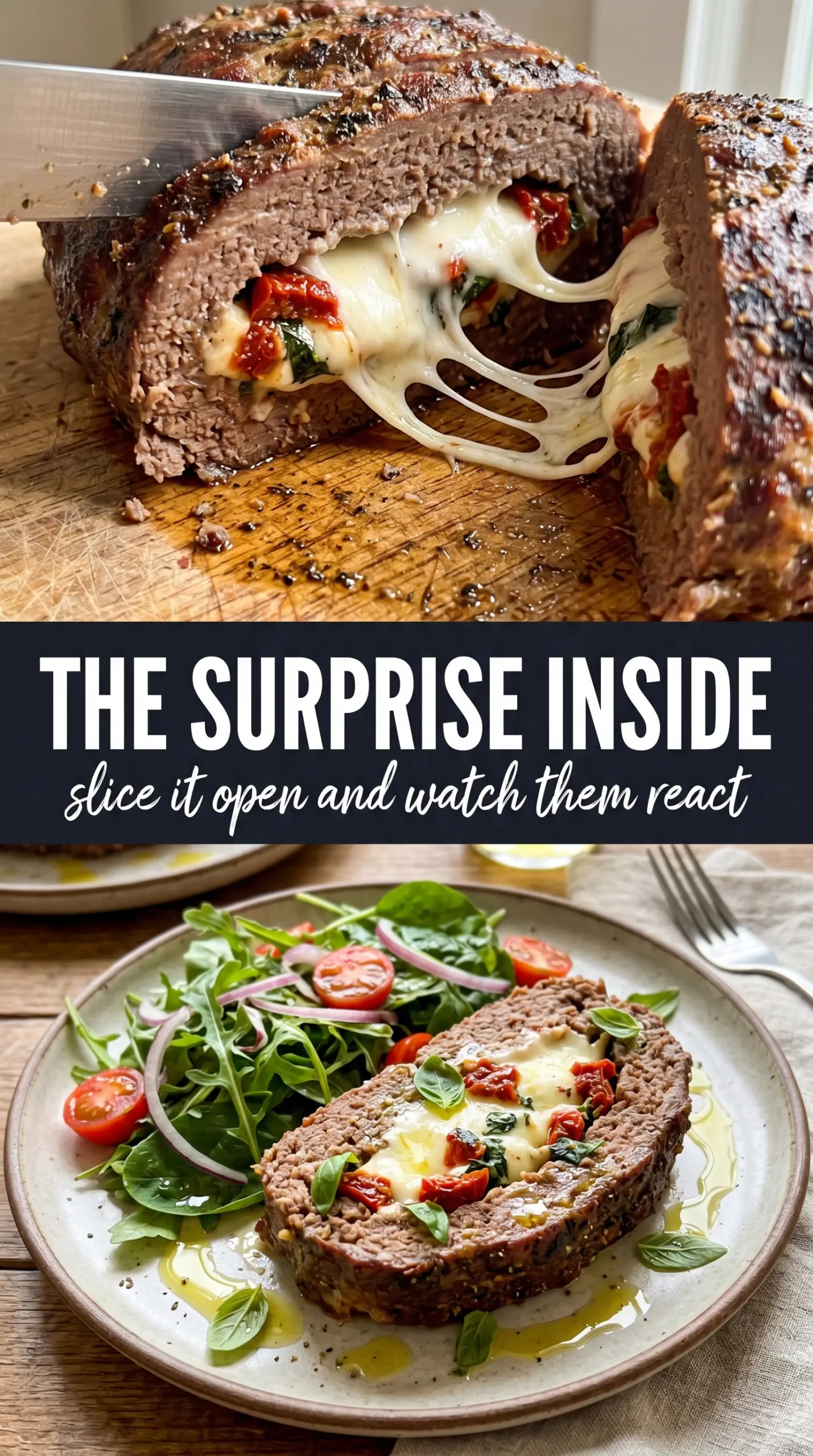
- Ground meat (the protein foundation) — Use 80/20 so it stays moist. Handle gently to keep texture tender instead of dense.
- Breadcrumbs or fillers (the binder) — These hold the meat together without making it dense. Soak in milk first so they add moisture.
- Egg (the structural binding agent) — This holds everything together during cooking. One egg per pound of meat is the right ratio.
- Onion and aromatics (the base flavor) — Mince finely so they distribute evenly. Raw onion softens as it cooks and becomes part of the texture.
- Seasonings (salt, pepper, Worcestershire, spices) — Build flavor boldly. The meat mixture carries the entire flavor profile.
- Milk or liquid (the moisture keeper) — This keeps the meatloaf tender instead of dense and dry. Don’t skip this step.
- Glaze or sauce (ketchup-based or other) — This adds sweetness, moisture, and flavor to the exterior. Apply strategically so it caramelizes.
- Resting time (the final step) — Let the meatloaf rest 10 minutes so it sets and slices cleanly. Cutting too soon makes it fall apart.
Press, Roll, Seal, and Bake It Like a Loaf That Has to Hold Together
Mixing the Meat Without Overworking It
Combine the beef, breadcrumbs, eggs, milk, grated onion, garlic, Worcestershire sauce, Italian seasoning, salt, and pepper just until everything is evenly distributed. If you knead it like bread, the loaf turns tight and bouncy instead of tender. The mixture should hold its shape when pressed, but it shouldn’t look compacted.
Building the Rectangle
Press the meat mixture into a 10×12-inch rectangle on parchment or plastic wrap. Use your hands to keep the thickness even from edge to edge so it cooks at the same pace all the way through. A rectangle that’s too thick in the middle makes the roll awkward and can leave the center underdone when the outside is finished.
Layering the Filling
Scatter the spinach, roasted peppers, and mozzarella over the surface, but leave a 1-inch border around the edges. That bare border is what lets the seam seal instead of bursting open in the oven. Keep the filling in a thin, even layer; piling it high creates a log that’s hard to close and even harder to slice.
Rolling and Finishing the Bake
Use the plastic wrap or parchment to help you roll the meat into a tight log, then place it seam-side down in the loaf pan. The log should feel snug, not stuffed to the point of tearing. Brush the ketchup and brown sugar glaze over the top, then bake until the center reaches 160°F and the top is browned and set. Let it rest for 10 minutes before slicing, because cutting too early lets the juices run out and can blur that spiral you worked to build.
How to Adapt This Stuffed Meatloaf Without Losing the Spiral
Swap the mozzarella for provolone or fontina
Provolone gives you a little more savoriness, while fontina melts into a smoother, richer center. Either one will still slice well as long as you use a low-moisture cheese and keep the layer thin.
Make it gluten-free
Use gluten-free breadcrumbs in the meat mixture and check that your Worcestershire sauce is gluten-free. The texture stays close to the original, though some gluten-free crumbs absorb a little more moisture, so the loaf may feel slightly softer before baking.
Add a little heat
A pinch of red pepper flakes in the meat or a few sliced pepperoncini in the filling gives the loaf a sharper finish without changing the structure. Keep the amount modest so the glaze and cheese still taste balanced.
Storage and Reheating
- Refrigerator: Store slices in an airtight container for up to 4 days. The cheese firms up a bit, but the loaf stays sliceable and reheats well.
- Freezer: It freezes well. Wrap individual slices tightly and freeze for up to 3 months so you can reheat only what you need.
- Reheating: Reheat covered in a 325°F oven with a splash of water or broth in the pan until warmed through. The common mistake is blasting it in the microwave until the cheese turns rubbery and the edges dry out.
Answers to the Questions Worth Asking
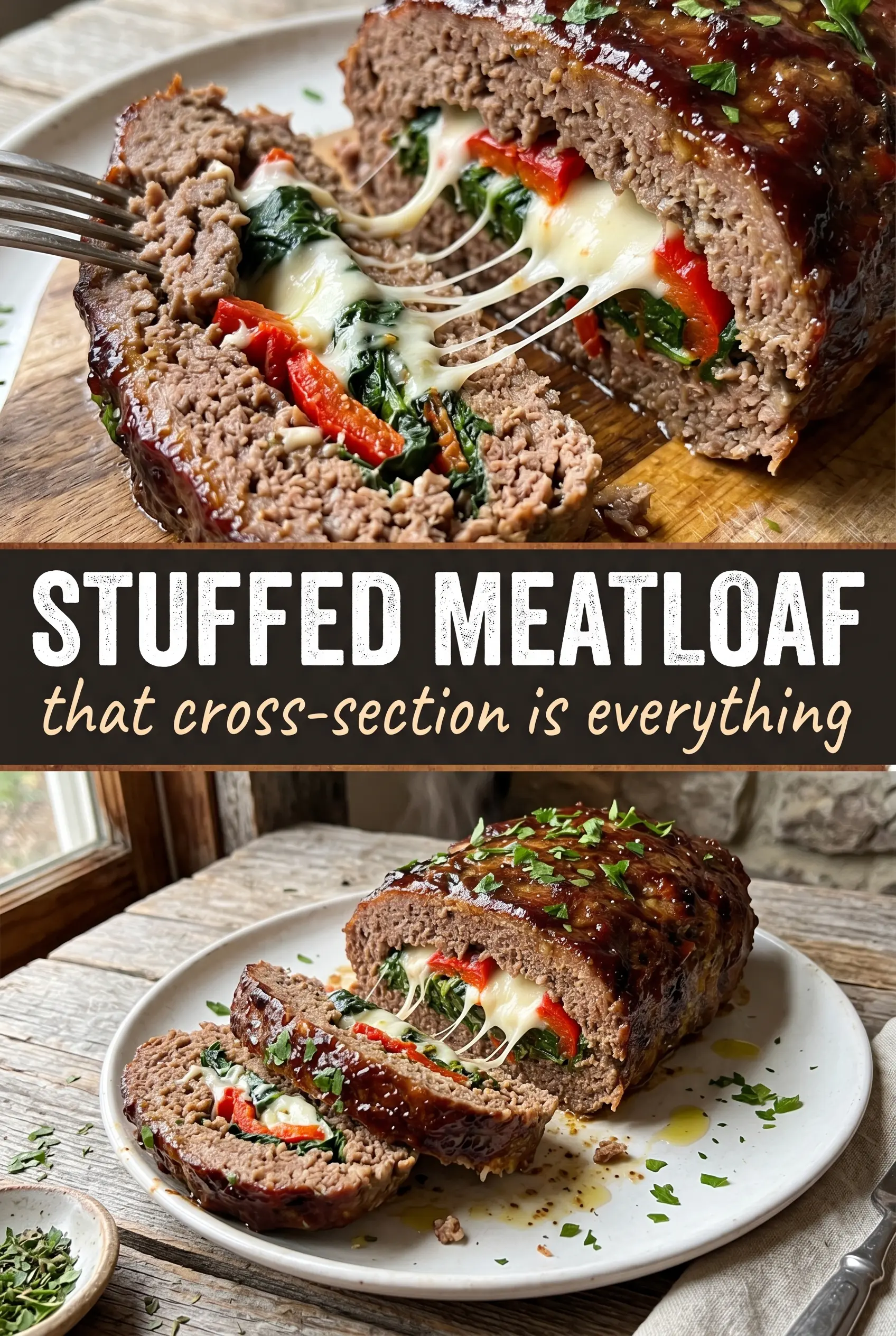
Stuffed Meatloaf
Ingredients
Equipment
Method
- Preheat the oven to 350°F. Place the oven rack in the middle so the loaf bakes evenly.
- In a large mixing bowl, combine ground beef, breadcrumbs, eggs, milk, grated onion, minced garlic, Worcestershire sauce, Italian seasoning, salt, and pepper. Mix just until evenly combined with no dry breadcrumb pockets.
- Lay plastic wrap or parchment on a flat surface and press the meat mixture into a 10x12 inch rectangle. Press firmly to form a cohesive layer with even thickness.
- Layer the wilted spinach, sliced roasted red peppers, and shredded mozzarella over the surface, leaving a 1-inch border. Distribute so the filling can create a continuous spiral when sliced.
- Roll tightly into a log using the plastic wrap, then seal the ends and place seam-side down in a loaf pan. Press lightly as you roll so the filling stays inside.
- Spread the glaze (ketchup and brown sugar) over the top of the meatloaf. Make sure it reaches the corners for a caramelized finish.
- Bake at 350°F for 60–70 minutes until the internal temperature reaches 160°F. You should see the glaze set and lightly darken, and juices should run clear when tested.
- Rest the stuffed meatloaf for 10 minutes before slicing. This helps the spiral hold together so the melted cheese and peppers stay visible in the cut.