Perfectly grilled salmon lands with crisp skin, juicy flakes, and clean grill marks that make it feel a lot more special than the 10 minutes it takes to cook. The trick is keeping the fillets calm on the grate long enough for the skin to release on its own, then pulling them before the flesh dries out. When salmon is handled that way, it comes off the grill tender in the center and full of flavor from the outside in.
This version leans on a simple marinade of olive oil, lemon juice, garlic, and Dijon mustard. That combination does two jobs: it adds brightness and aroma, and it gives the fish enough coating to stay supple over direct heat without turning heavy. A short 15-minute rest is enough here. Any longer and the lemon starts to change the texture of the surface instead of just seasoning it.
Below, you’ll find the little details that keep the salmon from sticking, the reason skin-side down does most of the work, and a few smart swaps if you’re working with a different cut or cooking for different eaters.
The skin crisped up beautifully and the salmon stayed flaky instead of drying out. I followed the 15-minute marinade and the fillets slid right off the grill once they were ready.
Save this grilled salmon with crisp skin and lemon-Dijon marinade for an easy seafood dinner that cooks fast and tastes fresh off the fire.
The Step That Keeps Salmon From Sticking to the Grill
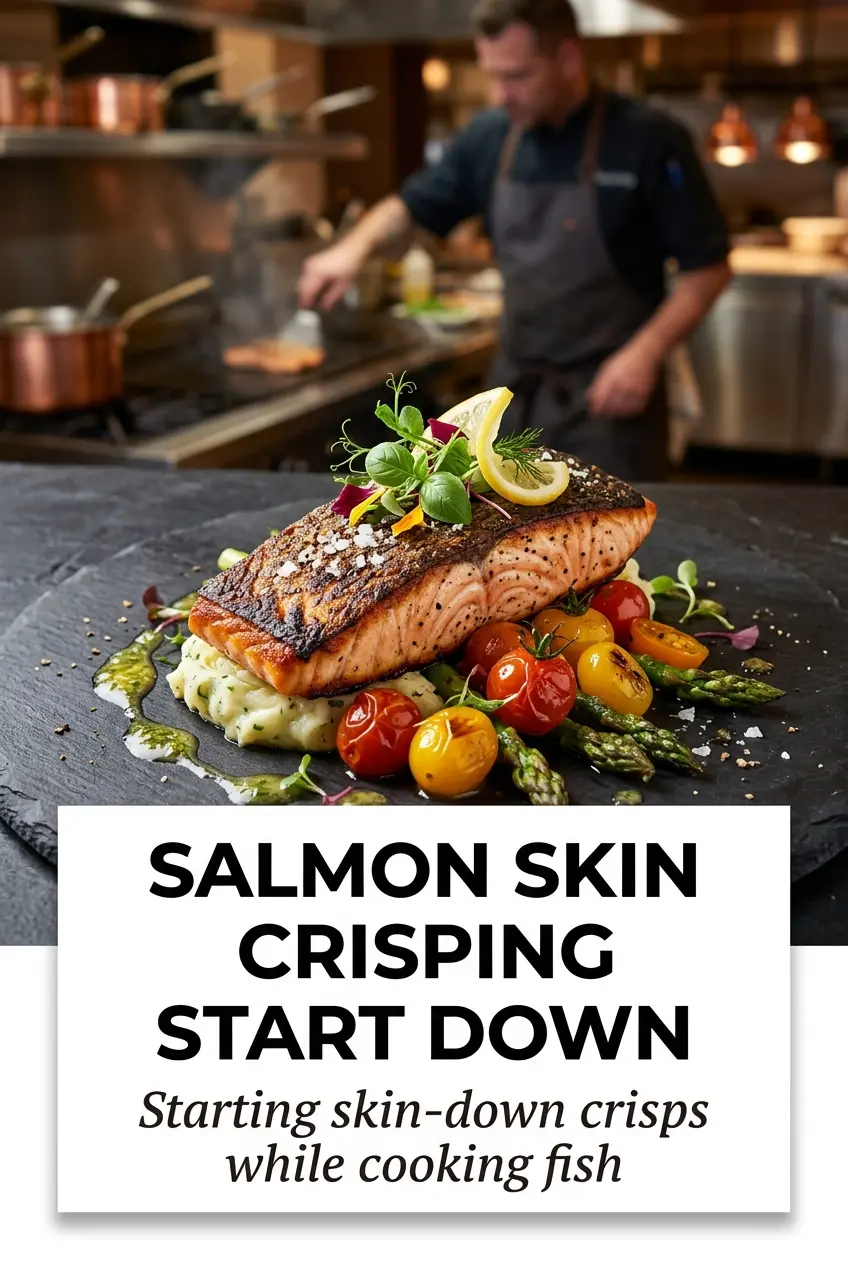
Salmon usually sticks for one of two reasons: the grates weren’t hot enough, or the fish was moved before the skin had time to set. Skin-on fillets are the answer here because the skin acts like a protective layer and helps the salmon release naturally once it has seared. If you try to flip too early, the flesh tears and you lose both the crust and the juices.
- Oil the grates, not just the fish. A thin film on the grill surface gives you a better chance of clean release.
- Keep the heat at medium-high. Too low and the fish steams; too high and the outside chars before the center is ready.
- Let the first side do most of the cooking. Six to eight minutes skin-side down is what builds that crisp edge.
- Use a thin spatula only after the fish releases easily. If it resists, give it another minute.
What the Marinade Is Actually Doing Here
- Olive oil — This coats the salmon so the surface doesn’t dry out over the flames. A good everyday olive oil is fine here.
- Lemon juice — It brightens the fish and sharpens the garlic and dill at the end. Keep the marinating time short because acid starts changing the texture of the salmon fairly fast.
- Dijon mustard — This adds body and a little tang, and it helps the marinade cling to the fillets instead of running off the sides.
- Skin-on salmon fillets — This is the part that matters most. Skinless salmon can be grilled, but it needs much more careful handling and has less protection against drying out.
- Fresh dill and lemon wedges — Dill gives the finished dish a clean, grassy note, while extra lemon wakes everything up right before serving.
Getting the Salmon on and Off the Grill Without Overcooking It
Mixing the Marinade
Stir the olive oil, lemon juice, garlic, Dijon, salt, and pepper until the mixture looks emulsified and slightly thickened. It doesn’t need to be perfectly smooth, but the mustard should be evenly dispersed so the garlic and lemon don’t collect in one spot. This is enough for a light coating, not a soak.
Marinating Briefly
Brush the salmon and let it sit for 15 minutes while the grill heats. That short rest seasons the outside without starting to cure the fish. If you leave it much longer, the surface can turn soft instead of staying clean and meaty.
Grilling Skin-Side Down
Lay the fillets on a hot, oiled grate skin-side down and don’t move them. You’ll hear a steady sizzle right away, and the skin will go from glossy to opaque as it crisps. If the fish sticks when you try to lift it, it’s not ready yet. Give it another minute and it will usually release on its own.
The Quick Flip and Finish
Turn the salmon carefully and cook just 2 to 3 minutes on the second side. You’re looking for the flesh to flake at the thickest part while still looking moist in the center. Pull it as soon as it reaches your preferred doneness; salmon keeps cooking after it leaves the grill, and a minute too long can dry out the edges.
How to Adapt This Grilled Salmon for Different Tables
Dairy-Free and Naturally Gluten-Free
This recipe already fits both of those needs as written. The only thing to watch is any seasoning blend or mustard brand if you use a packaged version, since some add unexpected fillers. Stick with plain ingredients and you’re set.
No Grill, Same Salmon
A grill pan or oven broiler can stand in if the weather isn’t cooperating. Use the same marinade, then cook skin-side down in a hot pan or under the broiler until the flesh flakes and the top takes on a little color. You won’t get identical grill marks, but you’ll still get the same bright, juicy finish.
Swap the Herb
Dill is classic with salmon, but parsley or chives work if that’s what you have. Parsley keeps the flavor clean and mild, while chives add a gentle onion note. Avoid heavy herbs like rosemary here, since they can bulldoze the delicate fish.
Make It Lower-Carb Without Changing the Dish
This is already a low-carb main dish, which makes it easy to build a meal around simple vegetables instead of a starch. Serve it with grilled asparagus, a crisp salad, or roasted broccoli to keep the plate balanced without changing the salmon itself.
Storage and Reheating
- Refrigerator: Store leftovers in an airtight container for up to 2 days. The skin softens, but the fish still tastes great chilled or reheated gently.
- Freezer: Cooked salmon can be frozen, but the texture turns a little softer after thawing. Wrap it tightly and freeze for up to 1 month if you need to save it.
- Reheating: Warm it low and slow in a 275°F oven, covered loosely with foil, just until heated through. High heat dries salmon out fast and makes the edges chalky.
Answers to the Questions Worth Asking
The Best Grilled Salmon
Ingredients
Equipment
Method
- In a bowl, mix olive oil, lemon juice, minced garlic, Dijon mustard, salt, and black pepper until smooth.
- Brush the marinade over the salmon fillets, then let them marinate for 15 minutes.
- Preheat the grill to medium-high heat and oil the grates well for easy release.
- Place the salmon on the grill skin-side down.
- Grill skin-side down for 6-8 minutes without moving, until the skin is crisp and grill marks form.
- Carefully flip the salmon and grill for 2-3 minutes until cooked to your desired doneness.
- Serve the grilled salmon immediately with fresh dill and lemon wedges.