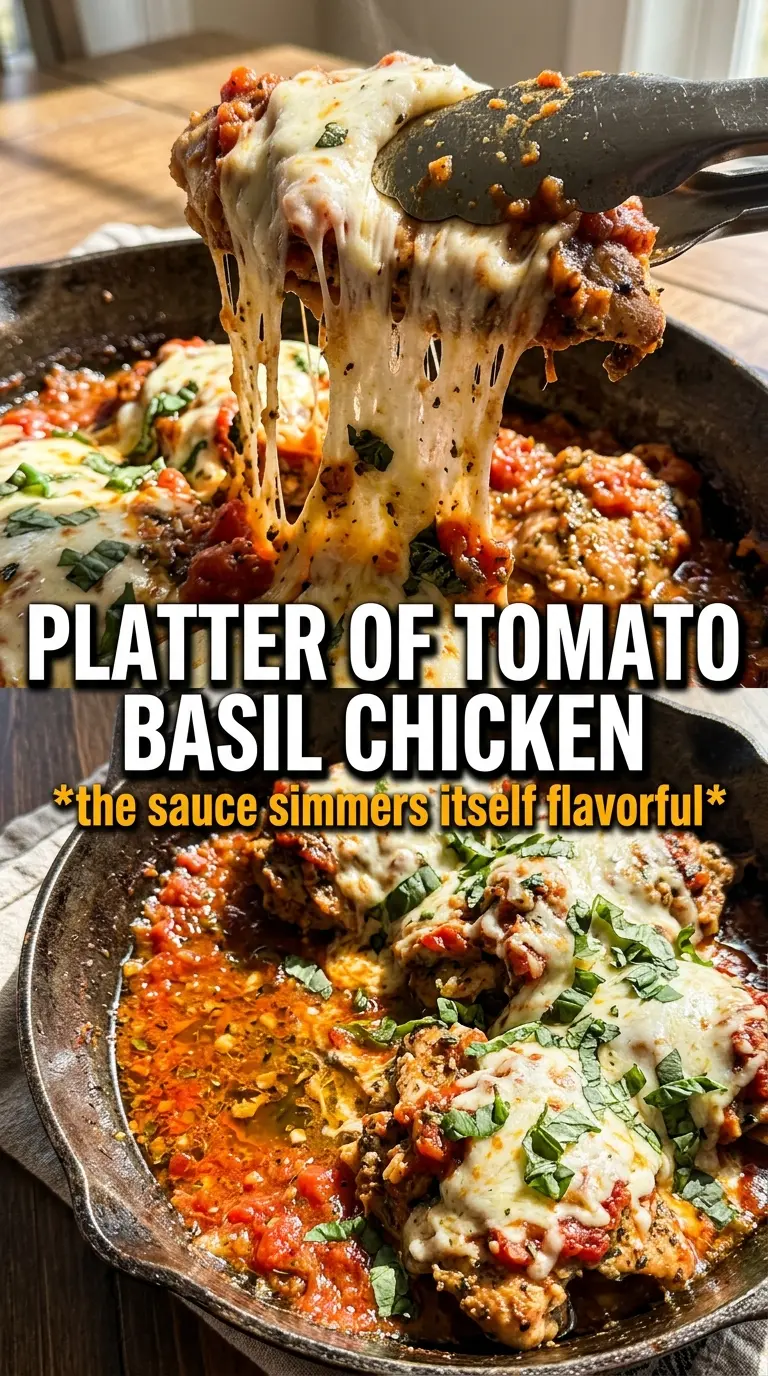
Golden chicken breasts tucked into a bright tomato basil skillet sauce hit that sweet spot between weeknight practical and dinner-that-looks-thoughtful. The chicken stays juicy, the tomatoes soften just enough to turn jammy at the edges, and the basil gives the whole pan a fresh finish that keeps it from tasting heavy. It’s the kind of meal that feels complete without asking for much on the side.
What makes this version work is the order. The chicken gets a proper sear first, which builds flavor in the pan and gives the breasts a little structure before they go back into the sauce. Then the garlic, cherry tomatoes, wine, and balsamic go into the same skillet, so nothing useful gets left behind. The tomatoes burst and thicken on their own, and the balsamic adds just enough depth to make the sauce taste rounded instead of sharp.
Below, I’ve included the little details that matter most here: how to keep the chicken from drying out, what to do if your tomatoes aren’t very sweet, and the one substitution that still gives you a good sauce when you’re out of wine.
The tomatoes broke down into a glossy sauce faster than I expected, and the basil at the end made it taste fresh instead of heavy. I let the chicken rest while the sauce finished, and it stayed juicy all the way through.
Pin these Tomato Basil Chicken Breasts for a juicy skillet dinner with burst tomatoes, garlic, and fresh basil.
The Trick to Keeping Chicken Breasts Juicy While the Tomatoes Turn Saucy
Chicken breasts and skillet tomatoes can work beautifully together, but the timing has to be right. The biggest mistake is cooking the chicken until it’s fully done before the sauce even starts, then letting it sit around and tighten up while the tomatoes finish. Here, the chicken gets browned first and finished briefly in the sauce, which keeps the meat tender and lets the tomatoes pick up all the savory bits left in the pan.
Another thing that matters is heat. If the pan is screaming hot when the garlic goes in, it’ll turn bitter before the tomatoes have a chance to soften. Keep the sear strong, then pull the heat back a little for the sauce stage so the garlic becomes fragrant and the tomatoes can collapse into something glossy instead of watery.
- Chicken breasts — Use boneless, skinless breasts that are similar in size so they cook at the same rate. If one side is much thicker, pound it lightly so you don’t end up with dry edges and an underdone center.
- Cherry tomatoes — These matter more than canned tomatoes here because they burst, hold some shape, and give you those sweet little pockets in the sauce. Grape tomatoes work too, but larger tomatoes should be cut smaller so they release their juices fast enough.
- Dry white wine or chicken broth — Wine gives the sauce a little lift and acidity, but broth works fine if that’s what you have. If you skip the wine, add the balsamic only after the tomatoes have broken down so the sauce doesn’t taste flat.
- Balsamic vinegar — This is the ingredient that rounds everything out. You don’t need much, but it keeps the sauce from tasting like plain tomatoes and garlic.
- Fresh basil — Use fresh basil at the end, not dried basil. Dried basil disappears into the sauce; fresh basil gives you the bright finish that makes this dish taste alive.
What Each Ingredient Is Actually Doing in This Recipe
- Primary ingredient (the star) — Quality matters most. Choose the best you can find.
- Cooking medium (oil, butter, or broth) — This carries flavors and prevents dryness.
- Seasonings (salt, pepper, spices, herbs) — Layer flavors so nothing overpowers. Build depth gradually.
- Aromatics (garlic, onion, herbs) — Cook with fat to bloom flavors. Become the foundation.
- Supporting ingredients — Complement the main ingredient without overpowering it.
- Sauce or liquid (if applicable) — Brings flavors together. Balance richness with acid.
- Acid (lemon, vinegar, wine, or other) — Brightens and prevents flat-tasting results.
- Final finish (garnish, glaze, or sauce) — Prevents one-dimensional taste and adds visual appeal.
Building the Sauce in the Same Pan Without Letting It Taste Flat
Seasoning and Searing the Chicken
Pat the chicken dry and season it well before it ever hits the skillet. Dry chicken browns; damp chicken steams. Cook it in olive oil over medium-high heat until the surface is deep golden and the breasts release easily from the pan, about 5 to 6 minutes per side depending on thickness. If you force the chicken too early, it will stick and tear, and that torn crust never browns the same way again.
Softening the Garlic and Bursting the Tomatoes
After the chicken comes out, the same pan should still have enough fat and fond to flavor the sauce. Add the garlic for just about 30 seconds, until it smells fragrant and not sharp, then get the tomatoes in right away. They should soften, split, and start to slump in the pan; if they just sit there looking shiny, the heat is too low. Stir often enough to keep the garlic from scorching, but leave the tomatoes alone long enough to blister and burst.
Finishing the Sauce and Returning the Chicken
Once the wine goes in, let it bubble for about a minute so the raw edge cooks off and the pan juices concentrate. Stir in the Italian seasoning, red pepper flakes, and balsamic, then return the chicken and spoon the sauce over the top. The last simmer is short on purpose — about 2 minutes is enough to warm the chicken through without overcooking it. Finish with basil and Parmesan after the pan comes off the heat so the basil stays bright and the cheese softens on contact instead of clumping.
How to Adjust This Skillet Dinner When You’re Missing an Ingredient
No wine, no problem
Use chicken broth in the same amount. You’ll lose a little brightness, so keep the balsamic in the recipe and let the tomatoes cook down until their juices turn slightly syrupy. That gives the sauce enough body and acidity to stay interesting.
Making it dairy-free
Skip the Parmesan and finish with a little extra olive oil and a pinch of flaky salt if you want that final savory lift. The sauce still works because the tomatoes, garlic, basil, and balsamic carry the dish on their own.
Using chicken thighs instead of breasts
Boneless thighs stay a little juicier and give you more forgiveness on the stove. They may need a few extra minutes to cook through, and the sauce can take a little longer to thicken because thighs release more fat, but the flavor is deeper and richer.
Making it gluten-free
This recipe is naturally gluten-free as written as long as your broth is certified gluten-free. The rest is just chicken, tomatoes, herbs, and cheese, so there’s no flour needed to get a proper sauce.
Storage and Reheating
- Refrigerator: Store leftovers in an airtight container for up to 3 days. The sauce will thicken and the basil will soften, but the flavor holds up well.
- Freezer: Freeze the chicken and sauce without the fresh basil and Parmesan for up to 2 months. Thaw overnight in the fridge; the tomatoes will be softer after freezing, but the dish still reheats well.
- Reheating: Warm gently in a covered skillet over low heat with a splash of broth or water. High heat will tighten the chicken fast and can make the tomatoes taste dull, so go slow and stop as soon as everything is hot.
Answers to the Questions Worth Asking
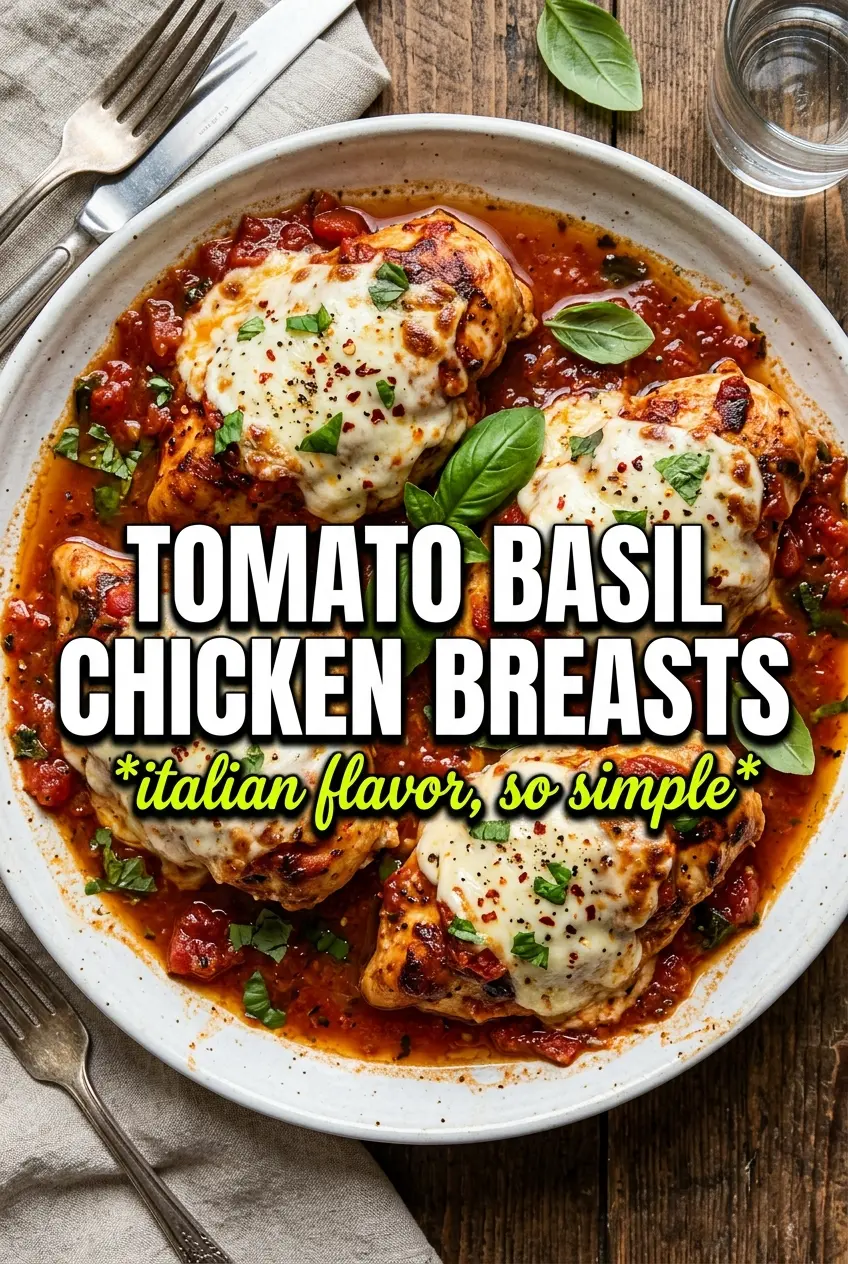
Tomato Basil Chicken Breasts
Ingredients
Equipment
Method
- Pat the chicken breasts dry, then season all over with salt, black pepper, garlic powder, and Italian seasoning. Heat olive oil in a large cast iron skillet over medium-high heat until shimmering.
- Add chicken and sear for 5-6 minutes per side, until deeply golden and cooked through to 165°F internal temperature. Remove the chicken to a plate while you make the sauce.
- In the same pan, cook the minced garlic for 30 seconds, stirring until fragrant. Add the halved cherry tomatoes and cook for 3-4 minutes until they burst and release juices.
- Pour in the white wine (or chicken broth) and let it bubble for 1 minute. Stir in dried Italian seasoning, red pepper flakes, and balsamic vinegar.
- Return the chicken to the pan and spoon the tomato sauce over each breast. Simmer for 2 minutes to warm the chicken through.
- Scatter the fresh basil over the top, then finish with shaved Parmesan and a drizzle of olive oil before serving.