Moist turkey meatloaf earns its place in the dinner rotation when it slices cleanly, stays tender all the way through, and still gives you that savory, ketchup-glazed finish people expect from a good meatloaf. The trick is treating ground turkey like the lean meat it is: it needs moisture, gentle handling, and a pan that helps it hold together instead of drying out before the center is done.
This version leans on grated onion, milk, breadcrumbs, and a good hit of herbs to keep the texture soft without turning mushy. Worcestershire and Dijon bring depth to the glaze and the meat mixture, while the second glaze application gives the top a sticky, caramelized finish instead of a thin, sad coating. You’ll also find a few notes below on how to keep turkey meatloaf from crumbling, plus the swaps that still give you a juicy result.
The loaf stayed so moist and held together perfectly after resting. The glaze thickened up on top and my husband kept sneaking slices straight from the pan.
Save this turkey meatloaf for the nights when you want a juicy loaf with a tangy ketchup-Dijon glaze and almost no fuss.
The Reason Turkey Meatloaf Stays Juicy Instead of Drying Out
Ground turkey dries out fast when it’s packed too tightly or baked until you’re guessing at doneness. This loaf avoids both problems by using enough binder and moisture to keep the texture tender, then baking it in a loaf pan so the sides support the meat as it cooks. That pan matters more than people think; turkey loaf spread free-form on a sheet can cook up a little leaner and drier than you want here.
The other thing that matters is restraint. Mix until the ingredients are evenly distributed, then stop. Overworking ground turkey makes the final slice dense and springy instead of soft and sliceable, and once that happens, no glaze can hide it.
- Use grated onion, not chopped onion — Grating gives you onion flavor plus the liquid that helps keep the loaf moist. Chopped onion works in a pinch, but it won’t disappear into the mixture the same way.
- Breadcrumbs and milk are doing more than binding — They hold onto moisture during baking so the turkey doesn’t tighten up and turn chalky. If you need a swap, use crushed crackers or oats, but expect a slightly different texture.
- The glaze goes on twice for a reason — The first coat soaks in and starts building flavor. The second coat at the end thickens and caramelizes instead of burning.
What Each Ingredient Is Doing in the Loaf and the Glaze
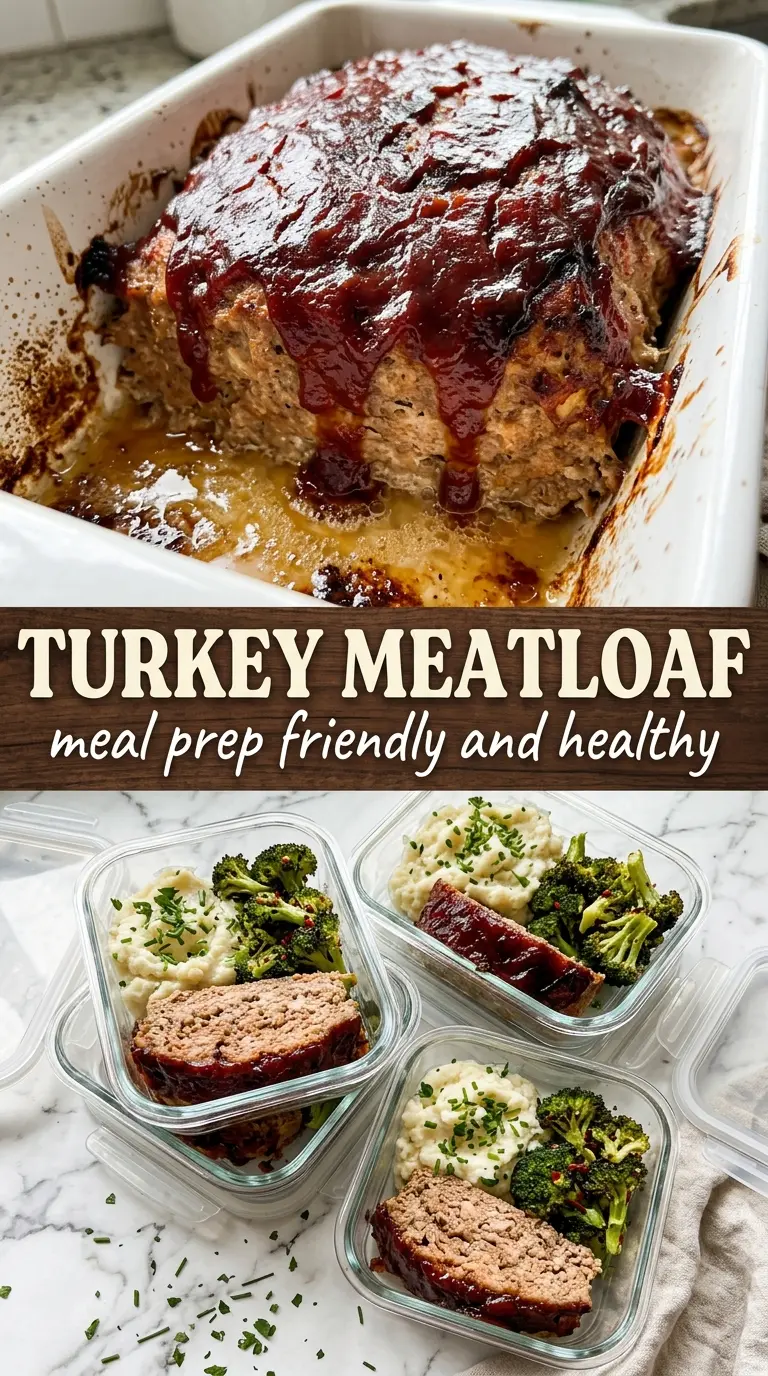
- Ground turkey — Use 93% lean if you can. Extra-lean turkey can work, but it needs the full amount of milk and the grated onion to stay tender.
- Breadcrumbs, eggs, and milk — This is the structure that keeps the loaf from collapsing. The milk softens the breadcrumbs first, which gives the loaf a lighter crumb than dry breadcrumbs mixed in alone.
- Grated onion and garlic — Onion adds moisture and sweetness as it bakes, while garlic gives the loaf a more savory backbone. Fresh garlic is worth using here because the meat mixture is mild and needs the lift.
- Worcestershire, thyme, Italian seasoning, and parsley — These are what make the turkey taste seasoned all the way through instead of just tasting like meat with glaze on top. Dried herbs are fine; fresh parsley adds the best finish.
- Ketchup, brown sugar, and Dijon — Ketchup gives the familiar meatloaf glaze, brown sugar helps it caramelize, and Dijon keeps it from tasting flat or one-note.
Building the Loaf So It Holds Together and Stays Tender
Mix the Binder First
Start by combining the breadcrumbs, eggs, milk, onion, garlic, Worcestershire, herbs, parsley, salt, and pepper before you add the turkey. That little head start lets the breadcrumbs absorb liquid so they don’t steal moisture from the meat in the oven. Once the turkey goes in, mix gently with your hands until everything looks evenly distributed and stop right there.
Shape It for the Pan, Not for the Camera
Press the mixture into a greased 9×5 loaf pan with even corners and no giant air pockets. If the loaf is mounded in the center, the middle tends to lag behind while the edges dry out. A free-form loaf works, but a pan gives turkey the support it needs to stay juicy and slice neatly.
Glaze, Bake, and Watch the Temperature
Spread half the glaze over the top before baking so the surface starts to darken and set. Bake at 350°F until the internal temperature reaches 165°F, then add the remaining glaze around the 45-minute mark so it finishes sticky instead of scorched. Pull it once the center hits temperature, not when the top just looks done; turkey meatloaf can look finished early and still be undercooked inside.
Let It Rest Before You Slice
Give the loaf a full 10-minute rest after baking. If you cut it too soon, the juices run out and the slices break apart on the board. Resting gives the loaf time to settle so each slice stays intact and stays moist.
How to Adapt This Turkey Meatloaf for Different Nights
Gluten-Free Turkey Meatloaf
Swap the breadcrumbs for certified gluten-free breadcrumbs or finely crushed gluten-free crackers. The texture stays close to the original, but gluten-free crumbs can be a little thirstier, so watch the mixture: it should hold together when pressed, not feel dry or crumbly.
Dairy-Free Version
Use unsweetened plain dairy-free milk in place of whole milk. The loaf still stays tender, though it won’t have quite the same richness as the original, so don’t skip the grated onion or the glaze.
Turkey Meatloaf Muffins
Portion the mixture into a lined muffin tin for faster cooking and easy weeknight servings. Start checking around 22 to 25 minutes, and expect more browned edges than a loaf pan version. They’re great for lunchboxes, but they don’t stay as juicy as the full loaf.
Make It with Ground Turkey Leftovers
If you’ve got leftover cooked turkey from a holiday meal, chop it finely and mix it with the same binder and seasoning, then bake just until heated through and set. It won’t have the same texture as raw ground turkey, but the glaze and herbs give it a second life without tasting like leftovers.
Storage and Reheating
- Refrigerator: Store sliced turkey meatloaf in an airtight container for up to 4 days. The texture stays moist, and the glaze tastes even better the next day.
- Freezer: It freezes well. Wrap slices or the whole cooled loaf tightly, then freeze for up to 3 months. Thaw in the refrigerator before reheating so the center doesn’t dry out.
- Reheating: Warm slices covered in the oven at 325°F with a splash of broth or water in the dish. The common mistake is blasting it in the microwave until the edges turn rubbery before the center is hot.
Questions I Get Asked About This Turkey Meatloaf
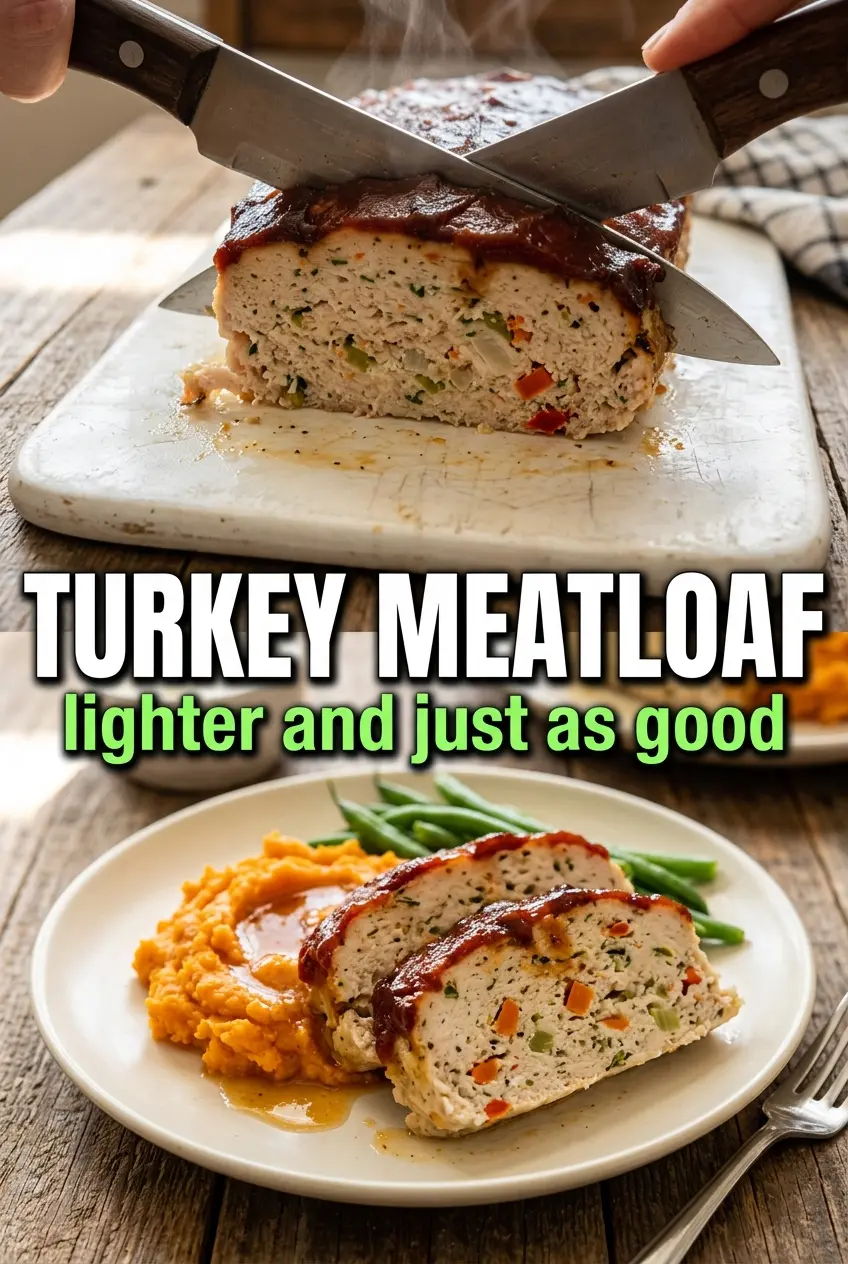
Turkey Meatloaf
Ingredients
Equipment
Method
- Preheat oven to 350°F and grease a 9x5 loaf pan or line a baking sheet with parchment. Set up your pan so the loaf holds its shape and stays moist during baking.
- In a large bowl, combine ground turkey, breadcrumbs, eggs, whole milk, onion, garlic, Worcestershire sauce, Italian seasoning, dried thyme, fresh parsley, salt, and pepper. Mix just until evenly combined so the loaf bakes tender.
- Press the mixture into the loaf pan or shape free-form on the baking sheet. Keeping it in a pan helps retain moisture for a juicy interior.
- Mix ketchup, brown sugar, and Dijon mustard, then spread half of the glaze over the top. This first layer sets up a caramelized finish.
- Bake for 55–65 minutes total until the internal temperature reaches 165°F, checking partway through. At the 45-minute mark, spread the remaining glaze over the top for a tangy, glossy finish.
- Rest the meatloaf for 10 minutes before slicing. This short rest helps the juices redistribute so slices hold together.