These Whole30 pumpkin pancakes turn out tender, lightly sweet, and just sturdy enough to flip without falling apart when you keep them small. The pumpkin brings that soft, custardy middle, while the banana does double duty as both binder and natural sweetness, so you don’t need any flour or added sugar to get pancakes that actually feel like pancakes.
The part that matters most here is the batter texture. It should look thinner than a standard pancake batter, and that throws people off the first time they make it. That looseness is what keeps the pancakes from turning gummy, but it also means the skillet has to stay at medium-low and the pancakes have to stay small. Big scoops are the fastest way to end up with broken centers and a messy flip.
Below you’ll find the little details that make these work on the first try, plus a few smart swaps if you need to adjust the nut butter or want to serve them a different way.
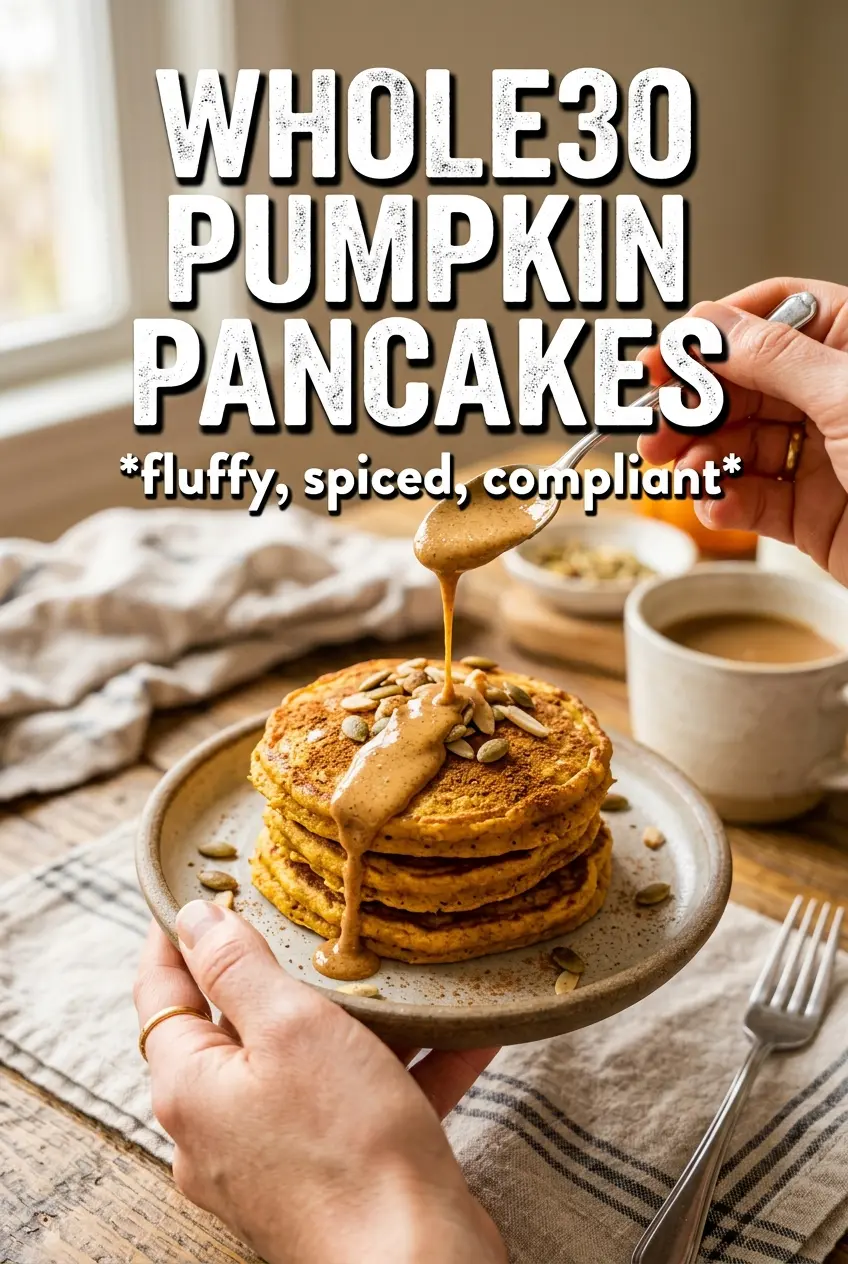
The pancakes stayed soft in the middle but still flipped cleanly when I kept them small, and the banana-pumpkin combo tasted great with the almond butter on top.
Like these grain-free pumpkin pancakes? Save them to Pinterest for a fast Whole30 breakfast with soft centers and an easy berry-and-almond-butter finish.
The Trick Behind Pancakes That Flip Without Falling Apart
With grain-free pancakes, most of the trouble starts before the batter ever hits the pan. If the banana isn’t mashed smooth, you’ll get little soft pockets that weaken the structure and make the pancakes tear when you turn them. If the heat is too high, the outside sets before the center has enough time to cook, and that fragile middle collapses the second you slide a spatula underneath.
The fix is simple: whisk until the batter looks uniform, then cook slowly in small portions. Medium-low heat gives the eggs time to set through the middle, and small pancakes give you a wider margin for error. Thin batter is part of the design here, not a problem to solve.
What the Pumpkin, Banana, and Almond Butter Are Each Doing
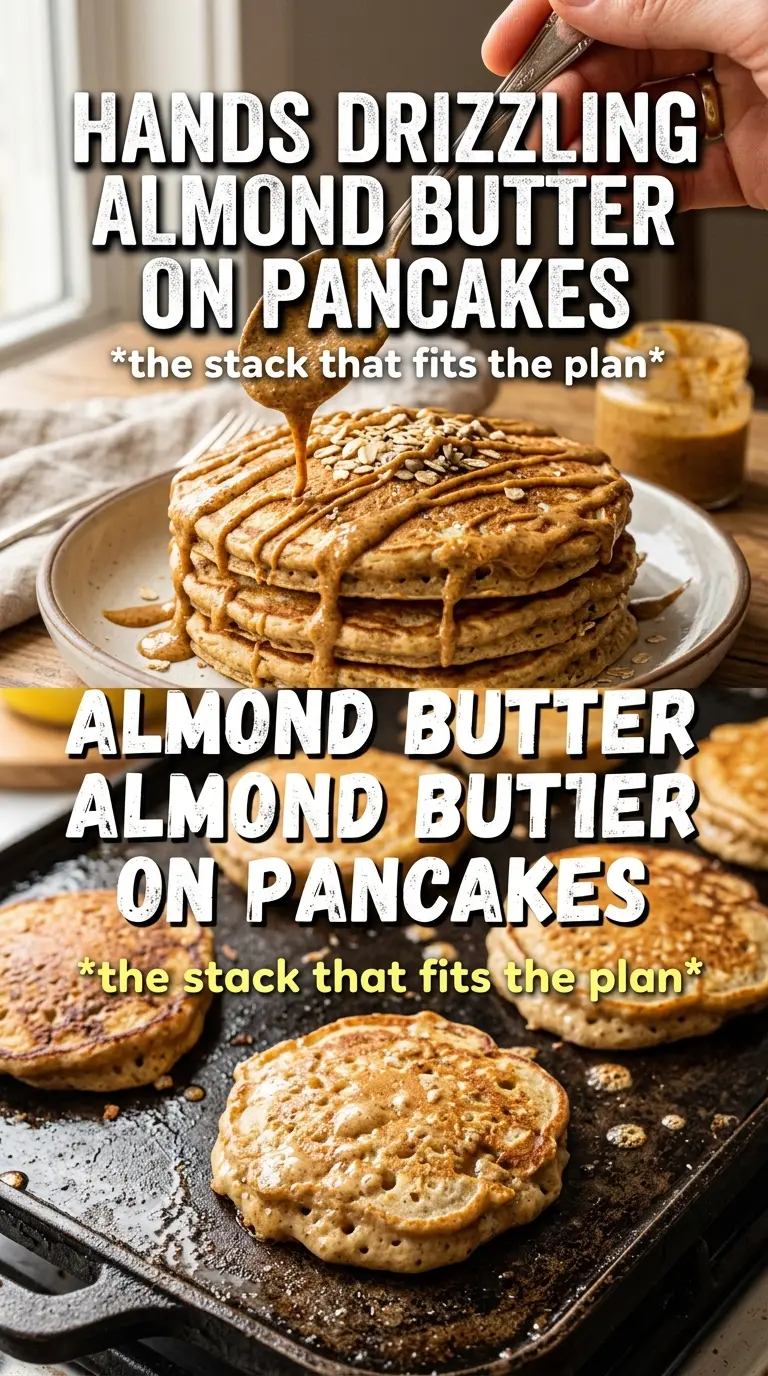
- Pumpkin puree — This gives the pancakes their soft texture and that gentle pumpkin flavor without making them heavy. Use plain pumpkin puree, not pumpkin pie filling, or you’ll throw off the seasoning and sweetness.
- Banana — This is the binder that replaces flour and a little of the sweetening you would normally get from sugar. It needs to be ripe and mashed until completely smooth, because chunks of banana make the batter harder to cook evenly.
- Eggs — Four eggs sound like a lot, but they are carrying the structure here. They set into a delicate, custardy pancake that holds together as long as the heat stays moderate.
- Almond butter or cashew butter — This adds richness and helps the batter feel more substantial. Cashew butter is milder and a little smoother; almond butter tastes deeper and a touch more nutty.
- Baking soda — You only need a little, but it helps lighten the batter so the pancakes don’t come out dense. Whisk it in right before cooking so it has the best chance to do its job.
Getting the Center Cooked Before the First Flip
Mix Until the Batter Looks Uniform
Mash the banana until there are no big soft lumps left, then whisk it with the pumpkin, eggs, nut butter, spices, vanilla, and baking soda until the batter looks smooth and cohesive. You want everything evenly distributed so each pancake cooks the same way. If you see streaks of banana or pockets of pumpkin, keep whisking. Uneven batter is what causes some pancakes to split while others stay soggy in the middle.
Cook Small Pancakes Over Gentle Heat
Heat a skillet over medium-low and add just enough coconut oil to lightly coat the surface. Drop the batter in 2 to 3 tablespoon portions, then leave them alone until the edges look set and the tops turn mostly dry, about 2 to 3 minutes. If the bottoms are browning fast before the tops change, the pan is too hot. Lower the heat and give them time; these need patience more than speed.
Flip With a Light Hand
Slide a thin spatula fully under each pancake and turn it in one quick motion. Don’t press down after flipping, or you’ll squeeze out the air and break the delicate center. Cook the second side for 1 to 2 minutes, just until it’s set and the pancake feels firm when nudged. If it sticks, give it another 20 to 30 seconds before trying again, because a pancake that releases cleanly is usually one that’s ready.
Ways to Adjust These Without Breaking the Batter
Make Them Dairy-Free and Whole30-Friendly
This version already fits that lane as written, so the main job is choosing a compliant nut butter and cooking them in coconut oil. Keep the toppings clean too: fresh berries, banana slices, and almond butter are enough to finish them without adding anything that fights the Whole30 rules.
Use Cashew Butter for a Softer, Milder Pancake
Cashew butter gives a smoother, less assertive flavor and makes the batter feel a little silkier. Almond butter tastes a bit more pronounced and rustic, which I like if you want the pumpkin to stay front and center. Either one works, but avoid natural nut butters with a lot of added oil, since they can make the batter looser.
Scale Them Up for More People
You can double the batter, but keep the pancake size small no matter how much you make. Bigger pancakes are harder to flip because the center stays loose longer, and this batter doesn’t have flour to help it stand up. Work in batches and keep the finished pancakes warm on a sheet pan in a low oven while you cook the rest.
Storage and Reheating
- Refrigerator: Store leftovers in an airtight container for up to 3 days. They soften a little as they sit, which is normal for egg-based pancakes.
- Freezer: Freeze in a single layer, then transfer to a freezer bag with parchment between layers. They freeze well for about 1 month.
- Reheating: Warm them in a dry skillet over low heat or in a 300°F oven until heated through. The common mistake is blasting them in the microwave, which makes the centers rubbery and the edges watery.
Questions I Get Asked About This Recipe
Whole30 Pumpkin Pancakes
Ingredients
Equipment
Method
- Mash the ripe banana until very smooth, then whisk it with pumpkin puree, eggs, and almond butter (or cashew butter) until uniform.
- Whisk in pumpkin pie spice, cinnamon, vanilla extract, and baking soda until fully combined.
- Let the batter rest in the bowl for 1 minute, so it thickens slightly while you heat the skillet.
- Note that the batter will be thinner than traditional pancakes—this is normal for the delicate texture.
- Heat a cast iron skillet over medium-low heat and add a small amount of coconut oil to coat.
- Drop 2-3 tablespoon portions of batter into the skillet and cook for 2-3 minutes, until the edges look set and the top looks mostly dry.
- Flip very gently with care because the pancakes are delicate, then cook for 1-2 minutes more until set through.
- Keep the pancakes small for easier flipping and a cleaner edge.
- Serve the pancakes immediately with fresh berries and sliced banana.
- Drizzle with almond butter to finish each stack.