Ingredients
Equipment
Method
Make the peanut butter custard
- Heat heavy cream and whole milk in a saucepan over medium heat until steaming but not boiling, then keep the surface active. Visual cue: steam should rise consistently from the dairy.
- Whisk egg yolks and granulated sugar in a bowl until thickened and smooth, then slowly whisk the hot dairy into the yolks in a thin stream. Visual cue: the mixture turns lighter and glossy as it thickens slightly from the tempered heat.
- Return the custard mixture to the saucepan and cook over medium-low heat, stirring constantly, until it reaches 175F. Visual cue: the custard should coat the back of a spoon.
- Remove the saucepan from the heat and whisk in creamy peanut butter until completely smooth. Visual cue: no streaks of peanut butter remain and the custard looks uniform and pale golden-tan.
- Strain the custard through a fine mesh sieve, then whisk in vanilla extract and salt. Visual cue: the strained texture becomes silky with no lumps.
- Cool the custard over an ice bath, stirring occasionally, until well chilled. Visual cue: the bowl feels cold and the custard thickens slightly as it cools.
Chill, churn, and freeze
- Refrigerate the custard at least 4 hours or overnight, covered, until thoroughly cold. Visual cue: the custard becomes noticeably thicker.
- Churn the chilled custard in an ice cream maker according to the manufacturer’s instructions. Visual cue: it expands and turns into a thick, soft-serve consistency.
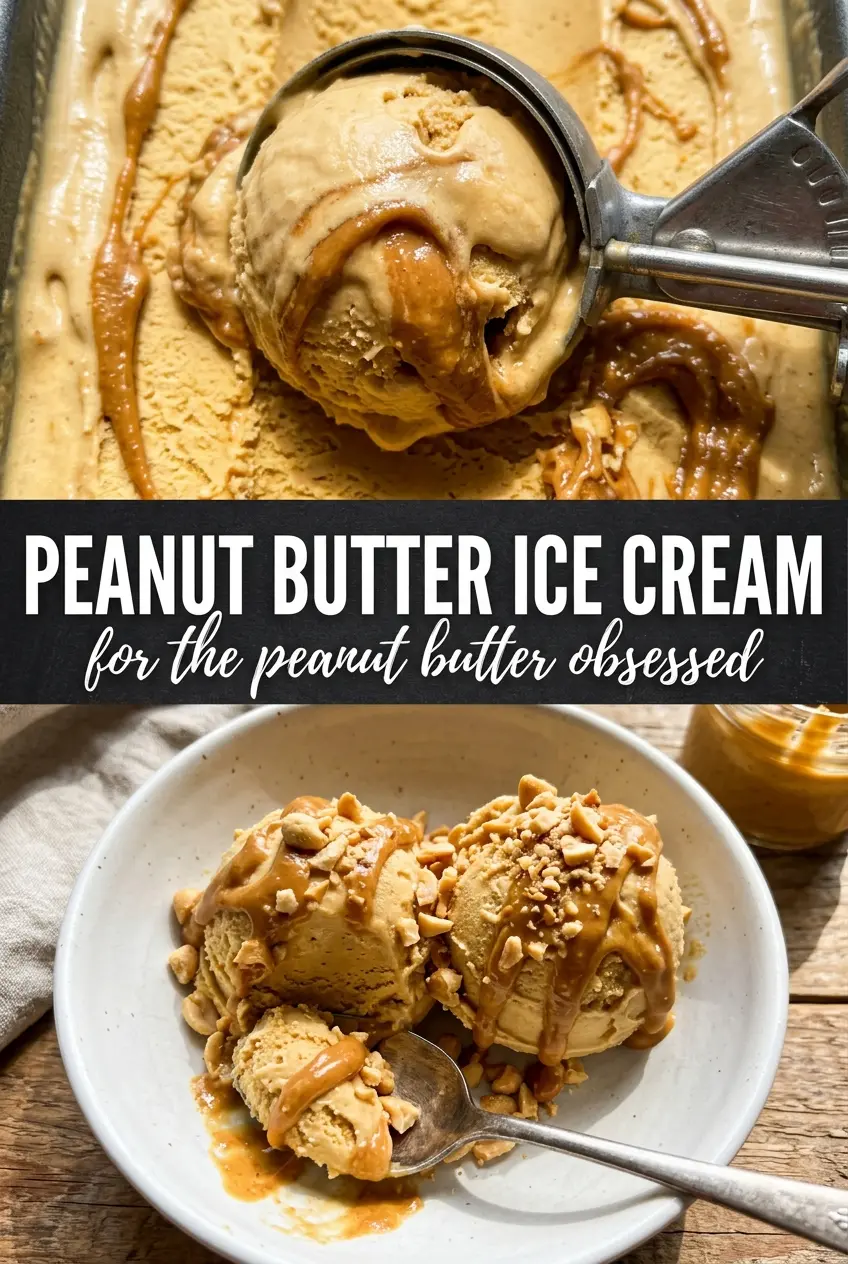
- Transfer to a freezer-safe container and freeze until firm. Visual cue: the ice cream holds shape when scooped.
Notes
For the silkiest texture, strain the custard even if it looks smooth—this removes any egg curd bits that can happen at 175F. Refrigerate leftover ice cream covered for up to 7 days; freeze up to 1 month for best scoopability. If you want a dairy-light option, use low-fat or evaporated milk substitutions for part of the heavy cream, but expect a softer churn.