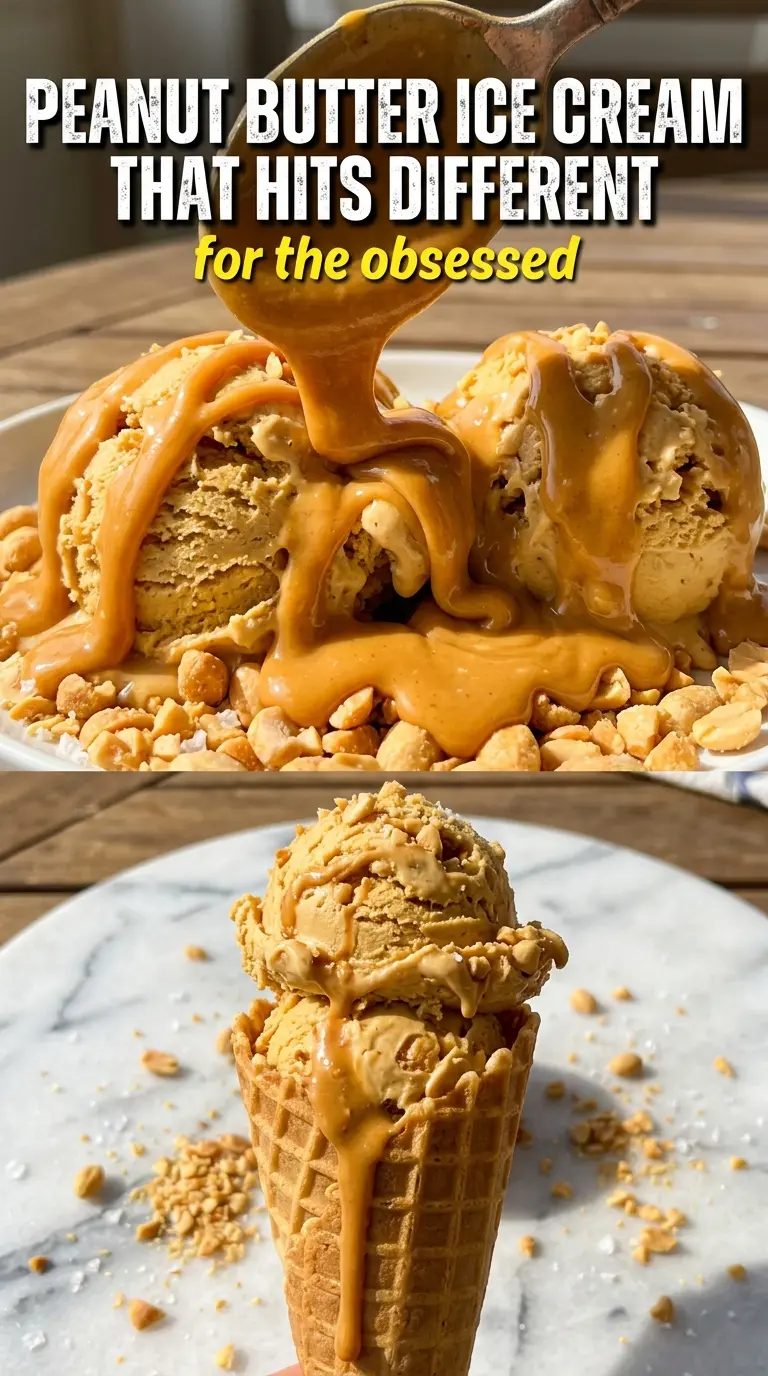
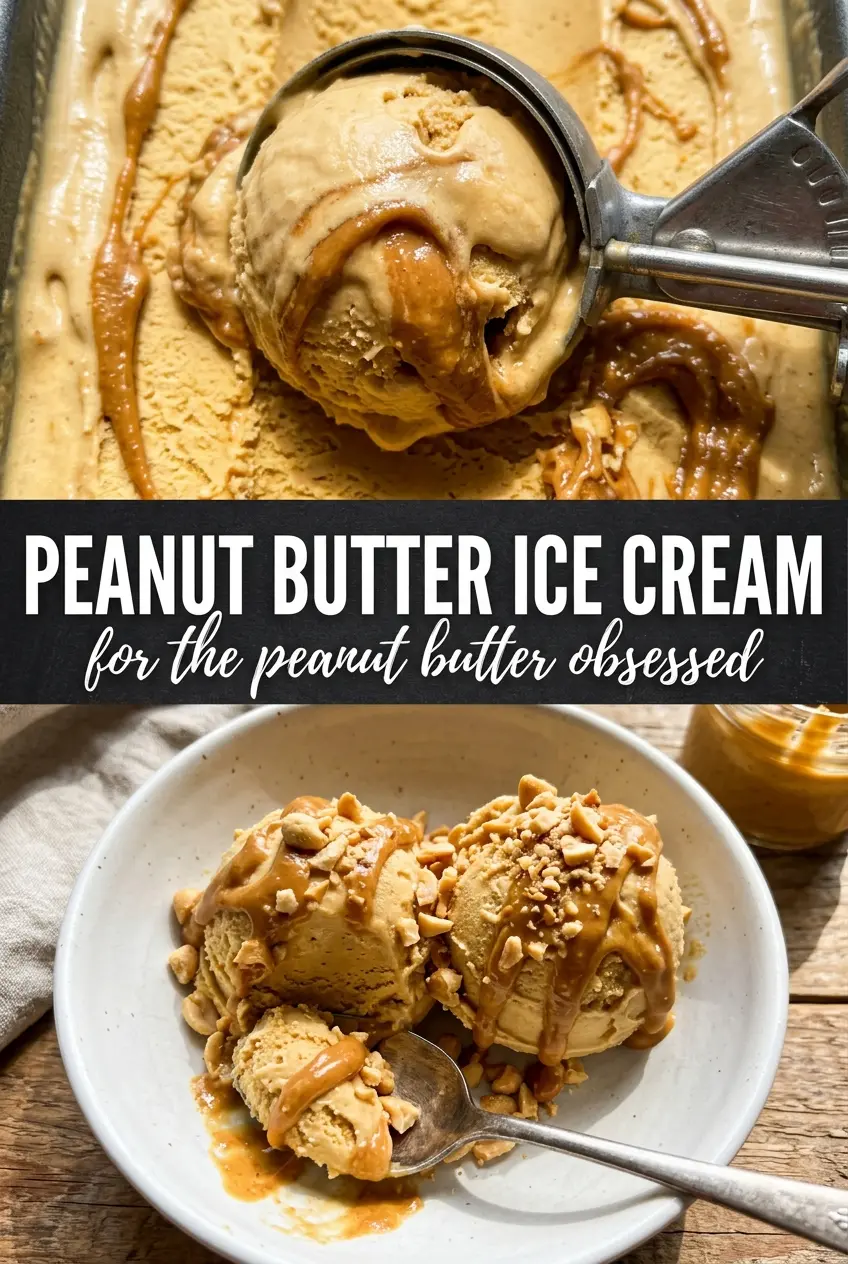
Peanut butter ice cream earns its keep fast: it’s dense, creamy, and has that deep roasted peanut flavor that tastes richer than anything from a carton. The texture lands somewhere between custard and mousse once it’s churned, with enough body to scoop cleanly but not so much air that it turns fluffy or icy.
This version uses egg yolks, which give the base a softer freeze and a smoother finish than a simple no-cook mix. The peanut butter goes in while the custard is still warm, so it melts in completely instead of leaving little oily streaks behind. That step matters more than the churn itself. If the base is smooth before it chills, the finished ice cream will be smooth too.
Below, I’ll walk through the part that keeps the custard from scrambling, the best way to fold in the peanut butter, and a few variations for when you want it extra salty, dairy-free, or loaded with mix-ins.
The custard thickened exactly at 175F and the peanut butter blended in without any grainy spots. It churned up so creamy, and after an overnight freeze it scooped like a dream.
Save this peanut butter ice cream for the nights when you want a custard-style scoop with deep roasted peanut flavor and a silky churn.
The Part Where Custard Turns from Thin to Scoopable
The biggest risk in peanut butter ice cream is rushing the custard. If you pour the hot milk and cream into the yolks too quickly, the eggs seize into little bits before they ever get a chance to thicken the base. The fix is a slow whisk and steady heat. At 175F, the custard should coat a spoon and leave a clean path when you swipe a finger through it.
Peanut butter also changes the game here. It adds fat and body, which is good, but it can clump if you try to stir it into cold custard or boil it hard. Warm custard and gentle heat are what keep the texture smooth and dense instead of greasy or grainy.
- Egg yolks — These give the ice cream its custard body and keep it from freezing into a hard block. Whole eggs won’t give the same plush texture.
- Heavy cream and whole milk — The cream brings richness, while the milk keeps the base from becoming too heavy. Swapping in lower-fat milk will make the finished ice cream icier.
- Creamy peanut butter — Use a smooth, standard peanut butter for the most even melt-in. Natural peanut butter can work, but it needs to be stirred extremely well and may still freeze a little less silky because the oil separation is harder to control.
- Fine mesh strainer — This catches any tiny egg bits and guarantees a cleaner texture. If your custard looks even slightly speckled, strain it before chilling.
What Each Ingredient Is Actually Doing in This Ice Cream
- Base ingredient (cream, milk, or custard) — This provides the foundation and richness. Quality matters.
- Sweetener (sugar, honey, or condensed milk) — This sweetens and prevents ice crystals. The ratio is critical.
- Flavor element (vanilla, fruit, chocolate, coffee, or other) — This defines the ice cream personality. Use quality ingredients.
- Egg yolks (if making custard base) — These create richness and silky texture. Optional but elevates ice cream.
- Churning (if using ice cream maker) — This incorporates air and prevents ice crystals. Critical for smooth texture.
- Freezing temperature and time — Proper freezing prevents rock-hard texture. Store at 0°F or below.
- Mix-ins (chocolate, cookies, fruit, or swirls) — These add texture and prevent one-dimensional flavor. Add near end of churning.
- Serving temperature (slightly soft, not rock hard) — This provides creamy mouthfeel. Remove from freezer 5 minutes before serving.
How to Keep the Peanut Butter Smooth All the Way Through Churning
Tempering the Yolks
Whisk the yolks and sugar until they look pale and a little thick, then stream in the hot dairy slowly while whisking constantly. That gradual addition raises the temperature of the eggs without scrambling them. If you see little yellow flecks, stop and strain the base before it goes back on the heat.
Cooking the Custard
Return the mixture to the saucepan and stir over medium-low heat, scraping the bottom and corners. You’re looking for 175F, not a rolling boil. If the heat is too high, the custard can break before it thickens evenly. The spoon test should still work if you don’t have a thermometer: it should cling to the back of the spoon and hold its shape for a moment.
Whisking in the Peanut Butter
Take the pan off the heat before adding the peanut butter and whisk until the base looks fully uniform. This is where a lot of people end up with little oily streaks, which usually means the custard was too hot or the peanut butter was added too late. The mixture should look glossy and completely blended before it ever hits the ice bath.
Chilling Before Churning
Strain the base, stir in the vanilla and salt, and cool it quickly over an ice bath before refrigerating. The rest time matters because a cold base churns faster and freezes with smaller ice crystals. If you churn a warm custard, the machine has to work too hard and the ice cream sets up coarse instead of creamy.
Chocolate Swirl
Drizzle in cooled chocolate fudge or a ribbon of melted chocolate during the last minute of churning. It adds contrast and a firmer bite, but don’t overmix or the swirl disappears into the base.
Dairy-Free Version
Use full-fat canned coconut milk in place of the cream and milk, then keep the peanut butter and yolks the same if dairy is the only concern. The flavor shifts a little toward coconut, and the texture is slightly softer, but it still churns into a rich scoop.
Extra-Salty Peanut Butter Ice Cream
Increase the salt to 1/2 teaspoon and finish the scoop with flaky salt on top. That sharper edge makes the peanut flavor taste deeper and keeps the custard from reading one-note sweet.
Crunchy Add-In Version
Fold in chopped peanuts, peanut brittle, or peanut butter cups after churning. Add them at the very end so they stay distinct instead of sinking or turning soggy in the churn.
Storage and Reheating
- Refrigerator: The custard base can be held up to 2 days before churning. After churning, keep the ice cream covered in the freezer instead of the fridge.
- Freezer: It freezes well for about 2 weeks. Press parchment or plastic wrap directly on the surface to limit ice crystals and keep the top from drying out.
- Reheating: Not applicable for the finished ice cream. Let hard-frozen scoops sit at room temperature for 5 to 10 minutes before serving so the custard can soften without melting around the edges.
Answers to the Questions Worth Asking
Peanut Butter Ice Cream
Ingredients
Equipment
Method
- Heat heavy cream and whole milk in a saucepan over medium heat until steaming but not boiling, then keep the surface active. Visual cue: steam should rise consistently from the dairy.
- Whisk egg yolks and granulated sugar in a bowl until thickened and smooth, then slowly whisk the hot dairy into the yolks in a thin stream. Visual cue: the mixture turns lighter and glossy as it thickens slightly from the tempered heat.
- Return the custard mixture to the saucepan and cook over medium-low heat, stirring constantly, until it reaches 175F. Visual cue: the custard should coat the back of a spoon.
- Remove the saucepan from the heat and whisk in creamy peanut butter until completely smooth. Visual cue: no streaks of peanut butter remain and the custard looks uniform and pale golden-tan.
- Strain the custard through a fine mesh sieve, then whisk in vanilla extract and salt. Visual cue: the strained texture becomes silky with no lumps.
- Cool the custard over an ice bath, stirring occasionally, until well chilled. Visual cue: the bowl feels cold and the custard thickens slightly as it cools.
- Refrigerate the custard at least 4 hours or overnight, covered, until thoroughly cold. Visual cue: the custard becomes noticeably thicker.
- Churn the chilled custard in an ice cream maker according to the manufacturer’s instructions. Visual cue: it expands and turns into a thick, soft-serve consistency.
- Transfer to a freezer-safe container and freeze until firm. Visual cue: the ice cream holds shape when scooped.