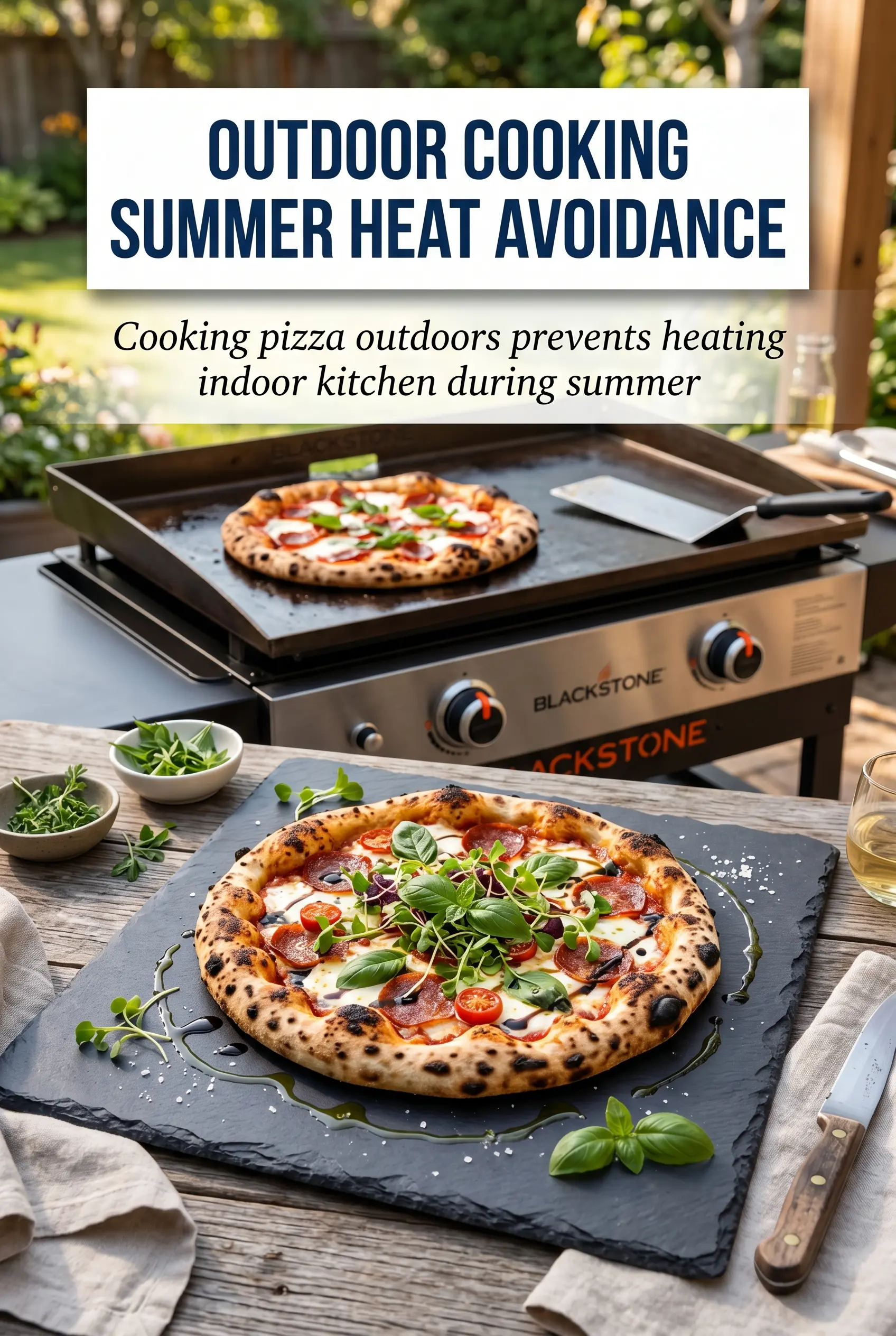
Pizza on a Blackstone griddle gives you that pizzeria-style finish without firing up the oven. The crust comes out crisp underneath with a little chew in the middle, and the cheese melts fast once the dome goes on. That mix of charred edges, bubbling mozzarella, and a hot-from-the-griddle bottom is what makes this one worth repeating.
The trick is cooking the dough first, before the sauce ever touches it. That keeps the crust strong enough to handle toppings and lets you flip it onto the cooked side, where the sauce and cheese can go on without soaking through. Medium heat matters here too: too hot and the outside burns before the center sets; too low and you lose the blistered, golden crust that makes griddle pizza special.
Below you’ll find the small details that make a huge difference, from stretching the dough evenly to using the dome for even melting. Once you get the rhythm down, this turns into a fast, flexible dinner that works with whatever toppings are in the fridge.
The crust crisped up underneath in just a few minutes and the dome melted the cheese evenly without making the middle soggy. My kids kept asking for “the griddle pizza” again the next night.
Save this Blackstone pizza for the nights when you want crisp crust, melted cheese, and dinner on the table fast.
The Reason the Dough Gets Crisp Instead of Soggy
On a griddle, pizza fails for one main reason: people load the sauce on too early. Raw dough sitting under wet toppings turns limp fast, especially when the heat is coming from below and the toppings need just a few minutes to finish. Cooking the first side on its own gives the crust structure, so when you flip it, the sauce and cheese land on a surface that can hold them.
That flip also changes the game. The cooked side becomes the top, which means the sauce never has a chance to seep through and soften the bottom before the cheese melts. If your crust tears, the dough was either stretched too thin in one spot or moved before the underside had enough color to release cleanly from the griddle.
- Give the dough a light dusting of flour so it can stretch without sticking.
- Keep the griddle at medium heat; high heat scorches the outside before the center sets.
- Wait for a golden underside before flipping. Pale dough usually means fragile dough.
- Use the dome to trap heat so the cheese melts without overcooking the crust.
What Each Ingredient Is Doing in This Griddle Pizza
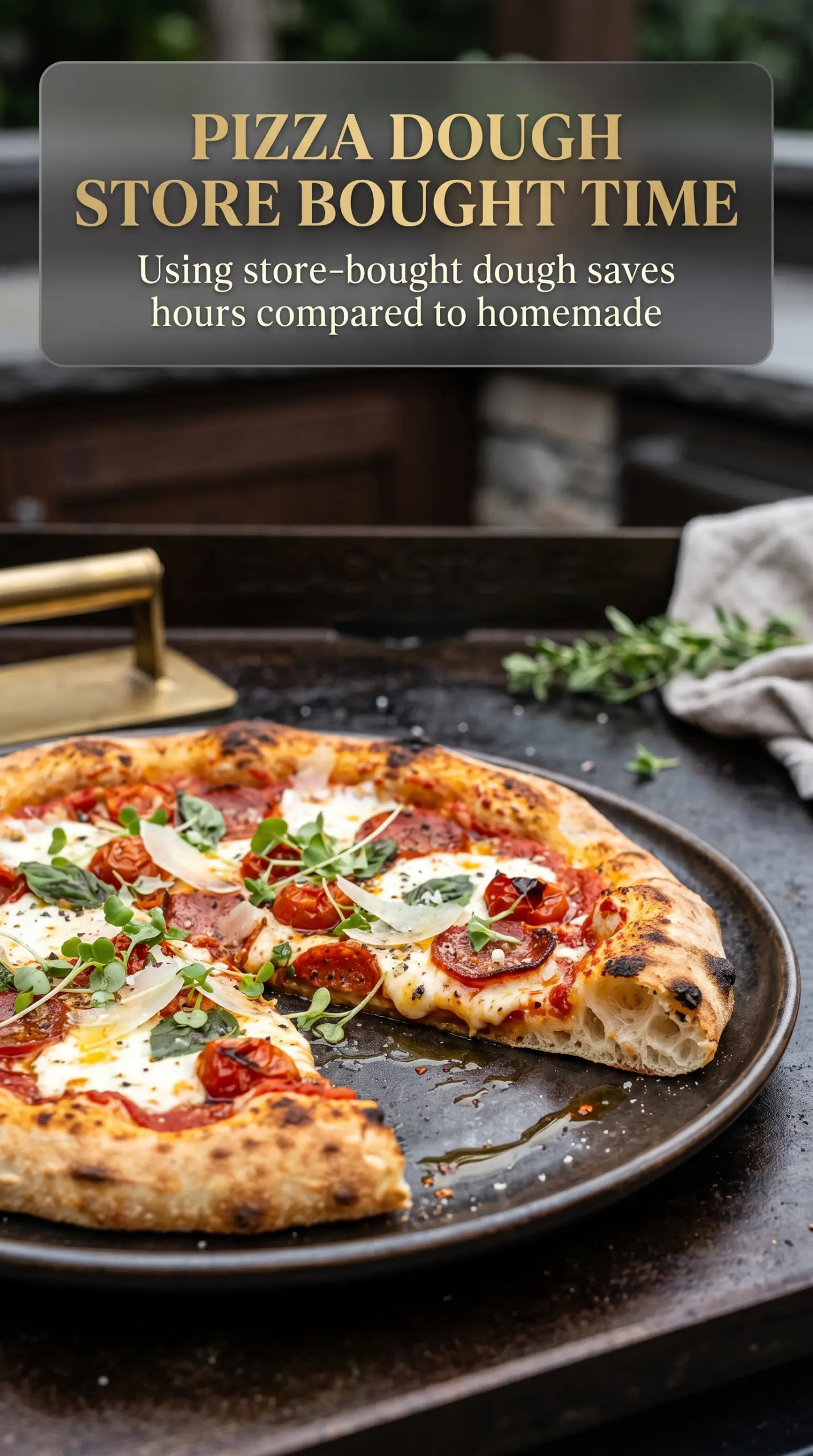
- Pizza dough — This is the base that needs enough strength to handle a flip. Store-bought dough works fine if it’s rested at room temperature first, because cold dough fights you and springs back instead of stretching.
- Olive oil — Oil on the griddle helps the crust brown and keeps the dough from sticking. A thin, even film is enough; too much oil fries the bottom before it crisps.
- Pizza sauce — Use a sauce that isn’t watery. Thick sauce clings to the crust instead of soaking in, which matters a lot when you’re finishing the pizza on a hot flat-top.
- Mozzarella — Shredded low-moisture mozzarella melts the cleanest here. Fresh mozzarella can work, but it releases more liquid, so blot it first or the center can turn slippery.
- Your choice of toppings — Keep toppings pre-cooked if they need more than a few minutes. Raw sausage or thick vegetables won’t finish in time before the crust is done.
- Fresh basil and Parmesan — Add both at the end so their flavor stays bright. Basil wilts instantly on the hot pizza, and Parmesan gives you a salty finish that doesn’t disappear into the sauce.
How to Time the Flip, Toppings, and Melt
Getting the Griddle Ready
Heat the Blackstone to medium and oil the surface lightly and evenly. You want steady heat, not a ripping-hot surface, because pizza dough needs a minute to set before it browns. If the griddle smokes hard as soon as the dough hits it, back the heat down and wait a minute.
Stretching Without Tearing
Divide the dough into four portions and stretch each one into a thin round on a floured surface. Press from the center outward and leave the edge slightly thicker so you get a little lift around the rim. If the dough keeps shrinking back, let it rest for five minutes and try again; that usually means the gluten needs to relax.
Cooking the First Side
Lay the dough on the griddle and leave it alone for 2 to 3 minutes. The bottom should turn golden and the top should lose its raw shine before you flip. If it sticks, it isn’t ready yet; forcing it tears the crust and ruins the shape.
Finishing After the Flip
Once flipped, work fast with the sauce, cheese, and toppings on the cooked side. Then cover with a dome or large pan so the trapped heat melts the cheese evenly from the top down. Pull the pizza once the cheese is bubbling and the bottom has deepened in color, then finish with basil and Parmesan before slicing.
How to Adapt This for Bigger Batches, Different Toppings, and Dietary Needs
Gluten-Free Pizza Dough
Use a gluten-free pizza dough that is meant to be rolled and handled, not a batter-style crust. It usually needs a little more care when flipping, so keep it slightly thicker and wait for a firm golden base before you turn it.
Dairy-Free Griddle Pizza
Swap in a dairy-free mozzarella that melts well and keep the toppings simple so the crust still has room to crisp. Some dairy-free cheeses need a little extra covered time to soften, so let them go until they look glossy rather than waiting for a traditional cheese pull.
Using Heavier Toppings
If you want sausage, peppers, onions, or mushrooms, cook them first so they don’t dump moisture onto the pizza while the crust is trying to finish. Heavy toppings taste great here, but only if they’re already cooked and drained.
Storage and Reheating
- Refrigerator: Store slices in an airtight container for up to 3 days. The crust softens a bit in the fridge, especially under sauce.
- Freezer: Freeze baked slices wrapped tightly and layered with parchment for up to 2 months. Thaw in the fridge before reheating for the best texture.
- Reheating: Warm slices on a skillet or back on the griddle over medium-low heat until the bottom crisps and the cheese loosens again. The microwave makes the crust rubbery, so skip it if you want that griddle texture back.