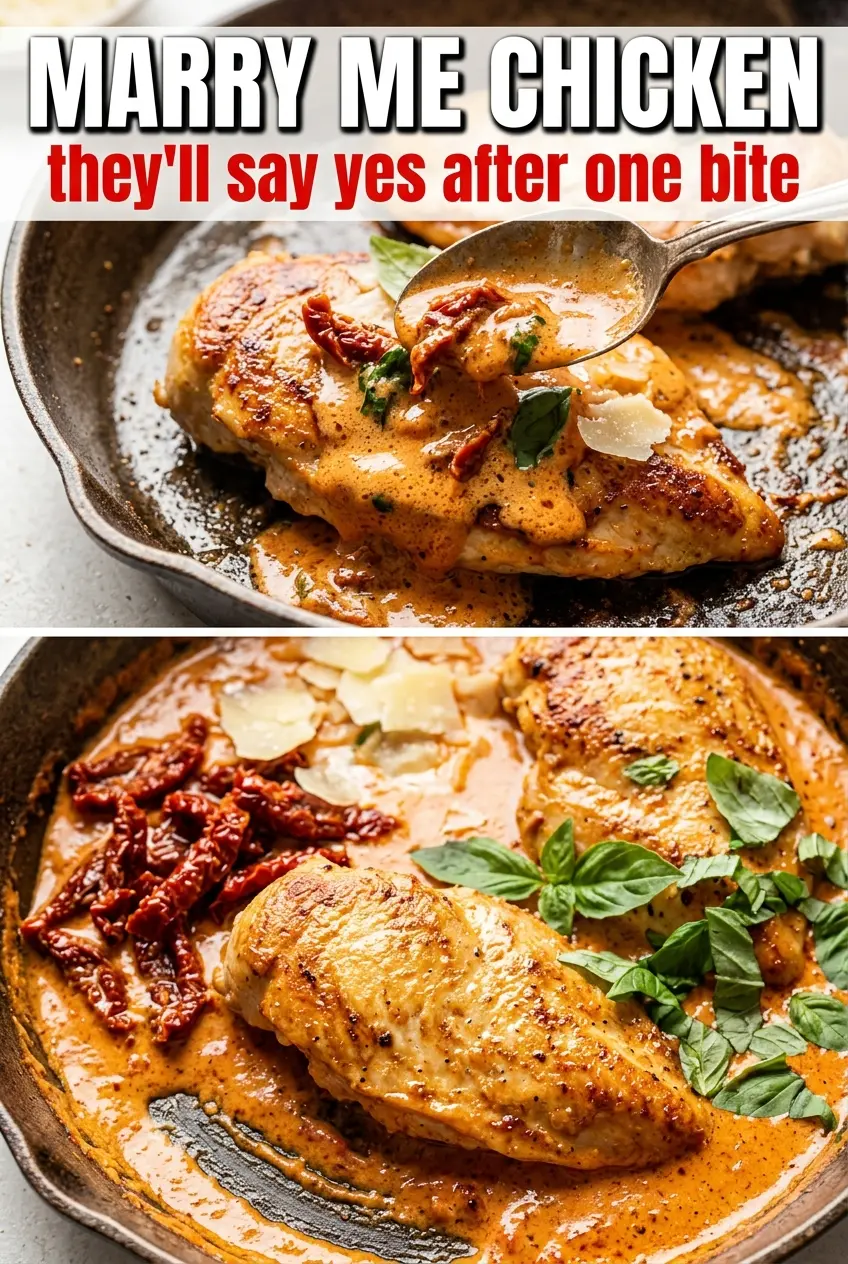
Golden seared chicken breasts tucked into a sun-dried tomato cream sauce earn their place on the regular dinner rotation fast. The chicken stays juicy because it gets a hard sear first, then finishes gently in the sauce instead of drying out in the oven. The sauce turns glossy and clingy, with Parmesan, garlic, and sun-dried tomatoes giving it that restaurant-style richness people remember after the plate is clean.
What makes this version work is the order of operations. The skillet does double duty, so the browned bits from the chicken become part of the sauce instead of getting washed down the drain. Cream goes in after the broth has loosened the pan, and the heat stays at a simmer so the Parmesan melts smoothly instead of turning grainy. That small bit of control is what keeps this dish silky instead of heavy.
Below, you’ll find the exact cues I watch for when the chicken is seared enough, when the sauce has thickened enough, and how to adjust the finish if your sun-dried tomatoes are especially salty or your sauce needs a little more lift.
The sauce thickened up perfectly and the chicken stayed juicy all the way through. I served it over mashed potatoes and my husband asked if we could put this in the regular dinner rotation.
Pin this Marry Me Chicken recipe for a creamy chicken dinner with seared breasts, sun-dried tomatoes, and a glossy Parmesan sauce.
The Trick That Keeps the Sauce Silky Instead of Grainy
The two places this dish usually goes wrong are the sear and the cheese. If the pan isn’t hot enough, the chicken gives off liquid and steams instead of browning, which means you lose the flavor base the sauce needs. If the Parmesan goes into a sauce that’s boiling hard, it can seize and turn sandy instead of melting into that smooth, spoon-coating finish.
The fix is simple but important: build the color on the chicken first, then drop the heat before you add the cream and cheese. The broth loosens the pan, the cream softens the edges, and the Parmesan goes in once the sauce is at a gentle simmer. That sequence gives you a deep savory sauce without any broken dairy or oily separation.
- Chicken breasts — Even thickness matters here. If one end is much thicker, pound them lightly so they cook at the same pace and don’t dry out before the center is done.
- Sun-dried tomatoes in oil — The oil-packed kind bring softer texture and deeper tomato flavor than dry-packed tomatoes. Drain them before slicing so the sauce doesn’t get greasy, but don’t rinse away the seasoning clinging to them.
- Heavy cream — This is what gives the sauce its body and keeps it from splitting during the final simmer. Half-and-half can work in a pinch, but the sauce will be thinner and a little less stable.
- Parmesan — Grate it fresh if you can. Pre-shredded Parmesan often contains anti-caking agents that can make the sauce less smooth, especially when it hits heat.
- Chicken broth — This isn’t just extra liquid; it pulls the browned bits off the skillet and adds savory depth. Use low-sodium broth if your Parmesan and sun-dried tomatoes are already salty.
What Each Ingredient Is Actually Doing in This Recipe

- Primary ingredient (the star) — Quality matters most. Choose the best you can find.
- Cooking medium (oil, butter, or broth) — This carries flavors and prevents dryness.
- Seasonings (salt, pepper, spices, herbs) — Layer flavors so nothing overpowers. Build depth gradually.
- Aromatics (garlic, onion, herbs) — Cook with fat to bloom flavors. Become the foundation.
- Supporting ingredients — Complement the main ingredient without overpowering it.
- Sauce or liquid (if applicable) — Brings flavors together. Balance richness with acid.
- Acid (lemon, vinegar, wine, or other) — Brightens and prevents flat-tasting results.
- Final finish (garnish, glaze, or sauce) — Prevents one-dimensional taste and adds visual appeal.
Building the Chicken and Sauce in the Right Order
Seasoning for a Proper Sear
Season the chicken generously on both sides before it ever hits the pan. The surface needs enough salt and seasoning to form a crust, not just pick up flavor at the end. If the chicken looks wet, pat it dry first or the spices will slide off and the skillet will never get that deep brown color.
Getting Color Without Overcooking
Heat the olive oil until it shimmers, then lay the chicken down and let it sit. If you keep moving it, the crust tears and sticks. Five to six minutes per side is the usual range, but the real cue is a golden crust that releases from the pan when it’s ready. Pull the chicken as soon as it reaches 165°F so it doesn’t keep cooking to dryness while the sauce finishes.
Deglazing the Pan
Garlic and sun-dried tomatoes only need about a minute in the skillet, just long enough to wake up their aroma. Add the broth and scrape the bottom of the pan with a wooden spoon, because those browned bits carry the seared chicken flavor into the sauce. If the pan looks dry before the broth goes in, the garlic can scorch fast, so keep it moving.
Finishing the Cream Sauce
Pour in the cream, Parmesan, Italian seasoning, and red pepper flakes, then keep the sauce at a gentle simmer. It should thicken enough to coat a spoon after four to five minutes. If it looks thin, give it another minute instead of cranking the heat. High heat is what breaks a cream sauce; patience is what makes it glossy.
Returning the Chicken to the Skillet
Slide the chicken back into the sauce and spoon it over the top so every piece gets coated. Two more minutes is enough to warm it through and let the flavors marry without pushing the chicken past juicy. Finish with basil at the end so it stays bright and fragrant instead of sinking into the sauce and fading.
How to Adapt Marry Me Chicken Without Losing What Makes It Work
Make It Gluten-Free by Serving It Differently
The sauce itself is naturally gluten-free if your broth and Parmesan are safe, so the main change is how you serve it. Spoon it over mashed potatoes, polenta, or gluten-free pasta and you’re set. The texture and flavor stay the same because nothing in the sauce depends on flour.
Dairy-Free Version With a Different Finish
Swap the heavy cream for full-fat coconut cream and use a dairy-free Parmesan substitute that melts well. The sauce will be slightly sweeter and less sharp than the original, so add a little extra salt and a squeeze of lemon if it tastes flat. Keep the heat low, because coconut-based sauces can separate if they boil hard.
Use Chicken Thighs for a Richer Result
Boneless thighs work beautifully if you want a deeper, juicier bite. They need a little longer in the pan than breasts, and they’re less likely to dry out if they go a minute too far. The sauce clings the same way, but the finished dish feels a touch richer.
Storage and Reheating
- Refrigerator: Store leftovers in an airtight container for up to 3 days. The sauce thickens as it chills, so it may look a little tighter the next day.
- Freezer: You can freeze it, but cream sauces sometimes separate after thawing. If you do freeze it, cool it completely first and reheat gently, stirring often.
- Reheating: Warm it slowly in a covered skillet over low heat with a splash of broth or cream. Don’t use high heat, or the sauce can break and the chicken can dry out before the center is hot.
Answers to the Questions Worth Asking
Marry Me Chicken
Ingredients
Equipment
Method
- Season the chicken breasts generously on both sides with salt, pepper, garlic powder, Italian seasoning, and smoked paprika. Make sure both sides look evenly coated for best flavor.
- Heat the olive oil in a large cast iron skillet over medium-high heat. Sear the chicken for 5-6 minutes per side until golden and the internal temperature reaches 165°F, then remove to a plate.
- In the same pan, cook the garlic and sun-dried tomatoes for 1 minute. Stir just until fragrant to avoid scorching.
- Pour in the chicken broth and deglaze, scraping up the browned bits from the pan. Keep the heat at a steady simmer while you stir.
- Stir in the heavy cream, Parmesan, dried Italian seasoning, and red pepper flakes. Simmer the sauce for 4-5 minutes until it thickens and turns glossy.
- Return the chicken to the pan and spoon the sauce over each breast. Simmer for 2 more minutes so the chicken warms through and absorbs flavor.
- Garnish with fresh basil and serve over pasta or mashed potatoes. Spoon extra sauce from the skillet over the top.