Juicy pineapple, caramelized peppers, and chicken with a sticky teriyaki-style glaze make these kabobs the kind of grill recipe people remember. The chicken picks up sweet-savory flavor from the marinade, then the pineapple does what pineapple does best on a hot grill: it turns glossy, smoky, and just a little charred at the edges. Everything cooks fast, but the payoff tastes like you spent all afternoon on it.
What makes this version work is balance. Pineapple juice gives the marinade enough acidity to season the chicken without making it mushy, while honey helps the glaze cling and darken on the grill. Cutting the chicken and vegetables into the same-size pieces matters more than most people think; it keeps the skewers cooking evenly, so you don’t end up with dry chicken and raw onions on the same stick.
Below, you’ll find the small timing details that keep the kabobs tender, plus the one grilling cue that tells you the pineapple is ready before the chicken dries out.
The marinade gave the chicken great flavor and the pineapple caramelized beautifully without turning mushy. I grilled them about 12 minutes total and the skewers were gone in minutes.
Love the char on these pineapple chicken kabobs? Save them for your next grill night when you want sweet, smoky skewers with almost no cleanup.
The Part That Keeps the Chicken Juicy Instead of Dry
The biggest mistake with kabobs is treating the grill like an oven and walking away. Chicken breasts cook fast, and once they go past 165°F, the texture starts turning stringy and dry. The pineapple and honey in the marinade help with browning, but they don’t protect overcooked chicken, so the real job is watching the skewers closely and pulling them the moment the centers are opaque and the juices run clear.
Another common failure is overloading the skewers. If the pieces are jammed together, the edges steam before they can caramelize. Leave a little space between each piece so the grill heat can move around the skewer and give you those dark, glossy spots instead of pale, wet chicken.
What the Marinade Is Doing Here
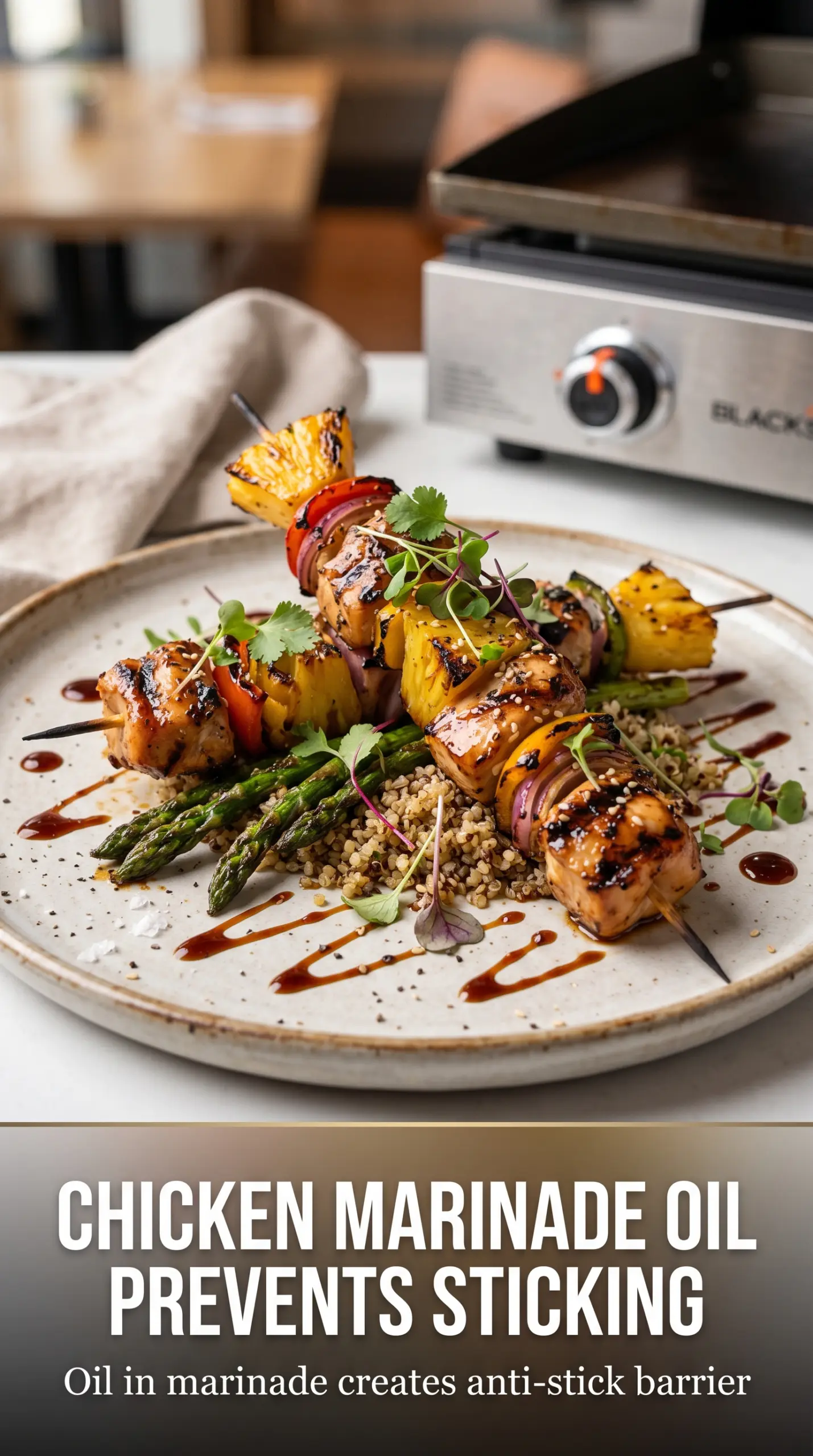
- Soy sauce — This brings the salty backbone that makes the chicken taste seasoned all the way through. Low-sodium soy sauce works fine if that’s what you keep on hand, but don’t swap in a thinner salty liquid like fish sauce here; you need soy sauce’s round, savory depth.
- Pineapple juice — This is what ties the marinade to the fruit on the skewers and gives the glaze its bright, tropical edge. Fresh pineapple juice is great, but bottled juice is fine as long as it’s 100% juice and not a sugary drink.
- Honey — Honey helps the marinade cling and encourages caramelization on the grill. Maple syrup can work in a pinch, but it browns a little differently and gives a deeper, less sunny sweetness.
- Olive oil — Oil keeps the chicken from feeling lean and dry after grilling. You can use another neutral oil if that’s what you have; just don’t leave it out, or the marinade won’t coat the meat the same way.
- Chicken breasts — Breasts grill cleanly and stay tender when cut into even cubes. Thighs also work if you want a richer, juicier kabob, and they forgive a minute or two of extra grilling better than breasts do.
- Pineapple, peppers, and onion — These aren’t filler. They add moisture, sweetness, and a little sharpness that keeps the skewers from tasting one-note. Cut everything to about the same size as the chicken so the vegetables soften at the same rate the chicken cooks.
Building the Skewers and Grilling Them for Real Color
Mixing the Marinade
Stir the soy sauce, pineapple juice, honey, olive oil, and garlic until the honey is fully dissolved and the mixture looks glossy. If the honey sits in a streak at the bottom, the chicken won’t marinate evenly. Put the chicken in a bowl or bag, pour the marinade over it, and coat every piece before it goes into the fridge.
Letting the Chicken Take on Flavor
Marinate for at least 1 hour and up to 4 hours. Any longer than that and the pineapple juice starts to work too hard on the chicken, which can make the outside soft instead of seasoned. If you’re short on time, even an hour makes a difference, but don’t try to rush it straight to the grill from the bowl.
Assembling the Kabobs
Thread the chicken, pineapple, peppers, and onion onto soaked wooden skewers, alternating the ingredients so each bite gets a little of everything. Don’t pack the pieces tightly together; a little breathing room helps the grill caramelize the edges. If you want the vegetables softer, put them closer to the center of the skewer where the heat is a touch gentler.
Grilling to the Finish
Cook over medium-high heat for 5 to 6 minutes per side, basting with a little of the reserved marinade as the kabobs cook. The pineapple should look golden with dark grill marks, and the chicken should feel firm but not hard when pressed. Pull everything at 165°F, then rest the kabobs for a couple of minutes so the juices settle back into the meat.
How to Change These Kabobs Without Losing What Makes Them Work
Dairy-Free and Naturally Gluten-Free
These kabobs already fit both needs as written if you use a gluten-free soy sauce or tamari. The key is checking the label on the soy sauce, because that ingredient carries the whole savory base; once that’s handled, nothing else needs adjusting.
Swap Chicken Thighs for a Richer Grill Bite
Boneless skinless thighs make the kabobs juicier and a little more forgiving on the grill. They take the same marinade well, but they may need an extra minute or two per side since they cook a little more slowly than breast meat.
If You Want More Char and Less Sweetness
Cut the honey back to 1 tablespoon and let the pineapple do more of the sweet work. You’ll get a slightly sharper glaze with more grill char and less sticky coating, which is the version I reach for when serving these with a rich side dish.
Storage and Reheating
- Refrigerator: Store leftovers in an airtight container for up to 3 days. The pineapple softens a little, but the flavor holds up well.
- Freezer: The cooked kabobs freeze, but the vegetables and pineapple lose some texture after thawing. If you want to freeze them, pull the chicken and fruit off the skewers and pack them tightly to reduce freezer burn.
- Reheating: Warm gently in a covered skillet over medium-low heat or in a 300°F oven until just heated through. High heat dries the chicken fast and turns the pineapple leathery, so keep the reheating slow.
Answers to the Questions Worth Asking
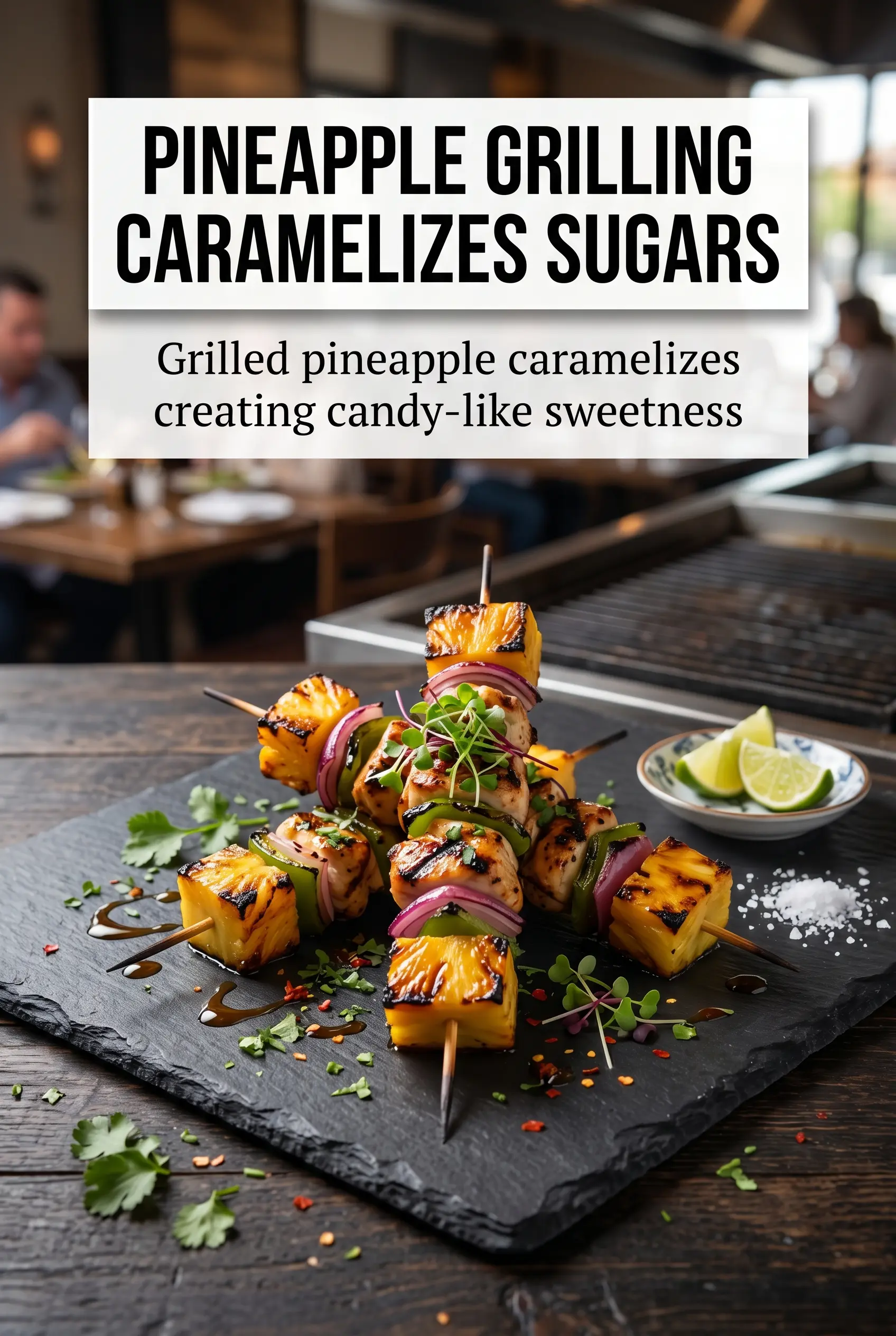
Pineapple Chicken Kabobs
Ingredients
Equipment
Method
- Whisk soy sauce, pineapple juice, honey, olive oil, and garlic until honey dissolves and the mixture looks glossy.
- Add cubed chicken to the marinade and coat evenly, then cover and marinate for 1-4 hours in the refrigerator (chilling 40°F or below) so the chicken absorbs flavor.
- Thread chicken, pineapple, bell peppers, and onion onto soaked wooden skewers, leaving small gaps so pieces cook evenly and caramelize.
- Preheat the grill to medium-high heat and place kabobs on the grate, cooking 5-6 minutes per side while basting with the marinade for a sticky glaze.
- Continue grilling until chicken reaches 165°F in the thickest piece and pineapple is caramelized, turning as needed for even browning.