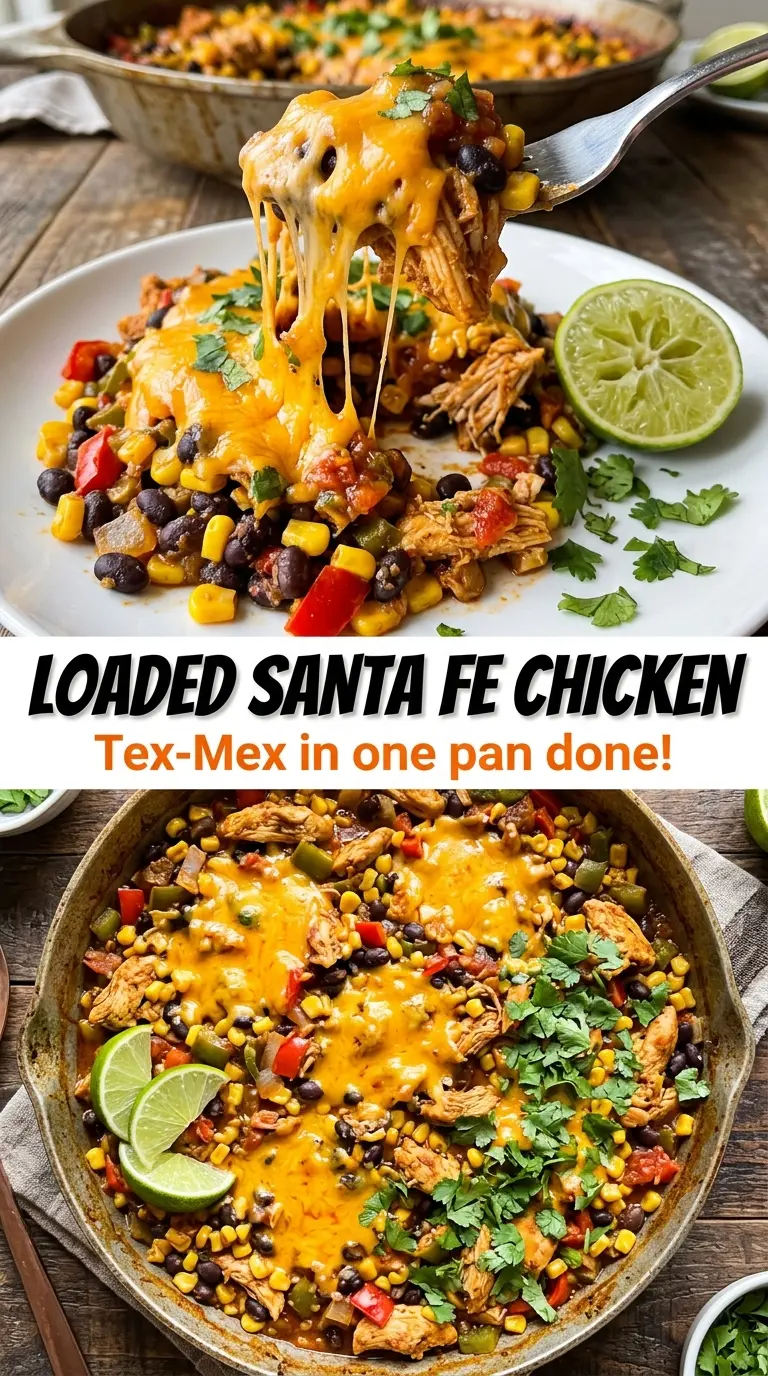
Golden chicken breasts tucked into a smoky skillet of black beans, corn, and tomatoes make this Santa Fe Chicken Skillet the kind of dinner that lands on the table fast but still eats like you planned ahead. The chicken stays juicy because it gets a hard sear first, then finishes gently in the simmering sauce instead of drying out in the oven. A blanket of melted cheddar on top pulls everything together without turning the whole pan heavy.
What makes this version work is the order of the cooking. The taco seasoning hits the chicken before it ever sees the pan, so the spice blooms in the oil and clings to the crust. Then the beans, corn, and diced tomatoes with green chiles simmer just long enough to pick up the browned bits from the skillet, which is where a lot of the flavor lives. A little chicken broth keeps the sauce loose enough to spoon over rice, tortillas, or baked potatoes if you want to stretch it.
Below, I’ve included the small timing cues that keep the chicken tender, plus the swaps that still give you that same Tex-Mex character when you need to work with what’s in the pantry.
The chicken stayed juicy and the sauce thickened just enough to coat the beans and corn without getting soupy. I added the cheese at the very end like you said, and it melted into the skillet instead of disappearing.
Save this Santa Fe Chicken Skillet for the nights when you want one pan, smoky Tex-Mex flavor, and melted cheddar with almost no cleanup.
The Sear Is Doing More Than Browning the Chicken
The biggest mistake with a skillet chicken dinner is crowding the pan and rushing straight into the sauce. Chicken breasts need real contact with hot oil to build color, and that color becomes flavor for the whole dish. If the chicken goes into a lukewarm skillet, it steams, the seasoning slides off, and the final sauce tastes flatter than it should.
You also want the chicken only partly cooked before it comes out of the pan. That first sear gives you a deep golden surface, but the center should still be underdone. The chicken finishes in the bean-and-corn mixture, which keeps it tender and lets the juices season the skillet instead of running out onto the cutting board.
- Cast iron skillet — This is one place where a heavy pan helps. It holds heat well enough to keep the sear going even after the chicken hits the surface. A thin pan can work, but you’ll lose some browning.
- Taco seasoning — This does more than flavor the chicken. The spices toast in the oil and build the base of the sauce. If your blend is salty, use it as written and don’t add extra salt until the end.
- Diced tomatoes with green chiles — Rotel brings acidity, heat, and liquid in one can. Regular diced tomatoes work in a pinch, but you’ll need a little extra seasoning and possibly a splash more broth to keep the skillet from tasting dull.
- Shredded cheddar — Pre-shredded is fine here if that’s what you keep on hand, but a block you grate yourself melts smoother. Add it only after the chicken is cooked through; otherwise it can separate and turn greasy.
Building the Skillet in the Right Order
- Chicken breasts — Use boneless, skinless breasts that are similar in thickness so they finish at the same time. If one side is much thicker, pound it lightly or slice it horizontally. That small step keeps the outside from overcooking while the center comes up to temperature.
- Black beans — Rinse them well so the skillet sauce stays clean and savory instead of muddy. They hold their shape and give the dish substance, which is why they’re better here than a soft bean that falls apart.
- Frozen corn — Straight from the freezer is fine. It thaws fast in the hot skillet and keeps a little pop. Canned corn works too, but drain it first so you don’t water down the sauce.
- Chicken broth — This loosens the tomatoes and helps everything simmer without scorching. Water can work in a pinch, but broth gives the sauce a deeper savory backbone and carries the seasoning better.
From Hot Skillet to Melted Cheese
Season and Sear the Chicken
Rub the taco seasoning onto both sides of the chicken so it forms a thin, even coat. Heat the oil until it shimmers, then lay the chicken in without moving it for a few minutes; you want a crust that releases on its own, not pale chicken that sticks and tears. If the seasoning darkens too fast, the pan is too hot, so lower the heat before the outside turns bitter.
Build the Smoky Bean Mixture
Add the black beans, corn, tomatoes with green chiles, and broth to the same skillet. Stir and scrape up the browned bits on the bottom; that’s the base of the sauce. Let it come to a steady simmer before the chicken goes back in, because if you nestle it into cold liquid the whole pan takes longer to cook and the chicken dries out while it waits.
Finish the Chicken Gently
Return the chicken to the skillet, cover, and cook until the thickest part reaches 165°F. The lid matters here because it traps enough heat to cook through without reducing the sauce down too fast. Pull the pan off the heat as soon as the chicken is done; overcooking is the fastest way to lose that juicy center you built with the sear.
Melt the Cheddar Without Breaking the Sauce
Scatter the cheese over the top, cover again, and let the residual heat melt it. Don’t crank the burner for this part. High heat can make the cheese oily and turn the sauce grainy, while gentle steam melts it into a smooth blanket over the chicken and beans.
How to Bend This Skillet Without Losing the Point
Make It Dairy-Free
Skip the cheddar and finish with avocado, cilantro, and a squeeze of lime. You’ll lose the creamy melt on top, but the skillet still reads clearly as Santa Fe-style because the seasoning, beans, corn, and tomatoes carry the dish.
Swap in Chicken Thighs
Boneless thighs give you a richer, more forgiving result and stay tender even if they cook a minute longer. They may not need the full 8 to 10 minutes in the covered simmer, so start checking early. The sauce and toppings stay the same.
Use What’s in the Pantry
No Rotel? Use diced tomatoes and add a small pinch of chili powder plus a spoonful of green salsa if you have it. You won’t get the exact same acidity and heat, but you’ll still have a bright, spoonable skillet instead of a flat tomato sauce.
Stretch It for More Servings
Add a second can of beans or serve the chicken and sauce over rice. That keeps the dinner satisfying without diluting the flavor, and the extra starch gives the sauce somewhere to go.
Storage and Reheating
- Refrigerator: Store leftovers in an airtight container for up to 4 days. The sauce thickens as it sits, and the chicken stays best when kept with the bean mixture instead of stored separately.
- Freezer: This freezes well for up to 2 months, though the tomatoes may soften a little after thawing. Cool it completely first and freeze in portions for the easiest reheating.
- Reheating: Reheat gently on the stovetop over medium-low with a splash of broth or water. The common mistake is blasting it in the microwave until the chicken turns tough and the cheese gets greasy.
Answers to the Questions Worth Asking
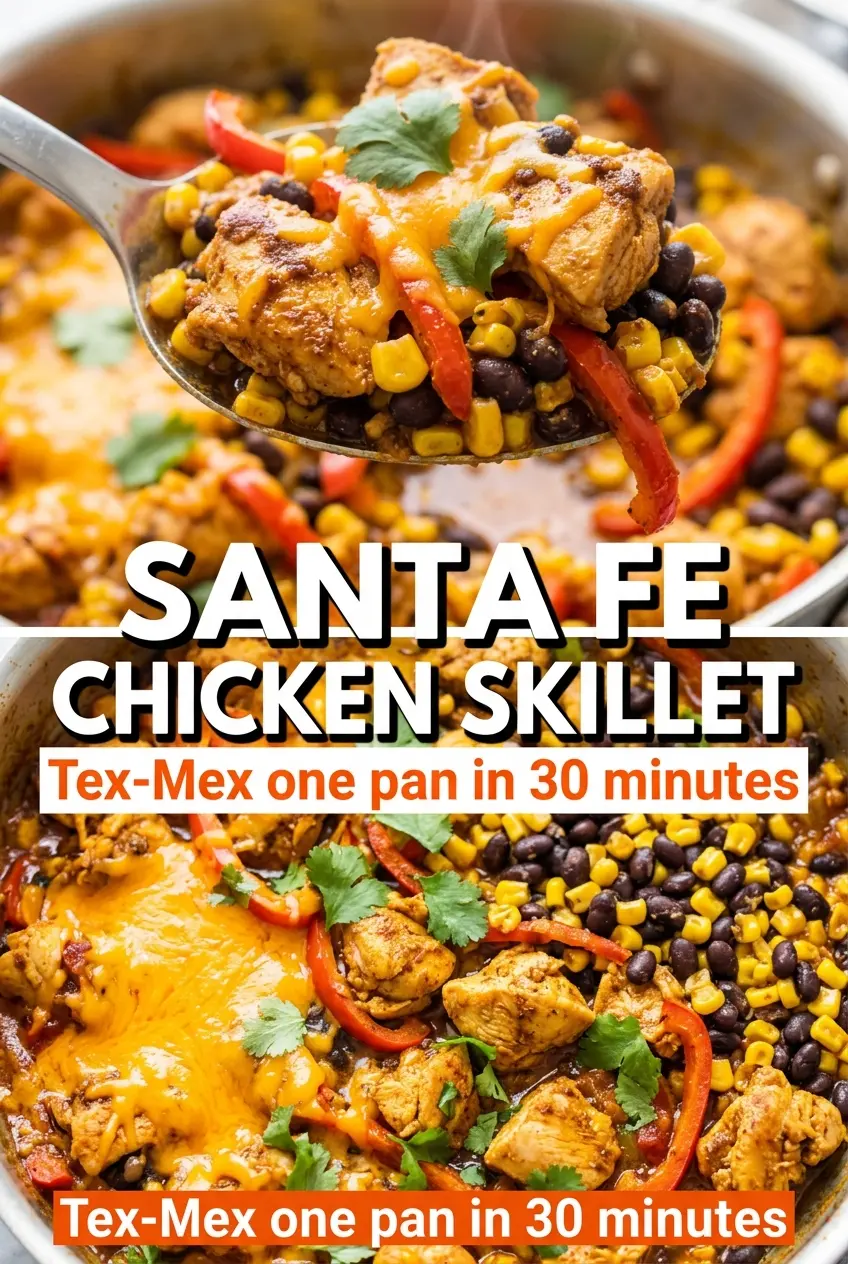
Santa Fe Chicken Skillet
Ingredients
Equipment
Method
- Rub the chicken breasts with taco seasoning on both sides. Pat to help the seasoning cling.
- Heat the olive oil in a large cast iron skillet over medium-high heat until shimmering, then sear the chicken for 4-5 minutes per side until golden. Remove to a plate.
- Add the black beans, corn, Rotel, and chicken broth to the skillet, stirring to combine. Bring the mixture to a simmer.
- Nestle the seared chicken breasts into the bean and corn mixture, cover, and cook over medium heat for 8-10 minutes until the chicken reaches 165°F. Keep it covered to retain moisture.
- Sprinkle the cheddar cheese over the top, then cover for 2 minutes until melted. Let it settle into the skillet for a thicker, cheesy finish.
- Garnish with fresh cilantro, sour cream, avocado, and lime wedges. Serve hot with lime for brightness.